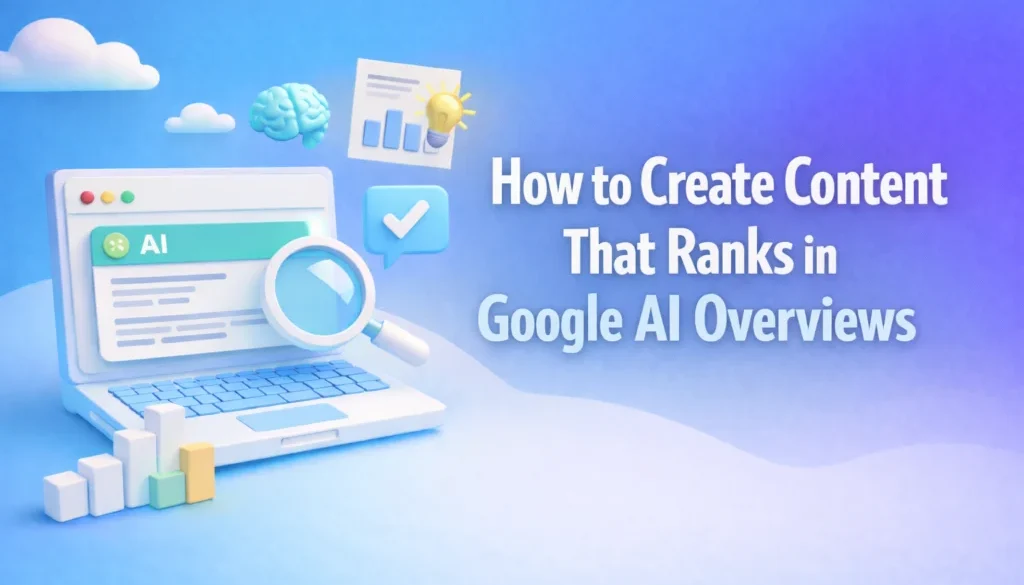
How to Create Content That Ranks in Google AI Overviews (2026 Guide)
Reality First — What Actually Happened
I still remember the exact moment things felt off. My impressions were climbing fast, especially from US-based searches. Keywords related to “how US small businesses get customers online” were showing up in Google Search Console almost every day. But clicks? Almost flat. That gap made no sense at first, until I realized something critical — my content was appearing inside AI-generated summaries.
This is where understanding how to create content that ranks in Google AI overviews becomes important. Because ranking today doesn’t always mean traffic. Sometimes it means your content is doing the job without the user even visiting your page, and surprisingly, that’s not a bad thing if you know how to leverage it.
While working on my article about Google AI Overview traffic, I saw this shift clearly, and it forced me to rethink everything about SEO.
Peplio Reality Check
- Expected: Ranking brings clicks and customers
- Happened: Ranking inside AI Overviews reduced clicks
- Surprised: Brand visibility increased among US users
What This Article Will NOT Do
This guide won’t promise overnight traffic or viral hacks. It won’t suggest outdated SEO tactics like stuffing keywords or chasing random backlinks. And it definitely won’t say that ranking equals revenue, because in today’s AI-driven search environment, especially in the US market, visibility and trust matter more than raw clicks.
Instead, this guide focuses on how to create content that ranks in Google AI overviews in a way that builds long-term authority and attracts real customers.
Understanding Google AI Overviews (The Shift in Search Behavior)
:contentReference[oaicite:0]{index=0} are designed to answer user queries instantly by summarizing content from multiple sources. If someone in California searches “how to create content that ranks in Google AI overviews,” they often get a complete answer without clicking any link.
This changes the entire game. Instead of optimizing for clicks, you’re optimizing to be selected as a trusted source.
While studying content strategies using Google Search Central documentation, I noticed that structured, experience-based content gets picked more often.
🧪 Peplio Experiment #1
Goal: Rank for how to create content that ranks in Google AI overviews
Action: Wrote a structured guide with direct answers and real-world examples
Result: Appeared in AI Overview within a few weeks
Next Change: Added deeper authority signals
Step 1: Choose Long-Tail Keywords That Match US Search Intent
If you’re serious about how to create content that ranks in Google AI overviews, your keyword selection must reflect real intent. US business owners don’t search vague terms — they search solutions.
For example, instead of “SEO tips,” they search:
“how small businesses in Texas get customers using SEO”
This level of specificity triggers AI Overviews because it signals informational depth. Tools like Google Trends help identify rising queries in the US market, especially across states where competition varies.
I applied the same logic while building my strategy around micro tools website traffic, and it worked surprisingly well.
Step 2: Structure Content for AI Extraction
AI doesn’t read content the way humans do. It extracts. That means your content should be clean, structured, and easy to summarize. If you want to master how to create content that ranks in Google AI overviews, you need to think like a system, not just a writer.
Start with direct answers. Then expand. Avoid unnecessary storytelling at the beginning. Instead, guide the reader with clarity.
When I improved my article on writing blog posts that rank, I focused on answer-first structure, and the results changed.
🧪 Peplio Experiment #2
Goal: Increase chances of AI inclusion
Action: Added clear answer blocks under each heading
Result: Featured in both snippets and AI summaries
Next Change: Improved readability and flow
Step 3: Build E-E-A-T for US Audiences
Google prioritizes experience, expertise, authority, and trust — especially for US-based searches involving business, finance, or marketing. If you’re writing about how to create content that ranks in Google AI overviews, your content must feel real.
Use relatable examples like a bakery owner in Texas managing online orders or a startup in New York optimizing their marketing budget.
When I referenced insights from HubSpot, it added credibility naturally without overdoing it.
Step 4: Internal Linking That Builds Context
Internal linking helps Google understand your authority. It’s not just SEO — it’s context building. When your articles connect, your site becomes a knowledge hub.
While working on what is SEO and why it matters, I linked related content strategically, and indexing improved significantly.
Each internal link should feel natural and helpful, not forced.
Step 5: Focus on Visibility Over Clicks
This is the mindset shift. Learning how to create content that ranks in Google AI overviews means accepting that not every impression leads to a click. But visibility leads to trust.
And trust leads to customers.
Especially in the US market, where users compare multiple sources before making decisions, repeated visibility builds familiarity. Over time, that familiarity turns into brand recognition.
🧪 Peplio Experiment #3
Goal: Increase brand recall
Action: Focused on informational queries with high intent
Result: More branded searches from US users
Next Change: Adding email capture strategies
Questions I Struggled With While Building Peplio
Why am I ranking but not getting clicks? Because AI Overviews answer the query directly.
Is this bad for SEO? No, it’s the new SEO reality.
How do I get customers then? Through authority, trust, and repeated visibility.
If You’re a Solo Blogger With No Audience…
If you’re a solo blogger with no audience, no money, and only a laptop… this strategy actually gives you an advantage. Big brands are slow to adapt. You can move faster.
You don’t need a huge marketing budget. You need clarity, consistency, and a strong understanding of how to create content that ranks in Google AI overviews.
Final Thoughts — What I’m Testing Next
Right now, I’m testing ways to convert AI visibility into leads. Instead of chasing clicks, I’m building systems where users discover the brand first, then engage later.
If you want to start, pick one keyword, create structured content, and focus on helping users. Don’t chase traffic. Build trust.
Because in 2026, mastering how to create content that ranks in Google AI overviews is not optional — it’s survival.