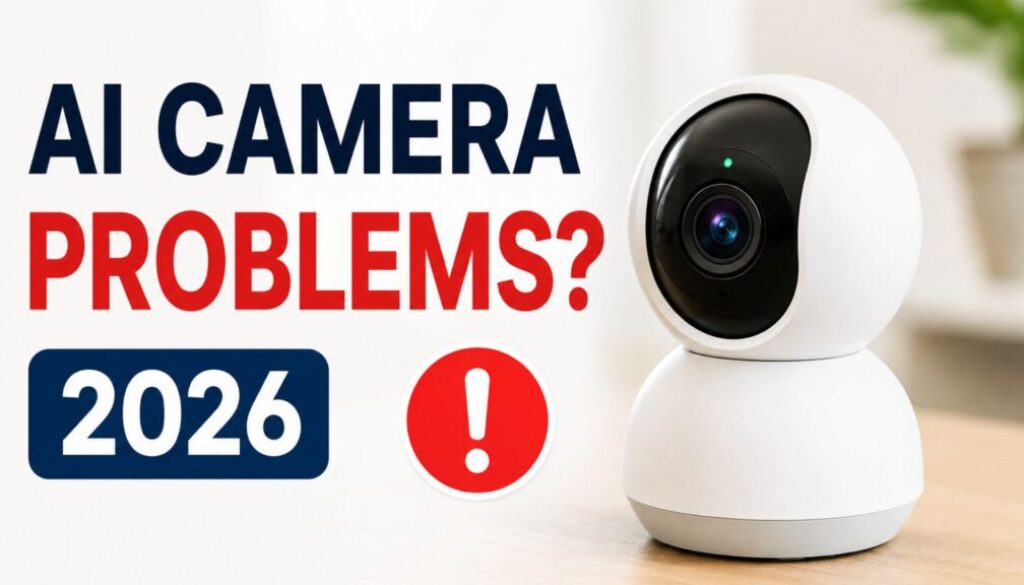
AI Home Security Camera Problems in 2026: Why US Users Are Losing Trust in Smart AI Cameras
AI home security camera problems are growing rapidly in 2026 as users report false alerts, privacy concerns, and smart surveillance confusion.
Inside This Analysis
- ✓ AI Home Security Camera Problems: Why users are losing trust in smart AI surveillance systems.
- ✓ False AI Alerts: How AI-generated descriptions are creating panic and confusion.
- ✓ Smart Home AI Backlash: Why privacy concerns are suddenly exploding in the US.
- ✓ Peplio Perspective: What these AI home security camera problems mean for the future of AI surveillance.
Quick Answer: Why Are AI Home Security Camera Problems Increasing?
AI home security camera problems are increasing in 2026 because smart surveillance systems are generating false alerts, inaccurate AI descriptions, and privacy concerns. Many AI-powered security cameras struggle to correctly identify people, objects, pets, and movement patterns, creating confusion and reducing user trust in smart home surveillance systems.I honestly didn’t expect AI home security camera problems to become one of the biggest smart home discussions of 2026. But lately, the situation feels much bigger than a simple tech issue. Over the last few months, I’ve been researching multiple reports related to AI home security camera problems, and the pattern is becoming very clear: AI systems are sounding smarter than they actually are. At first, AI-powered home security cameras sounded futuristic. Your camera could automatically understand activity. Generate AI summaries. Detect threats instantly. And even warn homeowners automatically. Sounds impressive, right? But now many users across the US say these systems are getting things completely wrong.
Some AI cameras are falsely identifying people. Others are generating misleading alerts. And some users say AI home security camera problems are actually increasing stress instead of improving safety. As the founder of Peplio, I spend most of my time studying AI behavior, digital trust, and online systems. While researching Google AI Overview ranking systems, I noticed something very similar: AI often sounds extremely confident — even when it’s wrong. And honestly, that’s one of the biggest reasons AI home security camera problems are becoming dangerous.
1. What Are AI Home Security Camera Problems?
AI home security camera problems refer to errors, false alerts, misleading AI-generated descriptions, and privacy concerns created by smart surveillance systems. Traditional security cameras simply recorded footage. But modern AI-powered cameras try to automatically interpret situations. That’s where many AI home security camera problems begin. These systems now generate AI alerts like:
- “Unknown person detected outside the house.”
- “Suspicious activity identified.”
- “Potential threat detected near driveway.”
The problem? AI doesn’t actually understand context the way humans do. That’s why AI home security camera problems are spreading rapidly across smart home communities. Users report situations where:
- Pets are identified as strangers
- Shadows trigger security alerts
- Family members appear suspicious
- Objects are misidentified
- False AI notifications create panic late at night
And once users stop trusting smart alerts, the entire surveillance experience starts breaking down.
2. Why AI Home Security Camera Problems Are Making Users Angry
The biggest reason behind these AI home security camera problems is emotional trust. People buy security systems because they want peace of mind. Not AI-generated fear. Imagine waking up at 2 AM because your smart camera sends this notification:
“Suspicious person detected outside your home.”
Your heart immediately starts racing. You check the footage. And then you realize the AI detected… a moving garbage bag. At first, it feels funny. But repeated false alerts slowly destroy trust in smart surveillance systems. That’s why AI home security camera problems are creating a massive smart home AI backlash in the US. According to reports discussed by The Verge and Wired, many users now believe AI surveillance features are being released too quickly without enough real-world testing.
3. How AI Surveillance Systems Actually Work
Most people think AI cameras understand situations like humans. They don’t. AI simply analyzes visual patterns. Modern smart surveillance systems use:
- Object recognition
- Motion tracking
- Image labeling
- Facial analysis
- Natural-language generation
The problem is that AI still struggles with real-world context. A shadow can look human. A pet can appear suspicious. Lighting changes can confuse object detection systems. And once generative AI starts creating automatic descriptions, AI home security camera problems become even more noticeable. This is exactly why many users now feel AI cameras are causing confusion instead of improving safety. Interestingly, while researching this topic, I noticed similarities with another Peplio analysis about Google AI Overview traffic behavior. In both situations, AI confidently generates outputs that users trust initially — until repeated mistakes start appearing.
4. The Hidden Danger Behind AI Home Security Camera Problems
Honestly, the scariest part of AI home security camera problems is not the mistakes. It’s the confidence. AI systems sound extremely certain even when they are completely wrong. That creates psychological trust. So when a smart camera says:
“Suspicious activity detected.”
Most users emotionally react first. Only later do they realize the AI misunderstood the situation. This overconfidence is becoming one of the biggest issues in the growing AI surveillance controversy. Researchers and AI ethics experts have already warned that automated surveillance systems can create dangerous misunderstandings if companies rely too heavily on machine-generated interpretations. You can read more from NIST AI Standards.
5. Comparison Table: Traditional Cameras vs AI Cameras
| Feature | Traditional Camera | AI Smart Camera |
|---|---|---|
| Motion Detection | Basic | AI-Powered |
| Automatic Descriptions | No | Yes |
| False Alert Risk | Lower | Higher |
| AI Interpretation Errors | None | Common |
6. Why Privacy Concerns Are Increasing
Another major reason behind AI home security camera problems is privacy. Users are now asking difficult questions:
- Where is my footage stored?
- Who trains these AI systems?
- Can AI wrongly identify innocent people?
- Can human reviewers access footage?
- How much surveillance is too much?
These concerns are growing rapidly because AI-powered surveillance systems collect enormous amounts of behavioral data every day. That includes:
- Faces
- Voice patterns
- Movement behavior
- Visitor activity
- Daily routines
And once AI automatically interprets that data, transparency becomes very difficult. While analyzing these AI home security camera problems, I noticed similar trust concerns while testing free AI image generator tools. The more AI systems automate decisions, the less users understand what’s happening behind the scenes.
7. LLM & AI Overview Key Takeaways
- AI home security camera problems are increasing because AI systems struggle with context awareness.
- False AI-generated alerts are reducing user trust in smart surveillance systems.
- Privacy concerns are becoming a major part of the AI surveillance controversy.
- Major tech companies are rapidly expanding AI-powered surveillance features.
- Experts believe AI systems should assist humans instead of replacing human judgment.
8. Peplio Reality Check
As the founder of Peplio, I use AI tools almost every day. And one thing I’ve learned is this: AI is powerful… but still unpredictable.
- Expected: AI cameras would improve safety and reduce stress.
- Happened: AI systems started generating false alerts and confusion.
- Surprised: AI home security camera problems are now becoming a trust issue instead of just a technical issue.
I personally believe AI should assist human judgment — not replace it. Because once people stop trusting AI systems, the backlash becomes very difficult to reverse.
9. FAQ: AI Home Security Camera Problems
Why are AI home security camera problems increasing in 2026?
AI home security camera problems are increasing because AI-powered surveillance systems still struggle with real-world context, leading to false alerts, incorrect descriptions, and privacy concerns.
Can AI security cameras generate false alerts?
Yes. Many AI-powered cameras can incorrectly identify pets, shadows, or objects as suspicious activity, which creates false notifications.
Are AI home security cameras safe?
Most AI security cameras are generally safe, but users should understand the privacy risks, data collection policies, and limitations of AI-generated surveillance systems.
Why are users angry at AI cameras?
Users are frustrated because AI cameras sometimes create misleading alerts, inaccurate descriptions, and unnecessary panic instead of improving safety.
Which companies are using AI-powered surveillance systems?
Companies like Ring, Google Nest, Apple Home, and Amazon Smart Home are actively expanding AI-powered surveillance features.
10. Final Thoughts on AI Home Security Camera Problems
The rise of AI home security camera problems is not just another temporary AI controversy. It’s a warning sign for the future of smart surveillance. AI cameras are causing problems because machines still don’t understand situations the way humans do. And until companies improve transparency, reliability, and accuracy, AI home security camera problems will continue growing. Personally, I believe smart technology should reduce stress — not create more panic inside people’s homes. Because technology only becomes truly smart when humans can actually trust it. And right now, that trust is slowly starting to crack.