AI Job Losses in the US 2026 Are Getting Worse Than Experts Expected
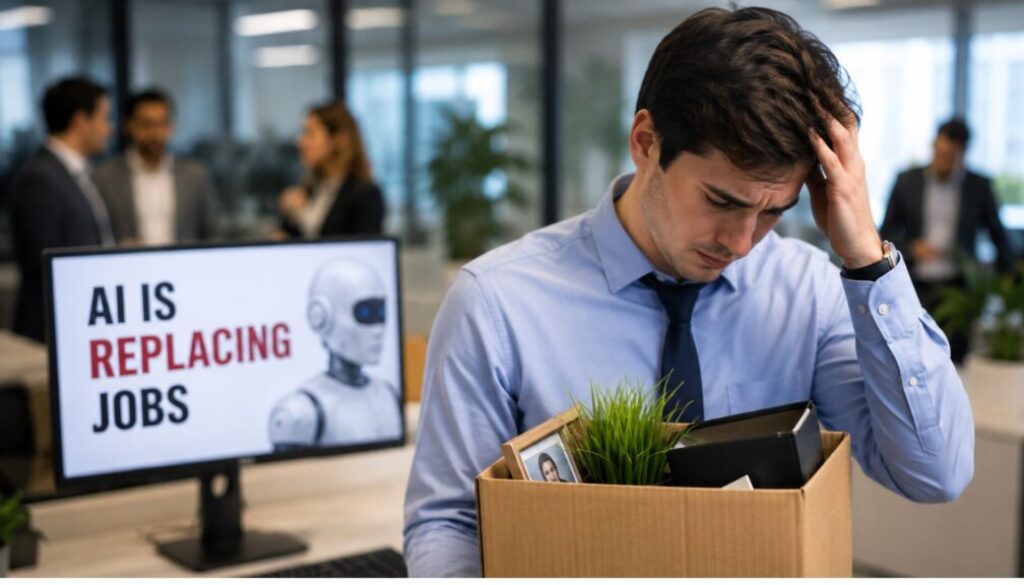
AI job losses in the US are becoming one of the biggest workplace discussions of 2026 as automation rapidly affects white-collar and office jobs.
Inside This Analysis
- ✓ AI Job Losses in the US: Why companies are reducing workers in AI-exposed occupations.
- ✓ White-Collar Jobs Affected by AI: Which office and administrative jobs are becoming vulnerable.
- ✓ AI Automation Job Cuts: How businesses are replacing repetitive tasks using AI systems.
- ✓ Peplio Perspective: What I personally noticed while studying AI’s impact on modern work culture.
Quick Answer: Why Are AI Job Losses in the US Increasing?
AI job losses in the US are increasing because companies are rapidly using AI automation tools to reduce costs, improve productivity, and automate repetitive office tasks. White-collar jobs affected by AI include customer service, administrative support, data entry, and entry-level office positions. AI-exposed occupations layoffs are becoming more visible as businesses prioritize automation and generative AI systems over traditional staffing.I honestly thought people were exaggerating when they first started talking about AI replacing jobs in America. At first, it sounded like another internet panic trend. People were saying:
- AI will replace office workers
- AI will reduce hiring
- AI will automate customer service
- AI will eliminate repetitive jobs
But lately, while researching AI systems for Peplio, I started noticing something uncomfortable. The numbers are slowly starting to support those fears. And honestly… that surprised me. Because now we are not just discussing future predictions anymore. We are already seeing AI job losses in the US happen inside real companies. Especially in jobs that depend heavily on repetitive digital work. That’s why AI exposed occupations layoffs are suddenly becoming one of the biggest workplace discussions of 2026. As someone who studies AI trends daily for Peplio, I’ve personally noticed a dangerous shift: Many companies no longer ask:
“Can AI help employees?”
Now they ask:
“How many employees can AI replace?”
And honestly, that small mindset shift changes everything.
1. Which Jobs Are Most Exposed to AI?
The biggest misconception people still have is this: They think only factory jobs are at risk. But right now, the fastest-growing AI automation job cuts are happening in white-collar sectors. Especially jobs involving:
- Customer support
- Data entry
- Email handling
- Scheduling
- Basic content writing
- Administrative assistance
- Research support
- Call center operations
According to a report from Bloomberg Law, occupations highly exposed to AI are beginning to show larger employment declines compared to jobs less exposed to automation. And honestly, this trend feels very real now. Because even while running Peplio, I personally notice how AI tools can now perform tasks that previously required entire teams. That’s exactly why AI impact on US jobs is becoming impossible to ignore.
2. Why Companies Are Choosing AI Over Hiring
Most companies are not replacing workers because they hate employees. They’re doing it because AI systems now offer:
- 24/7 operation
- Lower long-term cost
- Faster task completion
- Scalable automation
- Instant data processing
That creates a dangerous situation for workers performing repetitive office tasks. Because businesses now compare:
- Monthly salary
- Training costs
- Human error
- Productivity speed
against AI systems that work continuously. Personally, while testing AI productivity systems for Peplio, I noticed something scary: Many companies are becoming addicted to AI efficiency. Once they see cost savings, reducing staff becomes very tempting. That’s one of the biggest reasons behind growing US AI job losses.
3. White-Collar Jobs Affected by AI
Honestly, this is the part most people still underestimate. For years, office workers believed their jobs were “safe.” But now, white-collar jobs affected by AI are increasing rapidly. Especially jobs involving predictable digital tasks.
Customer Service Roles
AI chatbots now handle:
- Refund requests
- Basic troubleshooting
- Order tracking
- Customer queries
That directly affects customer support employment. Interestingly, while researching AI home security camera problems, I noticed many companies are aggressively replacing support agents with AI systems. And honestly, customers are starting to notice too.
Administrative Jobs
Scheduling software, AI email tools, and workflow automation systems are reducing the need for manual administrative work. That includes:
- Reception tasks
- Data management
- Meeting coordination
- Basic reporting
Entry-Level Office Jobs
This is becoming one of the biggest problems. Many young workers rely on entry-level jobs to gain experience. But now AI systems can already perform many beginner-level tasks. That means fewer learning opportunities for fresh workers entering the job market.
4. AI Productivity vs Human Employment
The strange thing about this situation is that AI itself is not “evil.” Actually, AI productivity improvements are very real. According to McKinsey Digital, generative AI could significantly improve productivity across multiple industries. And honestly, I believe that’s true. I personally use AI daily while managing content ideas, SEO analysis, and workflow systems for Peplio. AI genuinely saves time. But the problem begins when:
- Productivity becomes more important than people
- Cost reduction becomes the main goal
- Workers are treated as replaceable
That’s when AI and unemployment in the US starts becoming a serious social issue.
5. Why AI Layoffs 2026 Could Become Bigger
Honestly, I don’t think we’ve seen the full impact yet. Because current AI systems are still improving rapidly. Modern AI can already:
- Write reports
- Create presentations
- Answer customer emails
- Analyze spreadsheets
- Generate marketing ideas
- Handle repetitive research
And every few months, these systems become smarter. That’s why many experts believe AI layoffs 2026 could accelerate across multiple industries. According to OECD Employment Outlook, AI may heavily transform occupations involving routine cognitive tasks. Personally, I think the biggest danger is not sudden mass unemployment. The bigger danger is slow invisible replacement. One small department at a time. One support team at a time. One entry-level role at a time. Until suddenly… entire career paths become smaller.
6. Peplio Reality Check
As the founder of Peplio, I spend hours every day studying AI tools, automation systems, AI Overview behavior, and digital business trends. And honestly, one thing has become very clear to me: AI is improving faster than the workforce can adapt.
- Expected: AI would mainly assist workers.
- Happened: Companies started using AI for workforce reduction.
- Surprised: White-collar jobs affected by AI are increasing faster than many experts expected.
I personally believe AI should support human work — not quietly erase opportunities for new workers. Because once companies fully optimize around automation, rebuilding employment becomes much harder later.
7. AI Exposure Occupations Layoffs Comparison
| Occupation Type | AI Exposure Risk |
|---|---|
| Customer Support | Very High |
| Administrative Roles | High |
| Data Entry Jobs | Very High |
| Creative Strategy Roles | Medium |
| Human Relationship Roles | Lower |
8. What This Means for Young Workers
I honestly think younger workers may face the biggest challenge. Because many traditional beginner jobs are now becoming automated. That changes how people gain experience. Without entry-level opportunities, career growth becomes harder. And honestly, I think governments and businesses still don’t fully understand this long-term problem yet. While studying this trend for Peplio, I noticed similarities with another AI workforce issue discussed in our analysis on Samsung AI boom strike. In both cases, workers are becoming increasingly worried about how aggressively companies are expanding AI systems.
9. AI Overview & LLM Key Takeaways
- AI job losses in the US are becoming more visible in AI-exposed occupations.
- White-collar jobs affected by AI include customer support and administrative work.
- AI automation job cuts are increasing because businesses prioritize efficiency and lower costs.
- Entry-level office jobs are becoming especially vulnerable.
- Experts believe AI will reshape the future workforce significantly over the next few years.
10. Questions I Struggled With While Building Peplio
Will AI replace all jobs?
No. But AI will likely reduce demand for repetitive digital jobs and transform how many industries operate.
Which jobs are most exposed to AI?
Customer support, administrative work, data entry, and repetitive office roles currently face the highest automation exposure.
Why are AI job losses in the US increasing?
Companies are rapidly adopting AI systems to reduce costs, improve productivity, and automate repetitive workflows.
Are white-collar jobs affected by AI?
Yes. White-collar jobs affected by AI are increasing, especially in office support and routine digital task roles.
Can AI create new jobs too?
Possibly. AI may create new technical and strategic roles, but many traditional entry-level jobs could shrink first.
11. Final Thoughts on AI Job Losses in the US
The rise of AI job losses in the US feels very different from earlier technology shifts. Because this time, AI is targeting cognitive office work — not just physical labor. And honestly, that changes everything. Personally, while building Peplio, I use AI constantly. AI helps me research faster. Organize ideas. Improve workflows. But at the same time, I also see how easily companies can become obsessed with automation. That’s why I think the future discussion should not only be:
“What can AI do?”
It should also be:
“What kind of workforce future are we creating?”
Because once AI taking over office jobs becomes normalized, rebuilding stable career paths may become much harder. And honestly… I think we are only seeing the beginning right now. For more AI workforce and AI risk analysis, you can also read our Peplio article on UK Frontier AI Risks.