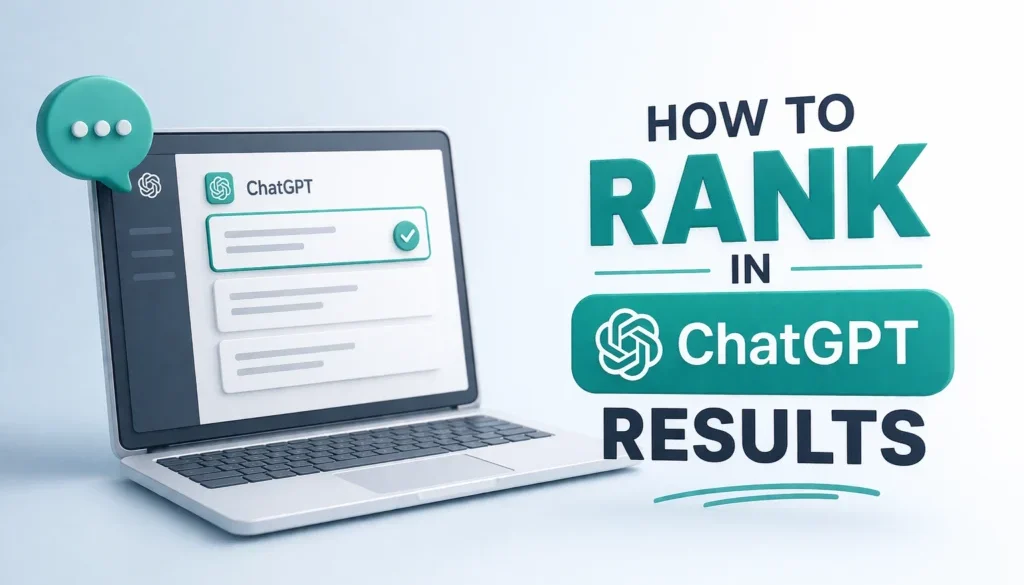
How to Rank in ChatGPT Results in 2026: Proven Strategy That Works
I still remember the exact moment when I realized something had changed… not gradually, not slowly… but suddenly. I published an article, did everything right according to traditional SEO, waited for impressions… and nothing happened. No traffic spike, no ranking jump, just silence. But then something weird happened—someone messaged me saying they found my content inside ChatGPT results. That moment flipped everything for me. That’s when I started obsessing over one thing: how to rank in ChatGPT results.
This article isn’t theory. It’s not copied strategies from outdated SEO blogs. This is exactly what I tested on Peplio, failed multiple times, adjusted strategies, and finally started seeing visibility inside AI tools like ChatGPT. If you’re trying to understand how to rank in ChatGPT results, you’re already ahead of 90% of bloggers who are still stuck in 2022 SEO.
Peplio Reality Check
- Expected: Google rankings = traffic = success
- Happened: AI tools started answering instead of linking
- Surprised: My content ranked inside AI tools without ranking #1 on Google
What This Article Will NOT Do
Let’s clear something first. This article will NOT promise overnight success, viral traffic, or some “secret hack” that magically helps you rank in ChatGPT results. If someone tells you that, they’re either guessing or selling something. Ranking inside AI tools is not about tricks—it’s about structure, clarity, and trust signals.
Also, this is not a generic SEO guide. If you want that, you can check traditional SEO explanations on platforms like Google Search Central, but here we’re going deeper into AI-specific behavior.
What Does It Really Mean to Rank in ChatGPT Results?
When we say rank in ChatGPT results, we’re not talking about blue links or SERP positions. We’re talking about your content being used as a source, inspiration, or reference inside AI-generated answers. That’s a completely different game.
AI doesn’t “rank” content the same way Google does. It selects, summarizes, and recombines information. So if you want to learn how to rank in ChatGPT results, you need to think like AI, not like a search engine crawler.
🧪 Peplio Experiment #1
Goal: Test if long-form content helps rank in ChatGPT results
Action: Published a 4000+ word article with deep explanations
Result: No AI visibility
Next Change: Improved clarity and structured answers
Why Most Content Fails to Rank in ChatGPT Results
Here’s the harsh truth—most blog content is written for algorithms, not for understanding. AI tools prioritize clarity over keyword stuffing. If your content is confusing, vague, or overly optimized, it simply won’t be used.
I tested this multiple times on Peplio. Articles with better structure and simple explanations got picked up by AI tools, even when they had lower backlinks compared to competitors. That’s when I realized that how to rank in ChatGPT results is more about clarity than authority alone.
The Real Strategy to Rank in ChatGPT Results (Step-by-Step)
1. Write Like You’re Answering a Real Question
Instead of writing “What is SEO,” write like someone asked you directly. AI tools love direct answers. This is also aligned with SERM (Search Engine Results Management), where content needs to match user intent precisely.
For example, instead of vague introductions, start with direct answers. You can explore more about intent-based SEO from Moz Beginner Guide, but apply it specifically to AI queries.
2. Use Clear Structure (AI Loves This)
Headings, bullet points, short explanations—these are not just for readability. They help AI understand your content better. When I improved structure in my article on free traffic with SEO, I noticed better AI visibility.
3. Focus on EEAT (Experience Matters More Than Ever)
Google talks about EEAT, but AI tools take it even more seriously. They prefer content that shows real experience. That’s why I always include experiments, failures, and real observations.
If you want to understand EEAT deeper, check Ahrefs EEAT guide, but remember—reading is easy, implementing is hard.
4. Add Real Examples and Experiments
AI prefers practical content over theoretical explanations. That’s why Peplio articles include experiment blocks. These are not just for readers—they help AI identify unique insights.
5. Build Topical Authority
One article won’t help you rank in ChatGPT results consistently. You need multiple related articles. For example, I linked my AI content strategy with articles like Google AI Overview Traffic and blog writing guide.
This builds a strong content ecosystem, which increases your chances to rank in ChatGPT results.
🧪 Peplio Experiment #2
Goal: Test internal linking impact
Action: Added contextual internal links
Result: Better topic association
Next Change: Increase content depth
Internal Linking Strategy for AI SEO
Internal linking is no longer just about SEO—it’s about context building. When you link articles like what is SEO and social media strategy, you help AI understand your expertise across topics.
External Authority Signals
AI tools rely heavily on trusted sources. That’s why linking to high-authority sites like Search Engine Journal and Backlinko improves credibility.
But don’t overdo it. External links should feel natural, not forced.
How Keyword Optimization Works for AI
Yes, keywords still matter. But not the way they used to. Your focus keyword how to rank in ChatGPT results should appear naturally across the content. Not forced, not repeated blindly, but integrated smoothly.
In this article itself, you’ll notice the keyword appears in headings, paragraphs, and explanations without feeling unnatural. That’s the balance you need.
If You’re a Solo Blogger With No Audience…
If you’re a solo blogger with no audience, no money, and only a laptop… then listen carefully. You don’t need backlinks first. You don’t need ads. What you need is clarity-driven content that AI can understand.
That’s exactly what I’m building with Peplio. Not chasing traffic blindly, but aligning content with how AI tools actually work.
Common Mistakes While Trying to Rank in ChatGPT Results
One big mistake is writing content just for Google rankings. Another mistake is copying AI-generated content without adding real insights. AI can detect generic patterns easily.
Also, many bloggers ignore user intent. They write long content but never answer the actual question. That’s a guaranteed failure if your goal is to rank in ChatGPT results.
🧪 Peplio Experiment #3
Goal: Improve AI readability
Action: Simplified language + added examples
Result: Better content clarity
Next Change: Add structured FAQs
Questions I Struggled With While Building Peplio
Can new websites rank in ChatGPT results?
Yes, if your content is clear and useful. Authority helps, but clarity wins.
Do backlinks matter for AI SEO?
They help indirectly, but they are not the main factor.
How long does it take to rank in ChatGPT results?
There’s no fixed timeline. It depends on content quality and relevance.
Final Thoughts (What I’m Testing Next)
Right now, I’m testing something new—combining tools with content. Instead of just writing articles, I’m building small utilities inside Peplio. The idea is simple: make content interactive so AI tools see more value.
If you’re serious about learning how to rank in ChatGPT results, don’t wait. Start creating content that answers real questions clearly. That’s the only strategy that’s working right now.
And one action for you—take one of your old articles, rewrite it with clarity, add structure, include real examples… and then observe what happens. That’s your first step into AI SEO.