
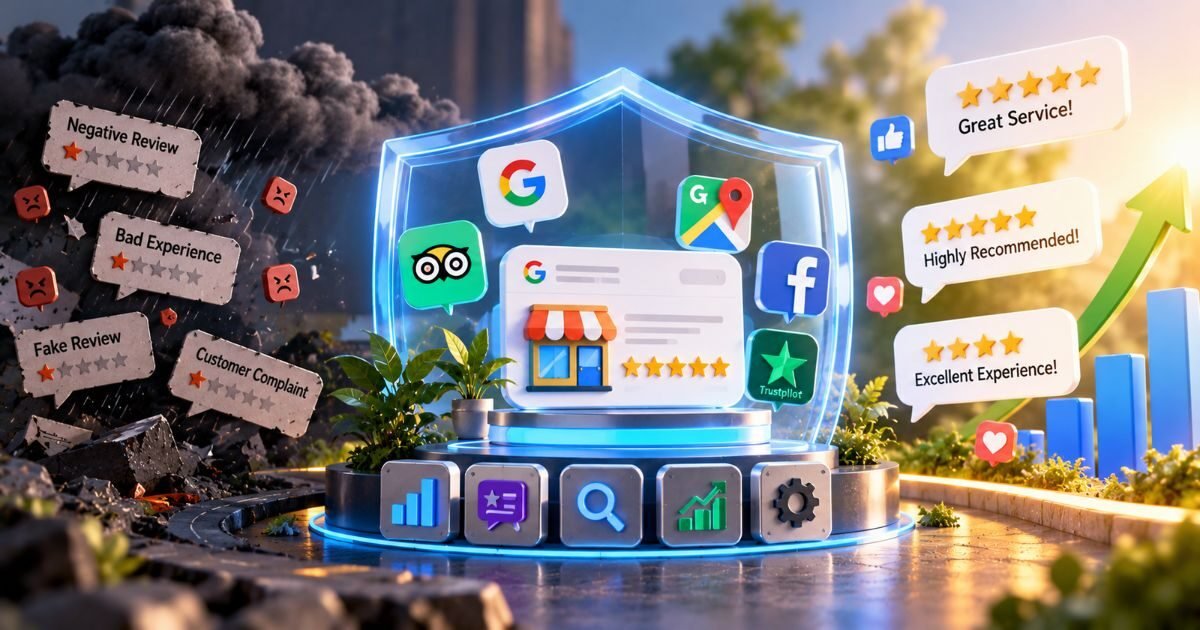
Online Reputation Management Tools: The Complete 2026 Guide to Brand SERP Control
Founder, Peplio · Digital Marketing Executive, Demech Chemical Products · Last updated: October 2026 — Built from real experience managing branded search for Peplio and Sougan Kumar Mandi across global search surfaces
- Online reputation management tools are systems that monitor brand mentions, manage reviews, analyze sentiment, and strengthen positive search visibility before and during reputation challenges
- There are four categories: Brand Monitoring Tools, Review Management Platforms, Social Listening tools, and SEO-Based Reputation Tools — each serves a different layer of control
- Reputation is largely an SEO battle — if positive content ranks higher than negative content, perception stays strong; if harmful pages dominate page one, trust declines
- The smartest strategy is proactive, not reactive — build so much positive authority that negative signals struggle to appear on page one at all
- Technical infrastructure (site speed, clean indexing, structured content) is the foundation — online reputation management tools amplify discipline, they do not replace it
- Search your brand name today — what appears on page one is your real reputation, not what you believe about your brand
One late night, I searched my own brand name. Not for ego. Not for vanity. But for truth. I typed “Peplio reviews,” “Is Peplio trustworthy,” and “Sougan Kumar Mandi” into Google. There was nothing negative. But there was nothing powerful either — no layered authority, no structured trust signals, no ecosystem defending the brand. That moment made something crystal clear: reputation is not what you believe about your brand. Reputation is what dominates page one when someone searches your name. That realisation changed how I approach growth at Peplio.com completely. Traffic alone is fragile. Visibility without reputation is dangerous. This is where online reputation management tools become critical — not as emergency solutions, but as growth infrastructure.
- What are online reputation management tools?
- The 4 categories of ORM tools explained
- Pricing landscape — what ORM tools actually cost
- Brand SERP control — where ORM and SEO meet
- Case simulations — how reputation strategy changes outcomes
- Technical infrastructure — the foundation ORM tools need
- Crisis recovery blueprint — step by step
- How Peplio’s free tools support reputation infrastructure
- Sougan’s Take
- FAQ
What Are Online Reputation Management Tools?
Online reputation management tools are systems designed to help individuals and businesses monitor brand mentions across the web, track and manage online reviews, analyse public sentiment, improve positive search visibility, identify reputation risks early, and strengthen branded search dominance. They operate at the intersection of SEO, PR, content strategy, and customer experience — which is why they require a strategy to work, not just a subscription.
In global markets like the United States, United Kingdom, Brazil, and across Europe, brand trust is shaped primarily by search behaviour. If someone searches your company name and finds complaints, weak authority signals, outdated information, or inconsistent branding, trust declines immediately and that visitor is lost before they ever interact with your actual product or service. BrightLocal’s Local Consumer Review Survey consistently finds that 93% of consumers say online reviews influence their buying decisions — making review management one of the highest-ROI investments for any service or product business.
The strategic shift I made for Peplio: I used to think online reputation management tools were reactive — something goes wrong, you fix it. The smarter strategy is entirely proactive. You build so much positive authority — through structured content, strong internal linking, technical SEO health, and visible expertise — that negative signals struggle to appear on page one at all. The importance of SEO in 2026 for reputation management is exactly this: dominate branded search before someone else does.
The 4 Categories of Online Reputation Management Tools Explained
Understanding categories is critical before choosing platforms. Most businesses make the mistake of subscribing to tools before knowing which layer of their reputation problem they are actually solving. Here is the complete breakdown of every category of online reputation management tools with strengths, limitations, and who each is actually best for.
| Category | Purpose | Strengths | Limitations | Best For |
|---|---|---|---|---|
| Brand Monitoring | Track mentions across web, blogs, forums, social | Real-time alerts, early risk detection, competitor tracking | Monitoring does not equal control — requires manual response strategy | Startups entering competitive markets, SaaS founders monitoring Reddit |
| Review Management | Centralise reviews from Google, Trustpilot, Yelp, directories | Faster responses, sentiment tracking, review request automation | Expensive at scale, automation can feel robotic, overkill for early-stage creators | UK eCommerce, multi-location US brands, local service businesses |
| Social Listening | Analyse broader public sentiment, hashtag trends, brand-adjacent discussions | Detect emotional tone, identify viral risks, track industry trends | Data-heavy, expensive, overkill for solo bloggers and small businesses | Growing SaaS startups, influencer brands, agencies handling multiple clients |
| SEO-Based Reputation | Monitor and influence branded keyword rankings and SERP composition | Track brand keyword performance, identify harmful ranking shifts, measure SERP control | Requires SEO knowledge, no instant results, strategy-driven not plug-and-play | Founders building global authority, brands expanding into new markets, thought leaders |
Brand monitoring is the awareness layer — without visibility, response is always delayed. Review management influences conversion more than traffic. Social listening shifts strategy from reactive to predictive. SEO-based reputation tools are the most powerful category for long-term control because reputation ultimately lives in search results. SEMrush’s brand monitoring features demonstrate how branded search tracking integrates directly with search performance monitoring — making SEO-driven online reputation management tools the most strategic layer for any founder serious about international authority.
Pricing Landscape — What Online Reputation Management Tools Actually Cost
Understanding the pricing tiers of online reputation management tools helps position strategy realistically and avoid over-investing at the wrong stage. The pattern is consistent: tools should scale with the complexity of your reputation challenge, and strategy must exist before any subscription begins.
The key insight: for anyone at the Peplio stage — a growing blog, a personal brand, a small business — the most powerful online reputation management tools are free or already available. Google Alerts for your brand name. Google Search Console for branded keyword tracking. Google Business Profile for local review management. Start with structure and technical SEO health before spending on subscriptions. The infrastructure is what gives paid tools something to amplify.
Brand SERP Control — Where Online Reputation Management Tools Meet SEO Authority
When someone searches your brand name, what appears on page one is your real reputation — not your intentions, not your internal values, not your effort. Just results. This page-one dominance is called Brand SERP control, and it is one of the most overlooked aspects of online reputation management tools. If your ecosystem is weak, search engines fill the gaps with external discussions — reviews you did not write, comparison articles you did not commission, forum threads you did not know existed.
Search engines evaluate websites for branded search dominance based on five signals: website authority (domain strength and backlink profile), structured data (schema markup that clarifies brand identity), content consistency (regular publishing on the same topics), backlink strength (external sites linking to your positive content), and engagement signals (how long users stay on your pages and whether they return to search results). Google’s structured data documentation explains how schema markup helps search engines understand brand entities — making it a direct reputation signal that most small business owners ignore entirely.
For Indian businesses targeting global markets, Brand SERP control is especially important because international users perform due diligence searches before engaging with unfamiliar brands. When Peplio content about digital marketing appears alongside Peplio tools and the Peplio comic series across multiple page-one results for branded searches, it signals a well-established, trustworthy brand rather than a single-page website. This is the power of online reputation management tools combined with SEO — systematic dominance of branded search, built over time. Read the complete guide on how does SEO work to understand the technical foundation that Brand SERP control depends on.
Case Simulations — How Reputation Strategy Changes Outcomes
Case 1 — US SaaS Founder. A new SaaS product launches. Within weeks, a negative comparison blog ranks on page one and Reddit threads criticise pricing. Without online reputation management tools: the founder notices late and negative content dominates search. With structured monitoring plus SEO strategy: the founder publishes a detailed pricing transparency page, improves technical SEO, builds backlinks to positive case studies, and strengthens internal linking. Result: negative thread drops to page two. Brand perception stabilises within 90 days. Lesson: visibility without structure invites vulnerability.
Case 2 — UK eCommerce Brand. A clothing brand experiences delayed shipping. Customers leave critical reviews on Trustpilot. Reactive strategy — attempting to delete or ignore comments — causes backlash to worsen. Strategic approach: respond publicly with an honest apology, improve the logistics transparency page, publish a fulfillment update blog, and optimise brand search content with positive case studies. Online reputation management tools track sentiment shifts throughout. Within months, positive signals outweigh initial complaints. Lesson: transparency strengthens trust more than silence.
Case 3 — Brazilian Influencer. An influencer faces backlash for a brand partnership. Sentiment drops rapidly on social platforms. Strategic recovery: monitor hashtags using social listening tools, release a clarification video, engage directly with the audience, and strengthen YouTube SEO presence so the clarification content ranks above the criticism. Online reputation management tools track conversation direction. Result: narrative regains balance within 6 weeks. Lesson: speed matters — silence escalates doubt.
Case 4 — The Peplio Reality Check. Expected: high-quality content would automatically build authority. What actually happened: content ranked, but brand perception stayed neutral with no structured trust signals. Surprise: reputation must be engineered deliberately, especially before scaling. The fix: structured internal linking, Sougan Kumar Mandi author boxes across all content, FAQ schema on every article, and consistent brand voice across all Peplio tools and articles. Brand SERP is now actively controlled rather than passively hoped for.
Technical Infrastructure — The Foundation Online Reputation Management Tools Need
This is where most businesses fail. They focus on monitoring tools but completely ignore the infrastructure that gives those tools something meaningful to work with. Online reputation management tools are limited without the technical foundation underneath them — because reputation control ultimately requires fast website performance, clean search indexing, clear niche positioning, structured content ecosystem, and internal linking authority.
A slow-loading website creates doubt before a user reads a single word. A site loading in over 4 seconds on mobile loses trust silently — not through a review or a forum post, but through a bounced visit that sends negative engagement signals back to Google. A site with poor Core Web Vitals scores ranks lower for branded searches, meaning third-party results fill the gap. Technical performance is silent reputation — it operates below the surface but shapes the entire user experience that determines whether someone trusts you enough to engage.
Clean indexing is equally critical. If your positive content is not correctly indexed, it cannot rank. If it cannot rank, it cannot defend your brand against negative third-party content. The on-page SEO checklist covers the technical elements that ensure search engines understand your content structure properly — making it a direct reputation protection tool, not just a rankings tool. Use Peplio’s free Robots.txt and Sitemap Generator to ensure search engines crawl the right pages and ignore the duplicate or thin URLs that waste crawl budget.
Crisis Recovery Blueprint — Step by Step When Reputation Is Under Threat
When reputation damage occurs, panic worsens outcomes every time. The structured response model below applies regardless of whether the problem is a negative review, a critical forum post, a comparison article, or a social media backlash. Online reputation management tools make each step faster and more data-driven — but the steps themselves are the strategy.
How Peplio’s Free Tools Support Reputation Infrastructure
I do not position Peplio’s tools as replacements for enterprise online reputation management tools. Instead, they strengthen the technical and strategic foundation that shapes brand perception — the infrastructure layer that every ORM tool depends on but that most guides never mention. Here is exactly how each tool connects to reputation control.
| Peplio Tool | Reputation Layer It Supports | Why It Matters for Brand Perception |
|---|---|---|
| Website Speed Analyzer | Technical performance | A slow site silently destroys trust — speed is silent reputation that shapes first impressions before a user reads a word |
| Robots.txt and Sitemap Generator | Search indexing control | If positive content is not indexed correctly it cannot rank; control indexing to control perception |
| Free AEO Checker | AI citation visibility | Being cited in AI Overviews builds brand recognition with searchers who never click — visibility without visits still compounds authority |
| Image Optimizer Tool | Page speed and visual quality | Optimised images reduce load time, improve ranking, and support positive visibility |
| Image Resizer Tool | Professional visual perception | Correctly sized, professional visuals influence subconscious trust — UX is a direct reputation factor |
| Blog Idea Generator | Content consistency | Consistent topical publishing builds niche authority that strengthens branded search dominance over time |
The consistency-reputation loop works like this: consistent content publishing builds topical authority, topical authority strengthens domain authority, domain authority helps positive content outrank negative third-party content, and positive page-one results build brand trust with every new visitor. Online reputation management tools at the monitoring layer then give you visibility into whether that cycle is working — closing the loop between strategy and measurement.
Reputation is not defended during crisis. It is built quietly, strategically, long before one arrives.
When I first searched Peplio and Sougan Kumar Mandi on Google and saw neutral results with no structured authority, I understood that reputation management was not something I could delay until I was bigger. Reputation gaps get filled — either by your own content or by whatever else happens to rank. The approach I now take is what I call proactive reputation stacking: structured internal linking across all Peplio articles, FAQ schema on every page, consistent author attribution across all content, technical SEO health checked quarterly, and content that builds genuine topical authority rather than just adding to the word count. The enterprise tools — the expensive monitoring platforms, the sentiment dashboards — I will add when the volume of brand mentions justifies them. Right now, Google Alerts, Google Search Console’s branded keyword data, and a structured content strategy are doing more for Peplio’s reputation than any paid tool could. At Demech Chemical Products, the same principle applies: the company’s reputation online is the content that ranks when someone searches the brand name. Build that before a problem arrives, and no single review or forum thread can undo what you have built.
Mitu’s bakery learns that one review is not a disaster — it is a signal about what reputation infrastructure is missing
Follow the full story in India’s first Digital Marketing Comic Universe — where every real marketing lesson comes to life through characters you will remember.
- The 4 categories: Brand Monitoring, Review Management, Social Listening, and SEO-Based Reputation Tools — each serves a different layer
- 93% of consumers say online reviews influence buying decisions — review management is one of the highest-ROI reputation investments
- Brand SERP control is your real reputation — dominate page one with positive content before someone else fills the gap
- The proactive strategy beats reactive: build so much positive authority that negative signals struggle to appear on page one
- Technical infrastructure is the foundation — site speed, clean indexing, and structured content are prerequisites for ORM tools to work
- Start free: Google Alerts, Search Console branded keywords, and Google Business Profile cover most early-stage needs
- Structured data, consistent publishing, and internal linking authority compound over time to strengthen brand SERP control
- The crisis blueprint: assess with data, respond publicly, stack positive content, improve infrastructure, monitor continuously
- Reputation is built long before crisis — every article published, every tool built, every schema added is a reputation asset
Do I need expensive online reputation management tools as a small business or blogger?
No — structure first, paid tools later. Google Alerts for your brand name is free and catches most mentions. Google Search Console shows you exactly which branded keywords people are using to find your site. Google Business Profile manages local reviews at zero cost. The most powerful reputation protection at the Peplio scale is content infrastructure — consistent publishing, internal linking, FAQ schema, and technical SEO health — all of which cost nothing but time.
Can SEO alone protect online reputation?
SEO strengthens branded search dominance by ensuring positive content ranks above negative third-party content. But monitoring ensures you are aware of problems before they compound. The complete answer: SEO provides control, online reputation management tools provide awareness, and technical infrastructure provides the foundation that both depend on. None of the three works in isolation — they are a system.
Should negative reviews be removed or responded to?
Remove reviews only if they are abusive, fake, or violate the platform’s policies. Honest critical reviews should be responded to publicly and professionally — they are actually a trust signal. A brand with 50 five-star reviews and zero criticism looks suspicious to sophisticated buyers. A public, empathetic response to a legitimate complaint builds more trust than the original review damages. Transparency is the most powerful online reputation management tool available.
Frequently Asked Questions — Online Reputation Management Tools
What are the best free online reputation management tools to start with?
The best free starting points for online reputation management tools are Google Alerts (set up alerts for your brand name, your personal name, and your key products — you receive email notifications whenever they appear in new indexed content), Google Search Console (shows branded keyword search volume and which queries trigger your pages), and Google Business Profile (manages local reviews, responds to feedback, and appears prominently in branded searches). These three cover monitoring, branded search tracking, and local review management at zero cost.
How often should I monitor my brand reputation online?
Weekly monitoring is the minimum for any active business or blog. Daily monitoring when scaling globally or running campaigns that increase branded search volume. The practical approach: set up Google Alerts for your brand name to deliver daily email digests, check Google Search Console branded keyword data once per week, and do a manual branded Google search once per month to see how your page-one composition is evolving. Online reputation management tools with automated monitoring become valuable when manual checking can no longer cover the volume of mentions.
How does technical SEO connect to online reputation management?
Technical SEO directly supports reputation through two mechanisms. First, site speed — a slow website creates doubt before a user reads a word, and Google ranks it lower for branded searches, meaning third-party content fills the gap. Second, clean indexing — if your positive content is not indexed correctly, it cannot rank above negative third-party results. Online reputation management tools identify reputation problems, but technical SEO health determines whether your own positive content can win the ranking battle that reputation ultimately is.
What is Brand SERP control and why does it matter?
Brand SERP control means systematically managing what appears on page one when someone searches your brand name. It matters because page one is your real reputation — sophisticated buyers, journalists, potential partners, and hiring managers all perform brand searches before engaging. Online reputation management tools help you monitor current Brand SERP composition and detect shifts. SEO strategy determines whether that composition is controlled by your own content or by whatever external discussions happen to rank.
How do Indian businesses use online reputation management tools for global markets?
Indian businesses targeting global markets face a specific challenge: international users perform due diligence searches before engaging with unfamiliar brands. The approach that works: structured data markup that clarifies brand identity to search engines, consistent publishing in English that builds topical authority, named authorship with clear credentials, and external citations from authoritative sources that build trust signals recognisable to international search algorithms. Online reputation management tools then allow monitoring of how branded search results evolve in target markets over time.
What is the difference between reputation monitoring and reputation management?
Reputation monitoring is the awareness layer — tools that alert you when your brand is mentioned or when branded keyword rankings shift. Reputation management is the action layer — the content strategy, SEO stacking, technical optimisation, and response protocols that actually change what appears on page one. Online reputation management tools in the monitoring category give you the data. Your strategy determines what you do with it. Monitoring without management is a notifications inbox with no response plan; management without monitoring is strategy without feedback.
- Importance of SEO in 2026 — Why It Matters More Than Ever
- How Does SEO Work — The Complete Crawl, Index, Rank Guide
- AEO vs SEO vs GEO — The Complete 2026 Comparison
- On-Page SEO Checklist — 15 Steps Before Every Publish
- B2B Digital Marketing Case Study — Demech Chemical Products
- Digital Marketing Skills in 2026 — The Complete Roadmap
- How to Increase Website Traffic — 9 Strategies That Work
Data sources: BrightLocal Local Consumer Review Survey 2026, SEMrush Brand Monitoring Features, Google Search Central — Structured Data Documentation, Google Helpful Content Guidelines. Updated October 2026.
Online reputation management tools are not an optional add-on for businesses that want to grow in 2026 — they are a strategic necessity for any brand that is building visibility in competitive markets. Online reputation management tools serve four distinct functions: monitoring where your brand is discussed, managing reviews across platforms, analysing public sentiment before it becomes a crisis, and strengthening positive search visibility so that page-one branded search results work for your brand rather than against it. The most important insight about online reputation management tools that most guides miss: they amplify a disciplined strategy, they do not create one. Building technical infrastructure, creating structured content, implementing FAQ schema, and maintaining consistent publishing frequency are the foundations that give online reputation management tools something meaningful to work with.
For Indian businesses and solo founders building globally visible brands, online reputation management tools become especially important as international audiences rely heavily on branded search to evaluate trust before engaging. The proactive approach to online reputation management tools — building authority before problems arrive — is significantly more cost-effective than reactive crisis management. Each article published with E-E-A-T signals, each Peplio tool used, each FAQ schema implemented is a reputation asset that compounds over time and strengthens branded search dominance. Online reputation management tools at the monitoring layer then close the feedback loop — giving you the data to know whether your content strategy is winning the ranking battles that reputation ultimately comes down to in 2026.