


Episode 13Mitu & Seema Bakery
Dance Viral Hua... Cake Ka Kya Hua? | Peplio Comic Episode 13
Previously on Peplio
On Pujo eve, a reel of Mitu's accidental dhunuchi dance hit 12 lakh views. Mitu is horrified, Sougan is amused, and nobody knows who filmed it.
Read the previous episode
Pujo eve. Seema shows Mitu a reel of her accidental dhunuchi dance with 12 lakh views. Mitu is horrified, Sougan calls her a superstar, and Mitu wants to know one thing: who filmed it?

Mitu marches through the pandal crowd looking for the culprit. Noisy Aunty proudly admits she filmed it, because hiding talent is a sin. But who uploaded it? The reel is on a big local community page.

Paanwala uploaded it. The comments are full of love for the dance queen and the bakery wali didi. Strangers recognise Mitu everywhere and Paanwala offers his new celebrity a free paan.

Next morning the viral crowd arrives at the bakery, but everyone wants a selfie with Mitu. Nobody buys a cake. Seema says it plainly: lots of selfies, zero sales.

Seema writes the numbers down: 12 lakh views, zero orders from the video. Mitu says at least the fans came. Seema reminds her that fans do not pay the bills, and calls Sougan.
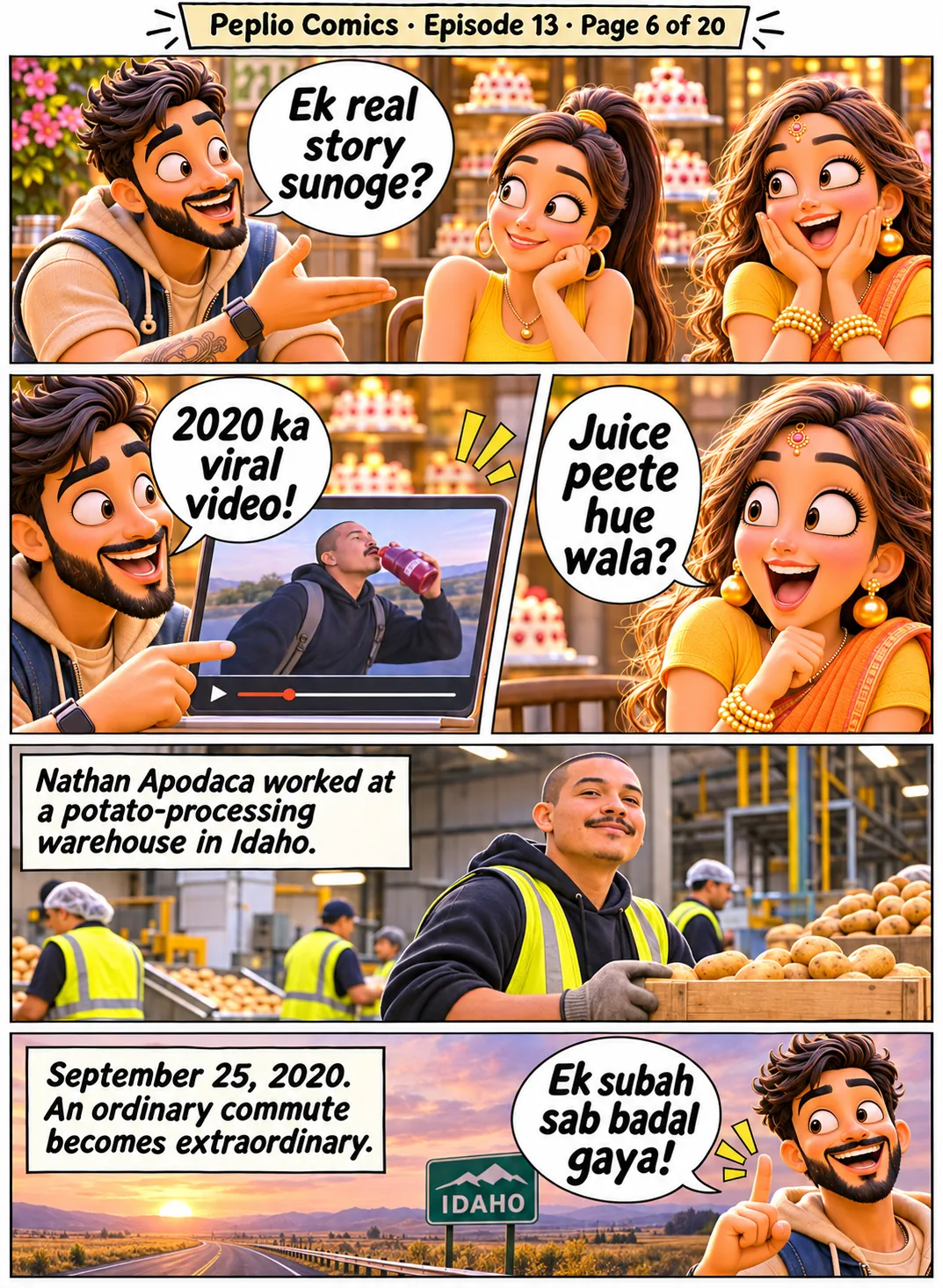
Sougan has a true story about Ocean Spray viral marketing. Nathan Apodaca worked at a potato warehouse in Idaho. On September 25, 2020, an ordinary commute turned into something nobody expected.
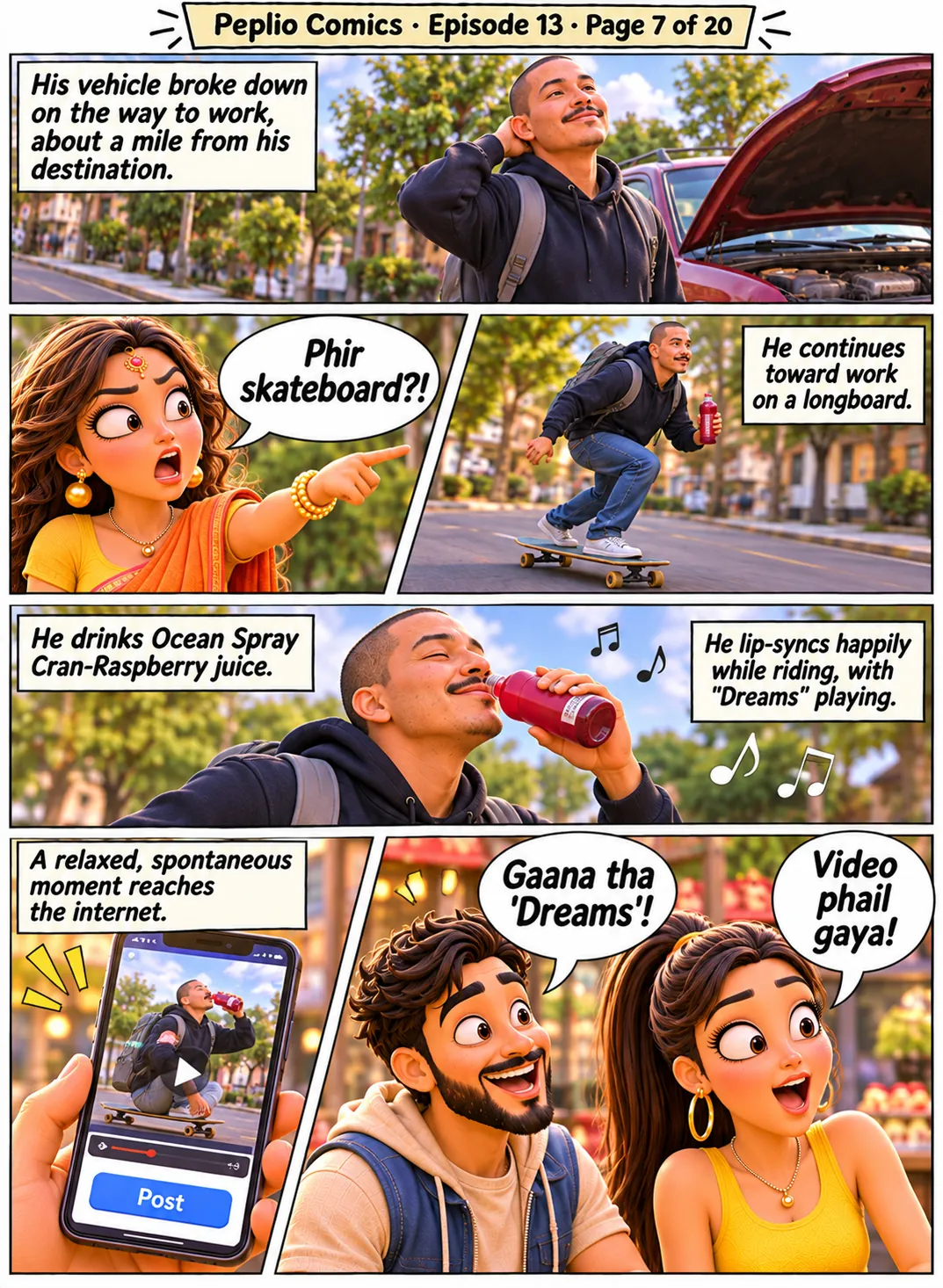
His car broke down on the way to work, so he jumped on his longboard, sipped Ocean Spray Cran-Raspberry juice and lip-synced to Fleetwood Mac's Dreams. He posted the relaxed clip on TikTok. Nobody planned it, and that is why the Ocean Spray viral marketing story is so useful for small shops.
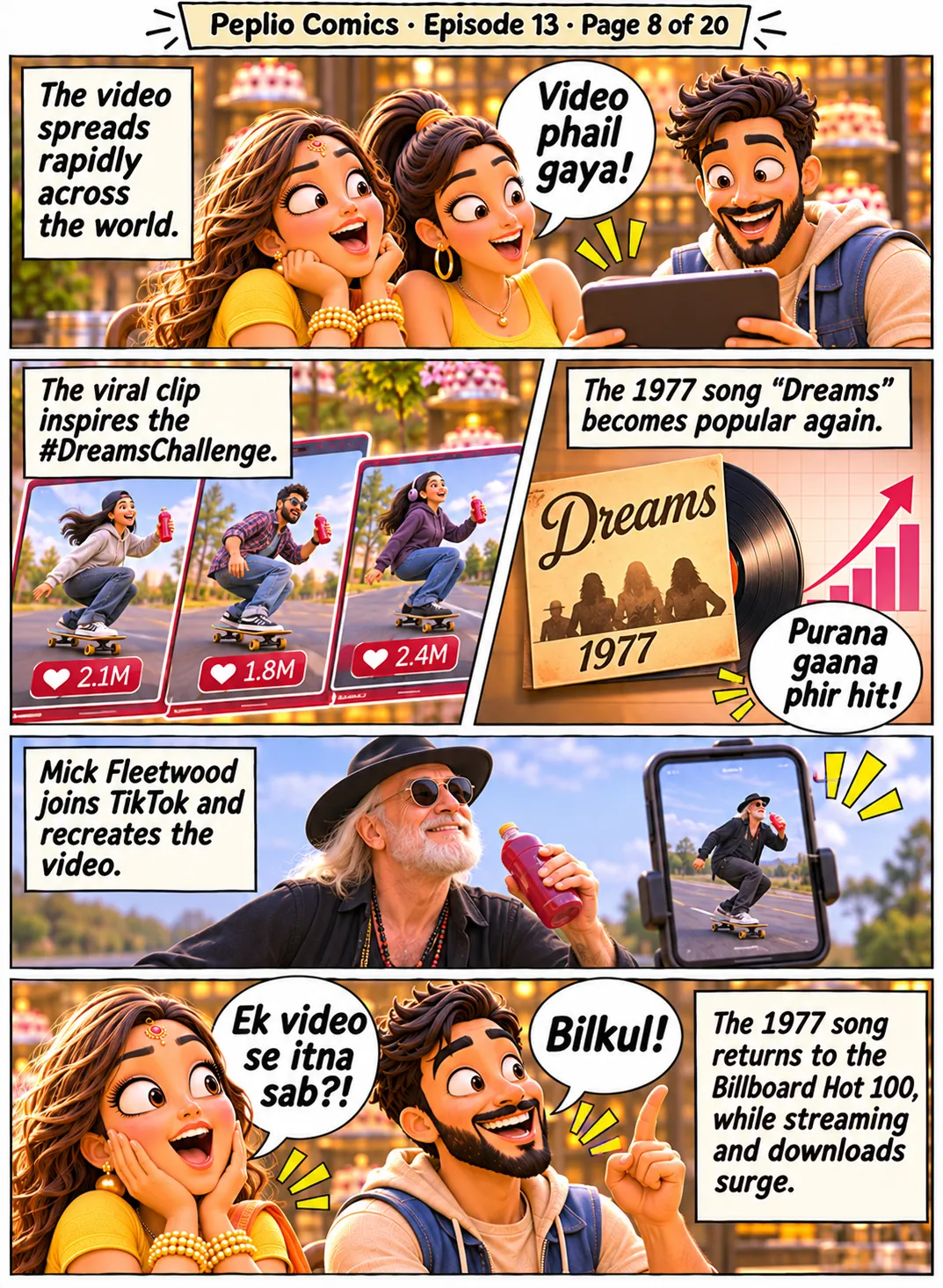
The clip spread fast. Thousands copied it in the #DreamsChallenge, the 1977 song climbed the charts again, and Mick Fleetwood himself joined TikTok to recreate the video. The brand had not done anything yet. The Ocean Spray viral marketing part was still to come.
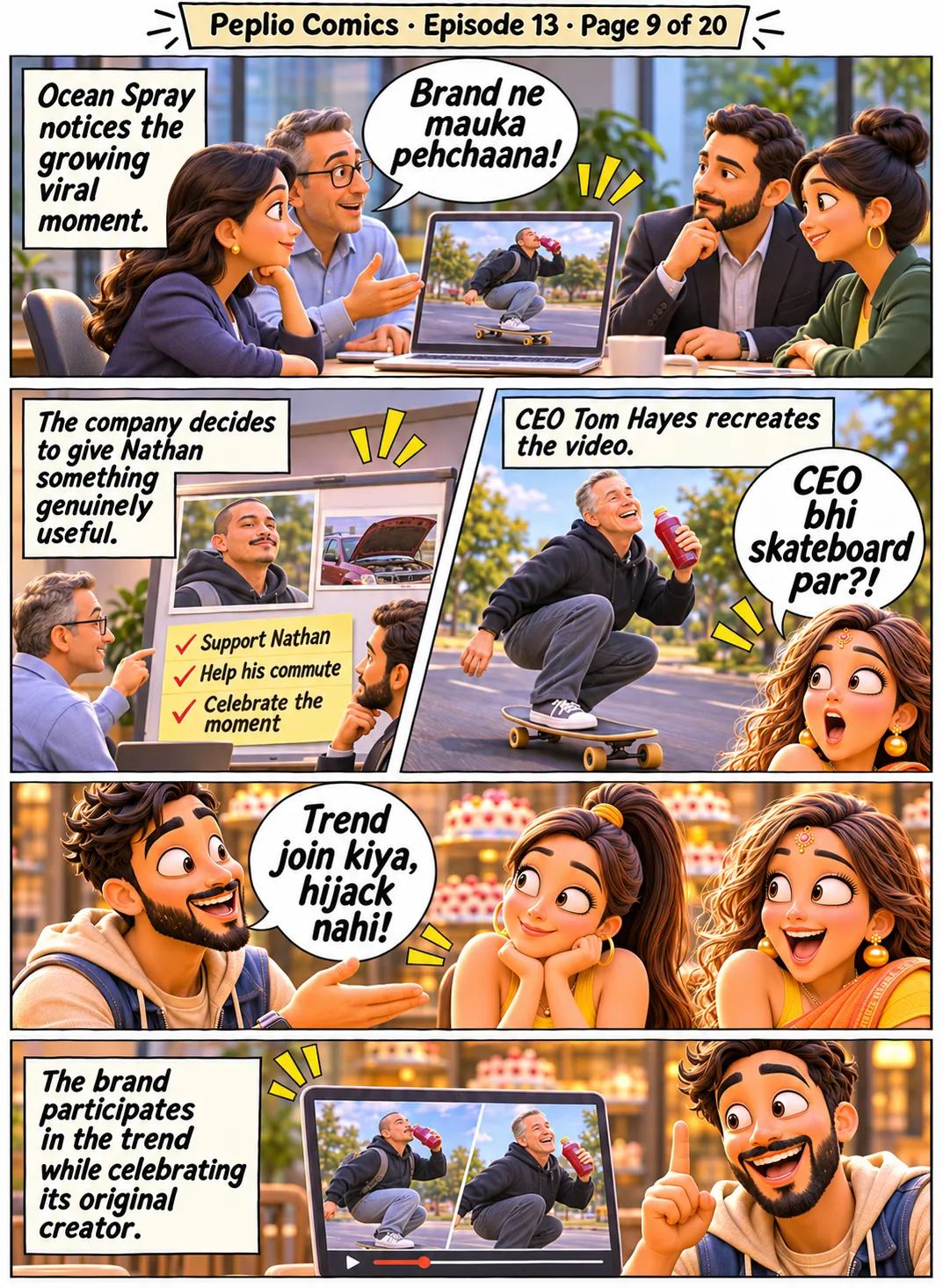
Ocean Spray noticed the moment. Instead of an ad, the brand decided to do something genuinely useful for Nathan, and CEO Tom Hayes recreated the skateboard video himself. Sougan's point: join the trend, don't hijack it. That choice is the heart of Ocean Spray viral marketing.
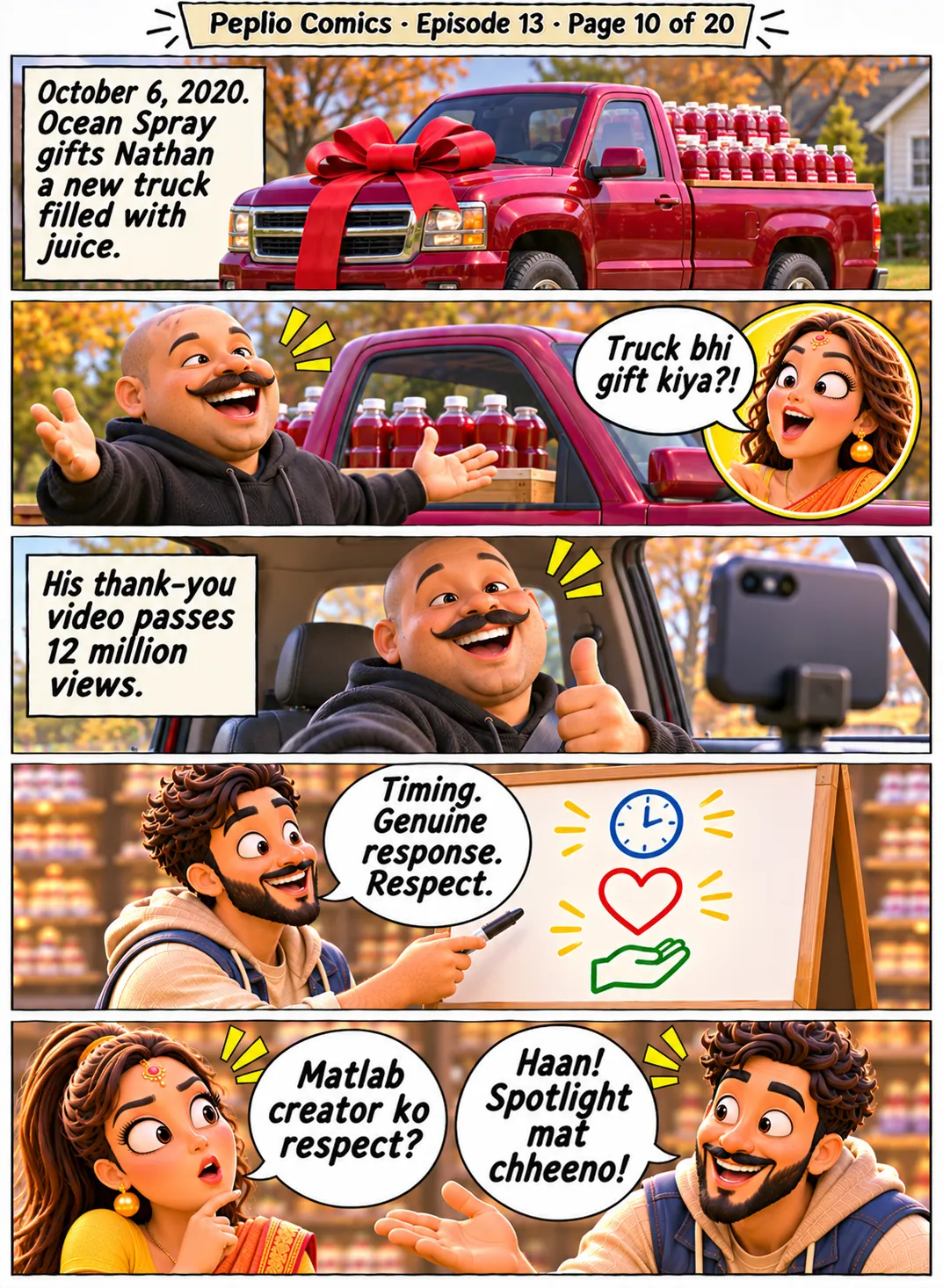
In early October 2020 the company surprised Nathan with a cranberry-red truck full of juice. His thank-you video passed 12 million views. Sougan sums it up: timing, a genuine response and respect for the creator. That is Ocean Spray viral marketing in one line.
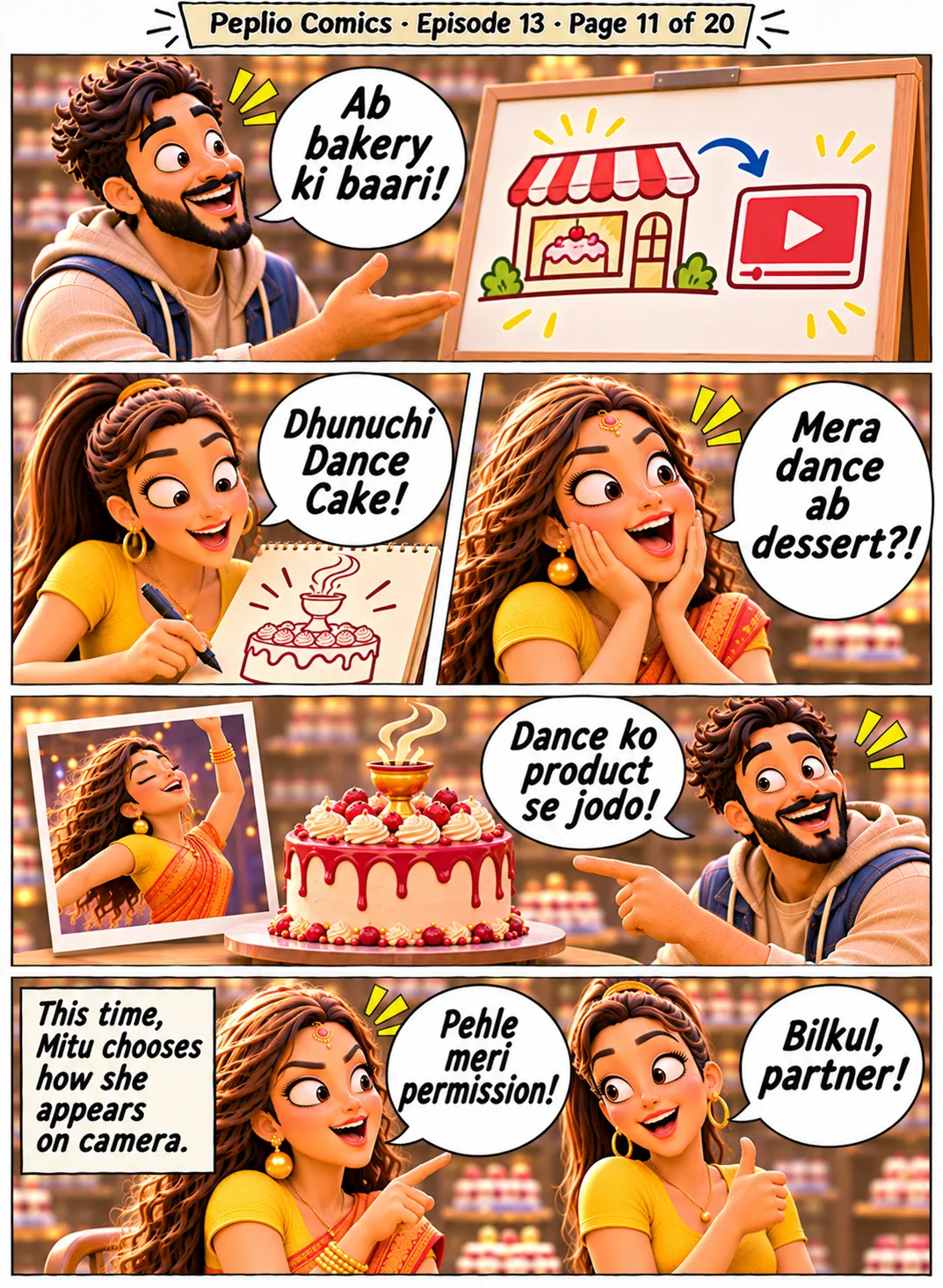
Now it's the bakery's turn. Seema sketches a Dhunuchi Dance Cake inspired by the reel. Sougan says to connect the dance to a product. Mitu agrees, as long as she chooses how she appears on camera. Now the bakery tries its own small version of Ocean Spray viral marketing.
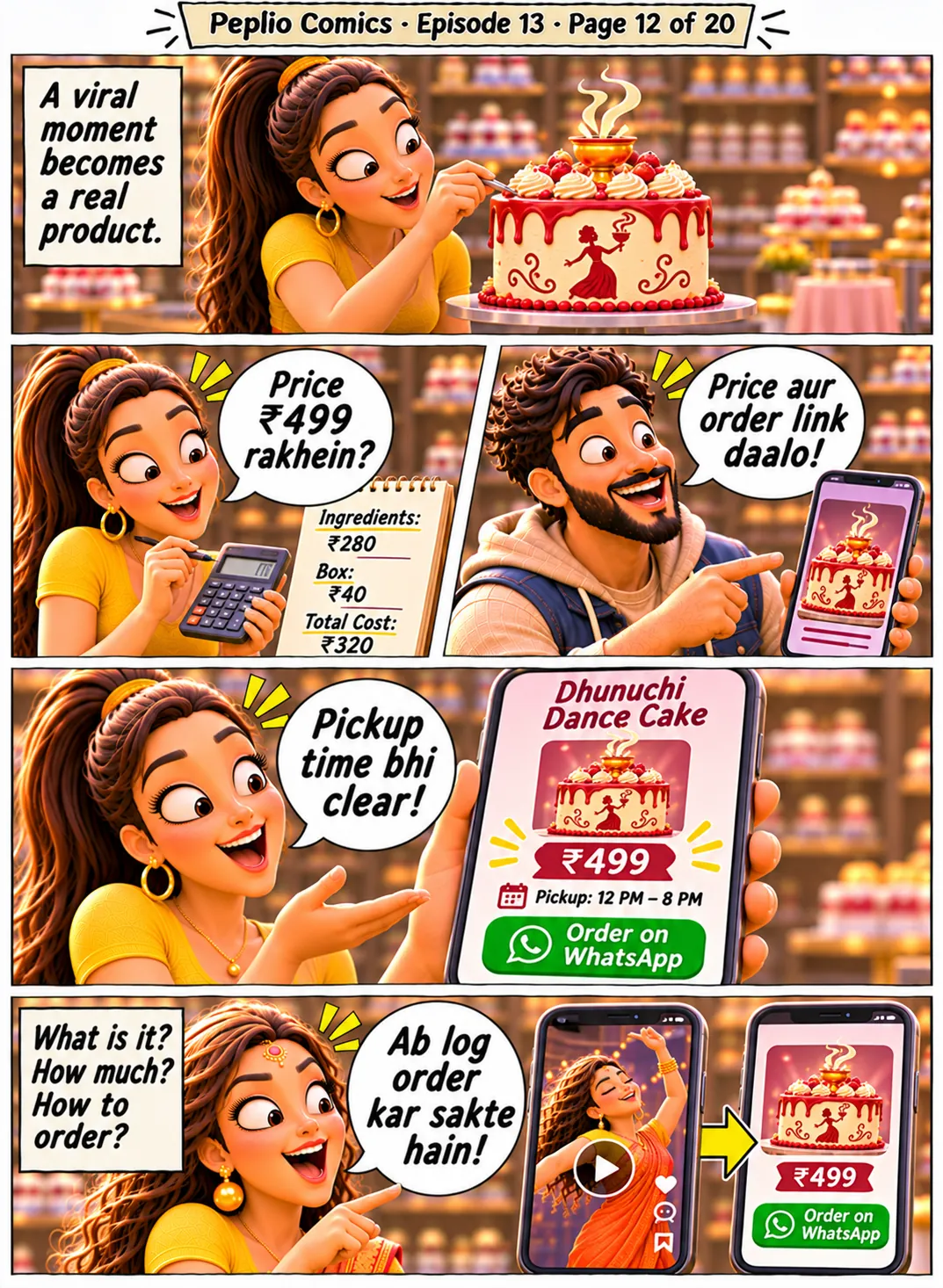
Seema works out the cost of ingredients and boxes and sets the price at ₹499. The post answers three questions: what is it, how much is it, and how do I order. Now people can actually buy.
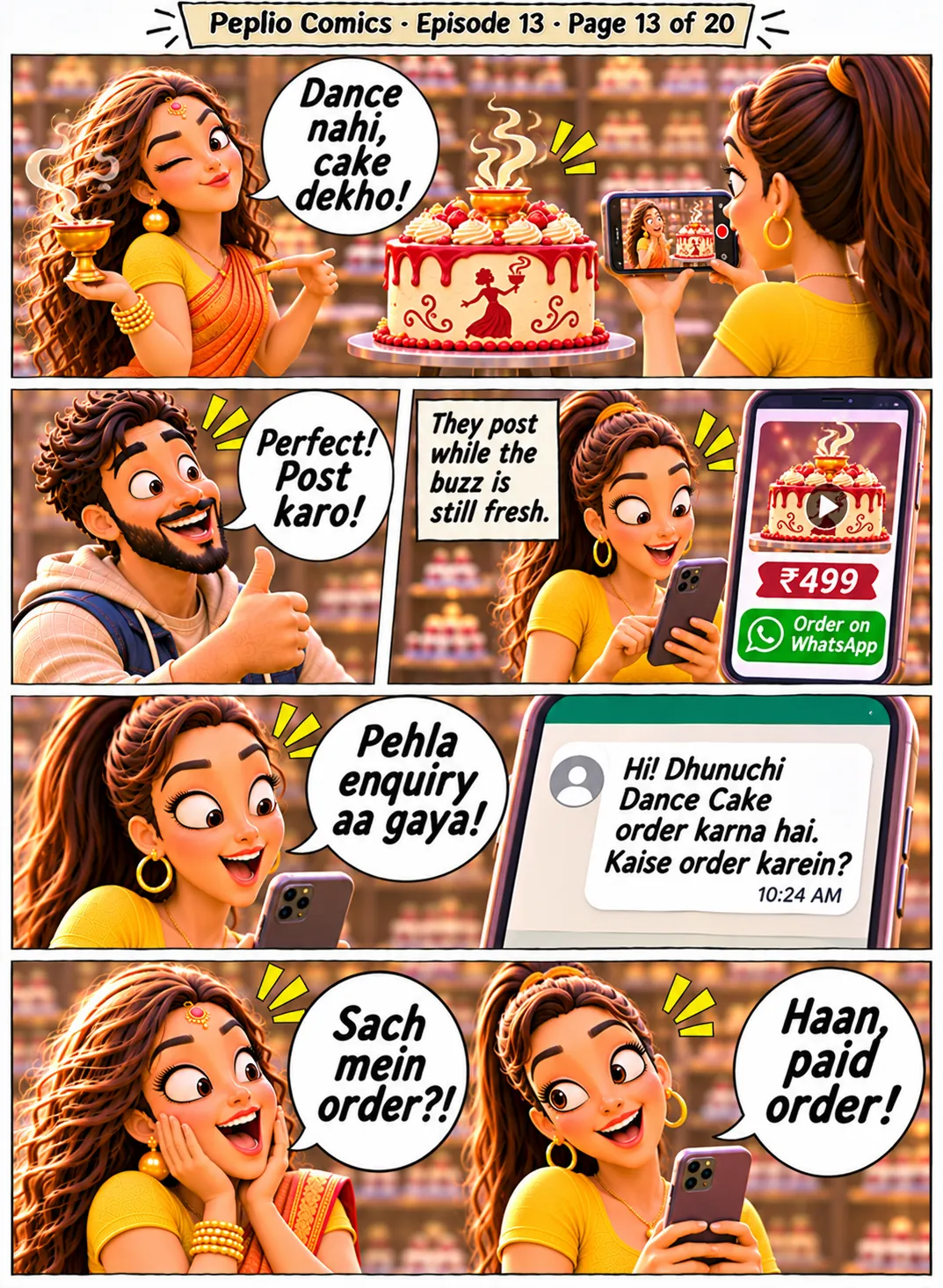
They post a follow-up video while the buzz is still fresh: no dancing, just Mitu and the cake. The first enquiry arrives on WhatsApp, and soon the first paid order is confirmed.
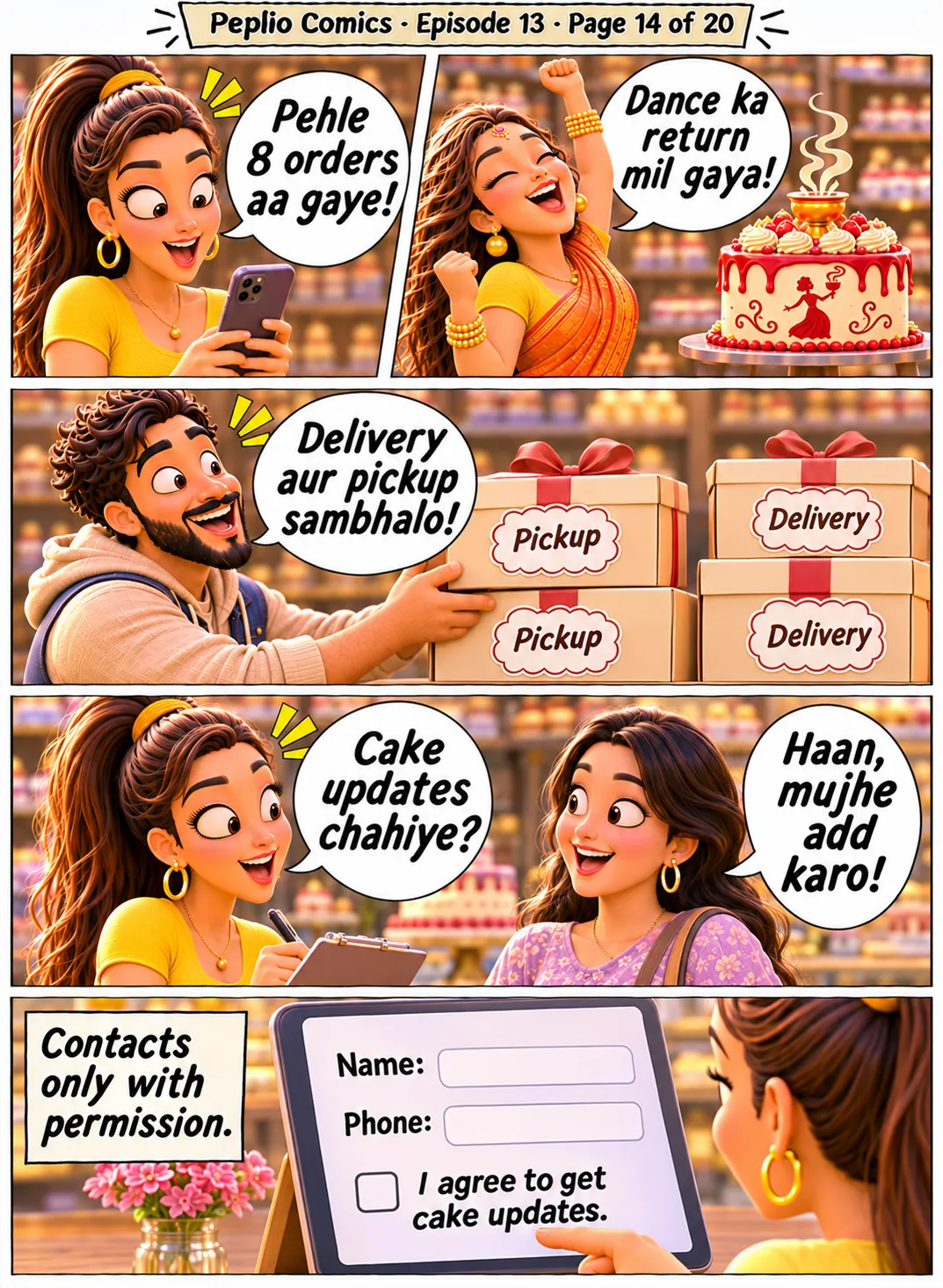
Eight orders come in. Sougan helps with pickups and deliveries. Seema asks happy customers if they want cake updates and adds them only when they tick the consent box.

Noisy Aunty storms in demanding royalty as the video's producer and settles for a pastry. Outside, Paanwala tries to go viral by balancing a juice bottle on his head. It does not end well.
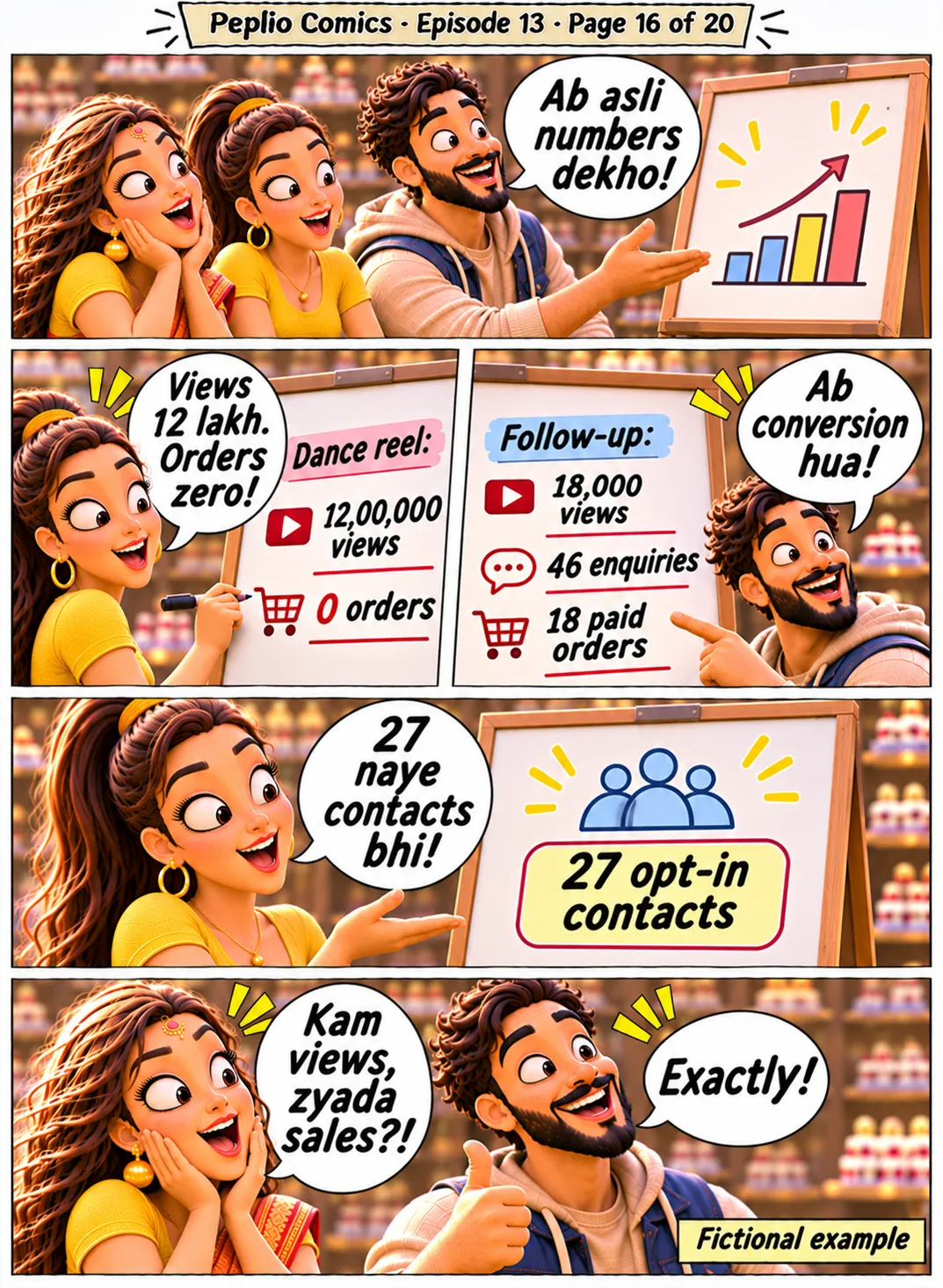
Sougan puts the numbers side by side. The dance reel had 12 lakh views and zero orders. The follow-up had only 18,000 views but brought 46 enquiries, 18 paid orders and 27 opted-in contacts. These are fictional numbers for the story. This is the Ocean Spray viral marketing lesson in numbers.
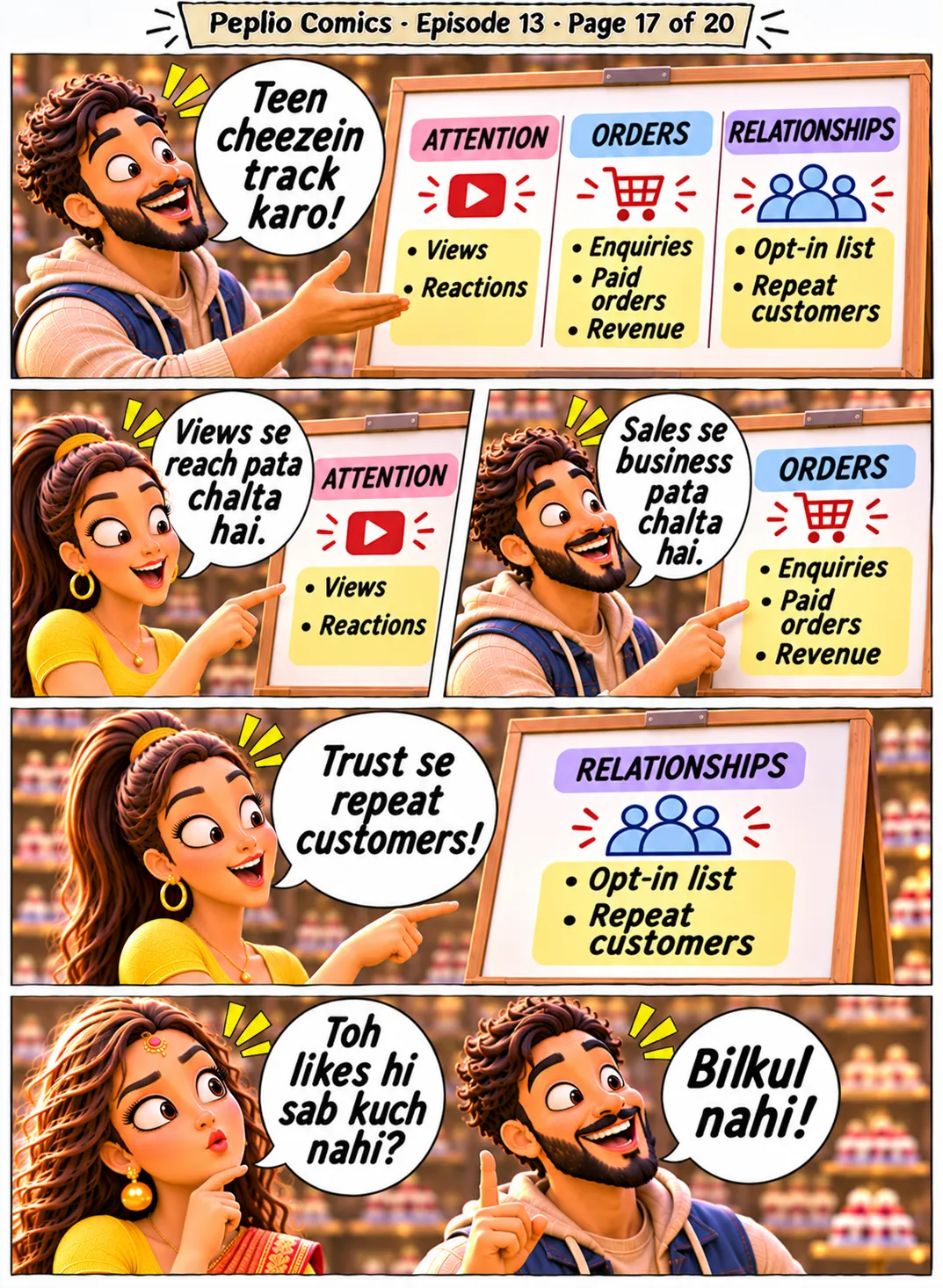
Sougan splits the whiteboard into attention, orders and relationships. Views show reach, sales show the business, and trust brings repeat customers. Likes alone are not everything.

Two days later the buzz is fading. Mitu's new posts get far fewer views and nobody wants a selfie. But Seema points out the bakery still has new customers and a contact list.
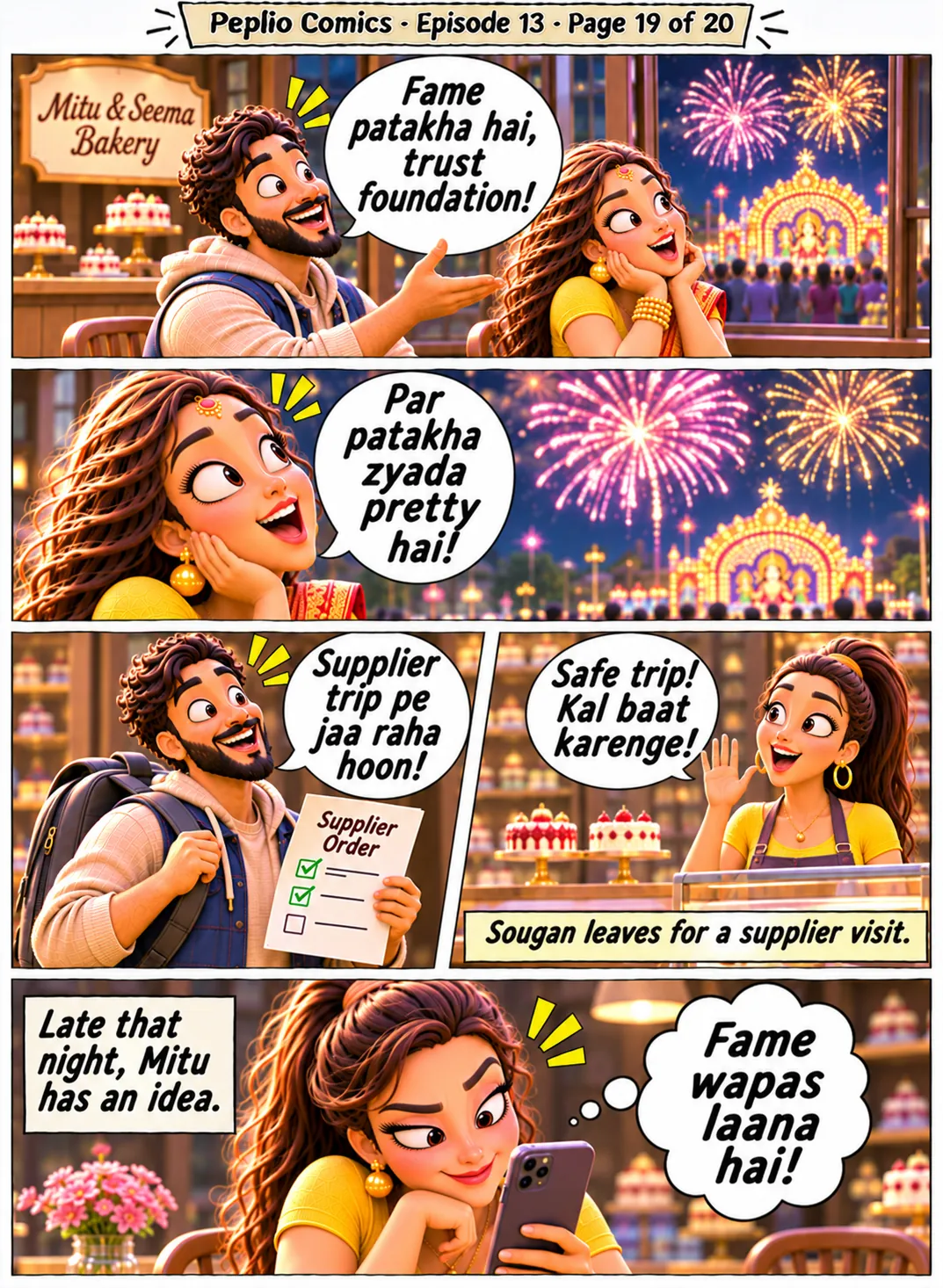
Watching the Pujo fireworks, Sougan says fame is a firecracker and trust is the foundation. Mitu thinks firecrackers are prettier. Sougan leaves for a supplier trip, and late that night Mitu decides to bring her fame back.
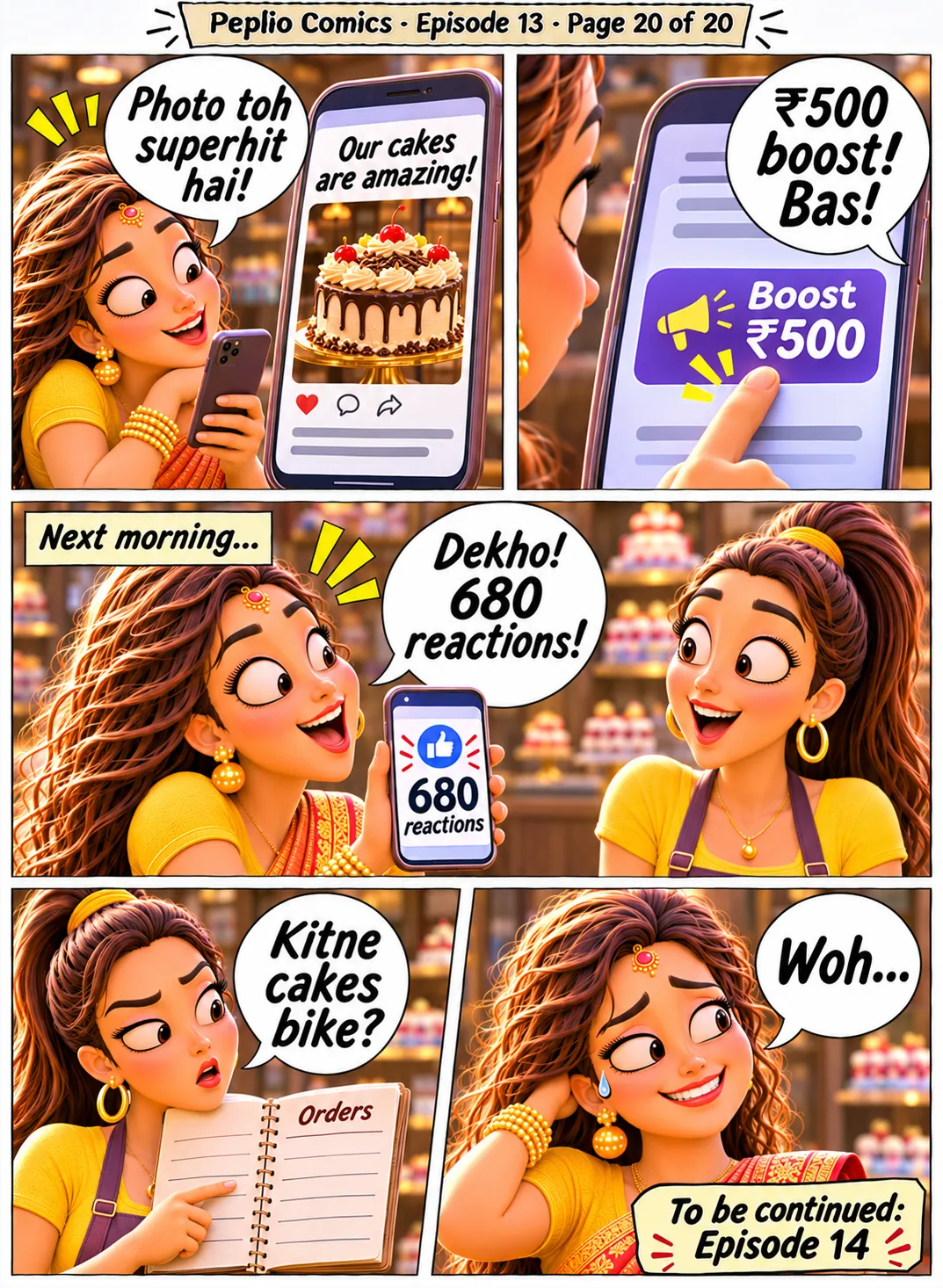
Late at night Mitu boosts a pretty cake photo for ₹500 with no price and no way to order. Next morning she proudly shows Seema 680 reactions. Seema asks how many cakes they sold. Mitu has no answer. To be continued in Episode 14.
End of Episode 13
Mitu paid ₹500 for 680 reactions. But how many cakes did they actually sell? Find out in Episode 14.
 Next up: Episode 14The ₹500 Ad That Almost Ruined the Bakery | Peplio Comic Episode 14680 likes, ₹500 spent, zero cakes sold. What went wrong?Read the next episode
What we learned today
- Views are attention, orders are the business result
- Act within days while the buzz is still hot
- Connect the viral moment to a product people can buy
- Every post needs a price and one easy way to order
- Collect customer contacts only with permission
- Viral fame fades, customer trust lasts
- Ocean Spray viral marketing rule: join the moment, never hijack it
Learn it and use it
Read the story and dialogue
Pujo eve. Seema shows Mitu a reel of her accidental dhunuchi dance with 12 lakh views. Mitu is horrified, Sougan calls her a superstar, and Mitu wants to know one thing: who filmed it?
Mitu marches through the pandal crowd looking for the culprit. Noisy Aunty proudly admits she filmed it, because hiding talent is a sin. But who uploaded it? The reel is on a big local community page.
Paanwala uploaded it. The comments are full of love for the dance queen and the bakery wali didi. Strangers recognise Mitu everywhere and Paanwala offers his new celebrity a free paan.
Next morning the viral crowd arrives at the bakery, but everyone wants a selfie with Mitu. Nobody buys a cake. Seema says it plainly: lots of selfies, zero sales.
Seema writes the numbers down: 12 lakh views, zero orders from the video. Mitu says at least the fans came. Seema reminds her that fans do not pay the bills, and calls Sougan.
Sougan has a true story about Ocean Spray viral marketing. Nathan Apodaca worked at a potato warehouse in Idaho. On September 25, 2020, an ordinary commute turned into something nobody expected.
His car broke down on the way to work, so he jumped on his longboard, sipped Ocean Spray Cran-Raspberry juice and lip-synced to Fleetwood Mac's Dreams. He posted the relaxed clip on TikTok. Nobody planned it, and that is why the Ocean Spray viral marketing story is so useful for small shops.
The clip spread fast. Thousands copied it in the #DreamsChallenge, the 1977 song climbed the charts again, and Mick Fleetwood himself joined TikTok to recreate the video. The brand had not done anything yet. The Ocean Spray viral marketing part was still to come.
Ocean Spray noticed the moment. Instead of an ad, the brand decided to do something genuinely useful for Nathan, and CEO Tom Hayes recreated the skateboard video himself. Sougan's point: join the trend, don't hijack it. That choice is the heart of Ocean Spray viral marketing.
In early October 2020 the company surprised Nathan with a cranberry-red truck full of juice. His thank-you video passed 12 million views. Sougan sums it up: timing, a genuine response and respect for the creator. That is Ocean Spray viral marketing in one line.
Now it's the bakery's turn. Seema sketches a Dhunuchi Dance Cake inspired by the reel. Sougan says to connect the dance to a product. Mitu agrees, as long as she chooses how she appears on camera. Now the bakery tries its own small version of Ocean Spray viral marketing.
Seema works out the cost of ingredients and boxes and sets the price at ₹499. The post answers three questions: what is it, how much is it, and how do I order. Now people can actually buy.
They post a follow-up video while the buzz is still fresh: no dancing, just Mitu and the cake. The first enquiry arrives on WhatsApp, and soon the first paid order is confirmed.
Eight orders come in. Sougan helps with pickups and deliveries. Seema asks happy customers if they want cake updates and adds them only when they tick the consent box.
Noisy Aunty storms in demanding royalty as the video's producer and settles for a pastry. Outside, Paanwala tries to go viral by balancing a juice bottle on his head. It does not end well.
Sougan puts the numbers side by side. The dance reel had 12 lakh views and zero orders. The follow-up had only 18,000 views but brought 46 enquiries, 18 paid orders and 27 opted-in contacts. These are fictional numbers for the story. This is the Ocean Spray viral marketing lesson in numbers.
Sougan splits the whiteboard into attention, orders and relationships. Views show reach, sales show the business, and trust brings repeat customers. Likes alone are not everything.
Two days later the buzz is fading. Mitu's new posts get far fewer views and nobody wants a selfie. But Seema points out the bakery still has new customers and a contact list.
Watching the Pujo fireworks, Sougan says fame is a firecracker and trust is the foundation. Mitu thinks firecrackers are prettier. Sougan leaves for a supplier trip, and late that night Mitu decides to bring her fame back.
Late at night Mitu boosts a pretty cake photo for ₹500 with no price and no way to order. Next morning she proudly shows Seema 680 reactions. Seema asks how many cakes they sold. Mitu has no answer. To be continued in Episode 14.
Sougan's TakeWhat this episode teaches, in plain words
Going viral opens the door for a few days. A product, a price and an order button are what walk customers through it.
Mitu's accidental dhunuchi dance reel gets 12 lakh views during Durga Puja, but the bakery sells nothing from it. Sougan explains the real Ocean Spray viral marketing story from 2020, then helps the bakery turn the buzz into a Dhunuchi Dance Cake with a clear price, a WhatsApp order button and a customer list built with permission.
I run digital marketing for a chemical company in Durgapur, and every festival season I watch a local shop go viral for something funny and then sell nothing from it. This comic is about that exact gap, and about the Ocean Spray viral marketing story that shows what to do in the few days a viral moment lasts.
Read all 20 pages below. It picks up right where Episode 12 ended. If you are new, catch up on all Peplio comic episodes first.
Went Viral but No Sales? Connect the Moment to a Product
Mitu's reel had 12 lakh views but sold nothing, because the video said nothing about the bakery. Views are attention, not customers. The fix was a product that grew out of the moment, the Dhunuchi Dance Cake, so the people who loved the reel had something to buy. For more on turning posts into real buyers, read my guide on growing on Instagram the right way.
What Ocean Spray Viral Marketing Got Right
Ocean Spray did not create the video. Nathan Apodaca did, on September 25, 2020. What the brand did well was speed and tone: within about two weeks Mick Fleetwood joined TikTok to recreate it, Ocean Spray CEO Tom Hayes did the same, and the company surprised Apodaca with a cranberry-red truck full of juice. The response felt warm and genuine, not like an ad, and his thank-you video got more than 12 million views. Read the reports from CBS News, Marketing Dive, Fortune, GBH.
Give People a Clear Next Step
Every post that follows a viral moment should answer three questions: what is it, how much does it cost, and how do I order. Seema's post had one cake, one price (₹499) and one button to order on WhatsApp. Without that, people enjoy the video and scroll on. Even Ocean Spray viral marketing only paid off because people could buy the juice in any store.
Collect Contacts Before the Buzz Fades
Viral attention fades in days. A big brand can wait for the next trend, but a small shop using Ocean Spray viral marketing ideas cannot. Seema used that short window to ask happy customers if they want cake updates, and saved only those who said yes. That list keeps working after the views drop. If you want steady traffic that does not depend on luck, see my honest comparison of SEO vs paid ads for small businesses.
Do Not Pay to Chase Likes
When the fame faded, Mitu boosted a pretty photo for ₹500 with no price and no order button. That buys reactions, not sales, and it is the opposite of Ocean Spray viral marketing. What happened next is the story of Episode 14: The ₹500 Ad That Almost Ruined the Bakery.
Most viral moments I see in Durgapur die the same way: lots of shares, lots of laughing emojis, and the shop owner still has no idea who the viewers were. The Ocean Spray viral marketing story works because the brand moved fast and stayed human. A small bakery can do the same with one festival product, one WhatsApp number and a list of customers who said yes to updates.
That is the end of Episode 13. The Ocean Spray viral marketing lesson is simple: when attention arrives by accident, move fast, stay genuine and give people something to buy. Mitu and Seema used Ocean Spray viral marketing thinking to sell their first Dhunuchi Dance Cakes, and then Mitu forgot it the moment the views dropped. Read Episode 14 to see what her ₹500 boost really bought.
Quick questions
What is the Ocean Spray viral marketing story?
In September 2020 Nathan Apodaca posted a TikTok of himself skateboarding to work while drinking Ocean Spray Cran-Raspberry and lip-syncing to Fleetwood Mac's Dreams after his car broke down. The video went viral, Ocean Spray's CEO recreated it, and the brand gifted Apodaca a cranberry-red truck full of juice.
Did Ocean Spray make the viral Dreams video?
No. Nathan Apodaca made it on his own. Ocean Spray only responded after the video spread, which is why the response felt genuine rather than like paid advertising.
My video went viral but I got no sales. Why?
Views show attention, not buying intent. If the video does not show what you sell, the price and how to order, people enjoy it and move on. Follow it up quickly with a clear offer and one easy way to buy.
How can a small business use a viral moment?
Act within a few days, link the moment to a real product, post a follow-up with price and an order button, and collect customer contacts with permission so you can reach them after the buzz fades. That is Ocean Spray viral marketing on a small budget.
How long does viral attention last?
Usually only a few days. New posts rarely get the same reach, so the time to turn attention into orders and saved contacts is right after the video spreads. Ocean Spray viral marketing worked because the brand responded within about two weeks.
Is Mitu's bakery story real?
No. Mitu and Seema's bakery, the 12 lakh view reel and the order numbers are fictional examples made to teach the lesson. The Ocean Spray story is real and the flashback pages are illustrated reconstructions.
Sources: CBS News, Marketing Dive, Fortune, GBH. The bakery story and its numbers are fictional. Flashback scenes are illustrated reconstructions and their dialogue is dramatized.