


Episode 15Mitu & Seema Bakery
Order Pe Order, Cake Out of Order! | Peplio Comic Episode 15
Previously on Peplio
In Episode 14, Seema fixed the bakery's ad with a clear ₹499 offer and a WhatsApp button. Now that ad works a little too well.
Read the previous episode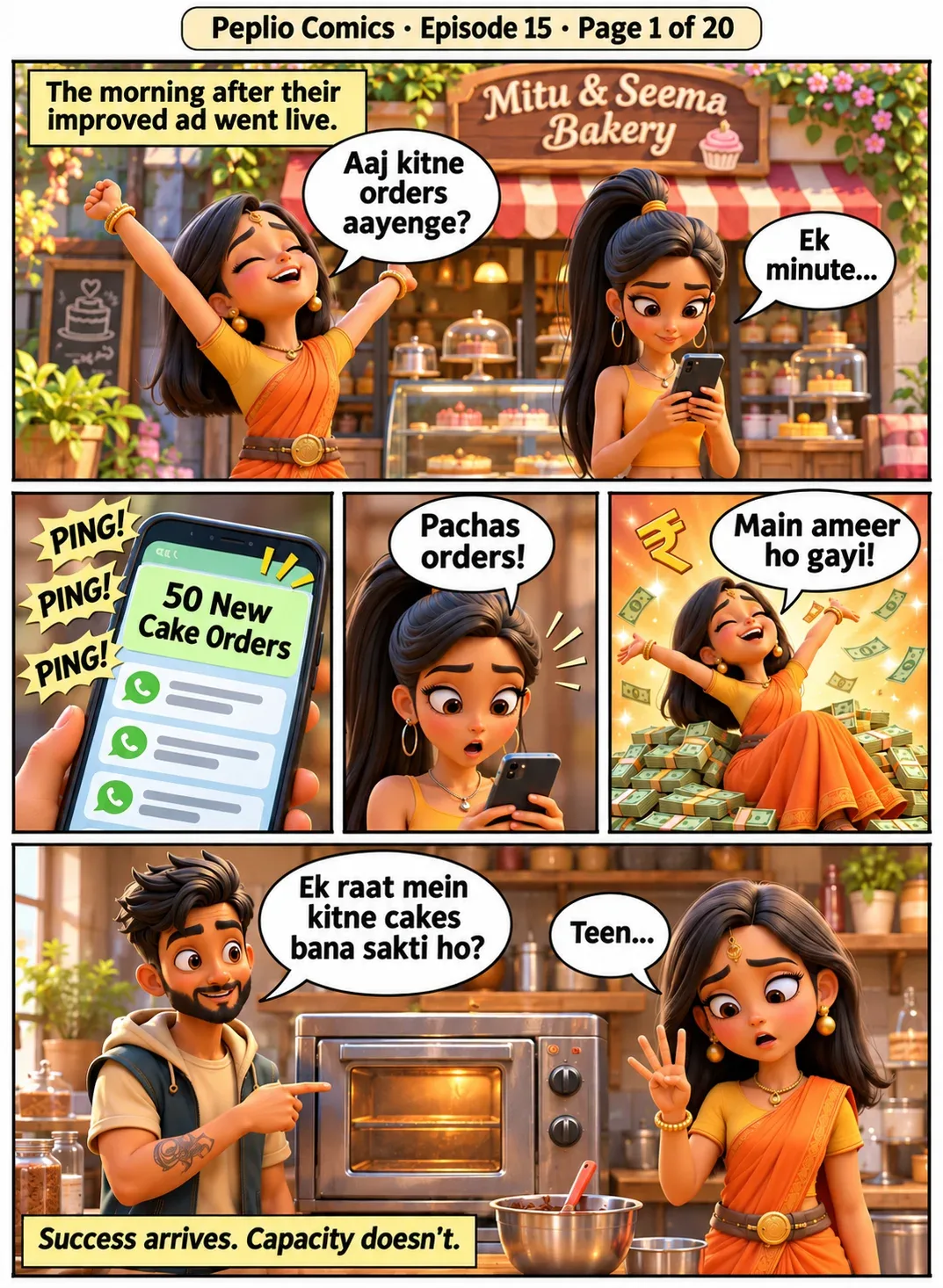
The morning after their improved ad went live, Seema finds 50 new chocolate cake orders on WhatsApp. Mitu dreams of a mountain of money, until Sougan asks how many cakes she can bake in one night. Three. It is the bakery version of the Popeyes chicken sandwich marketing problem.
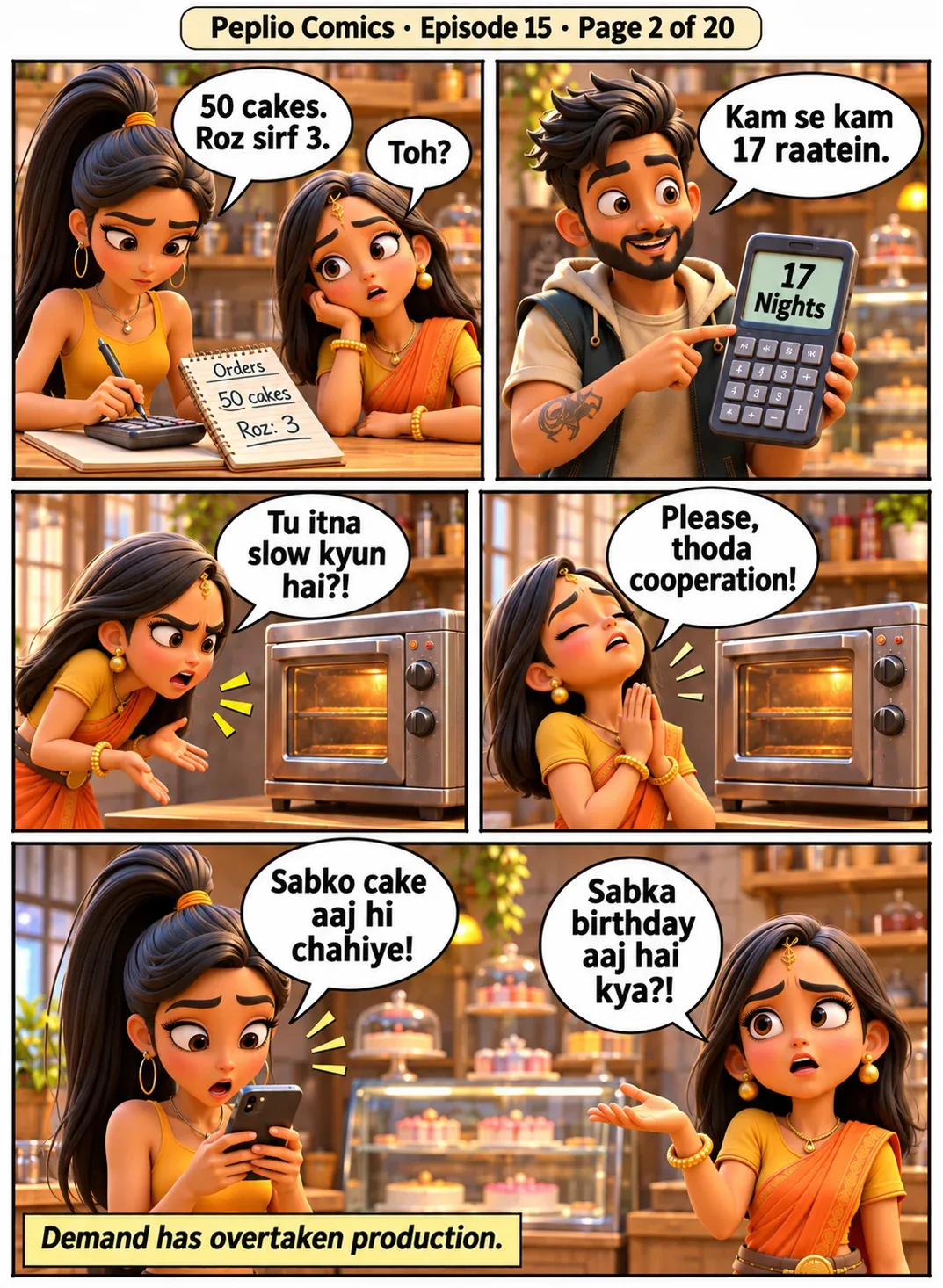
Seema does the maths: 50 cakes at 3 a night means at least 17 nights. Mitu scolds her oven, then begs it to cooperate. Every customer wants their cake today. Big brands hit the same wall, as the Popeyes chicken sandwich marketing story will show.
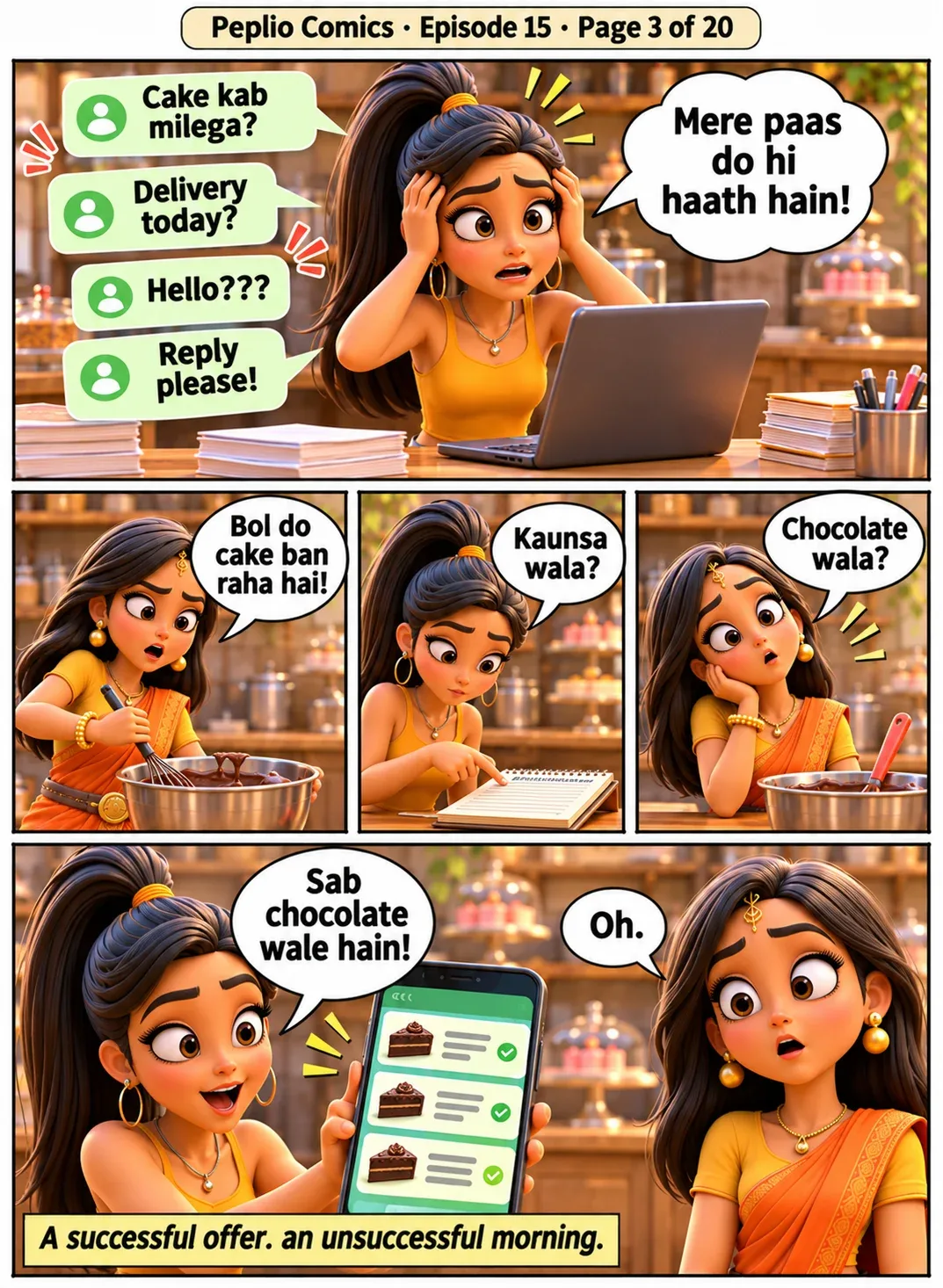
Seema is buried in messages asking when the cake will arrive. Mitu says to reply that the cake is being made, but which one? All 50 orders are for chocolate cake.
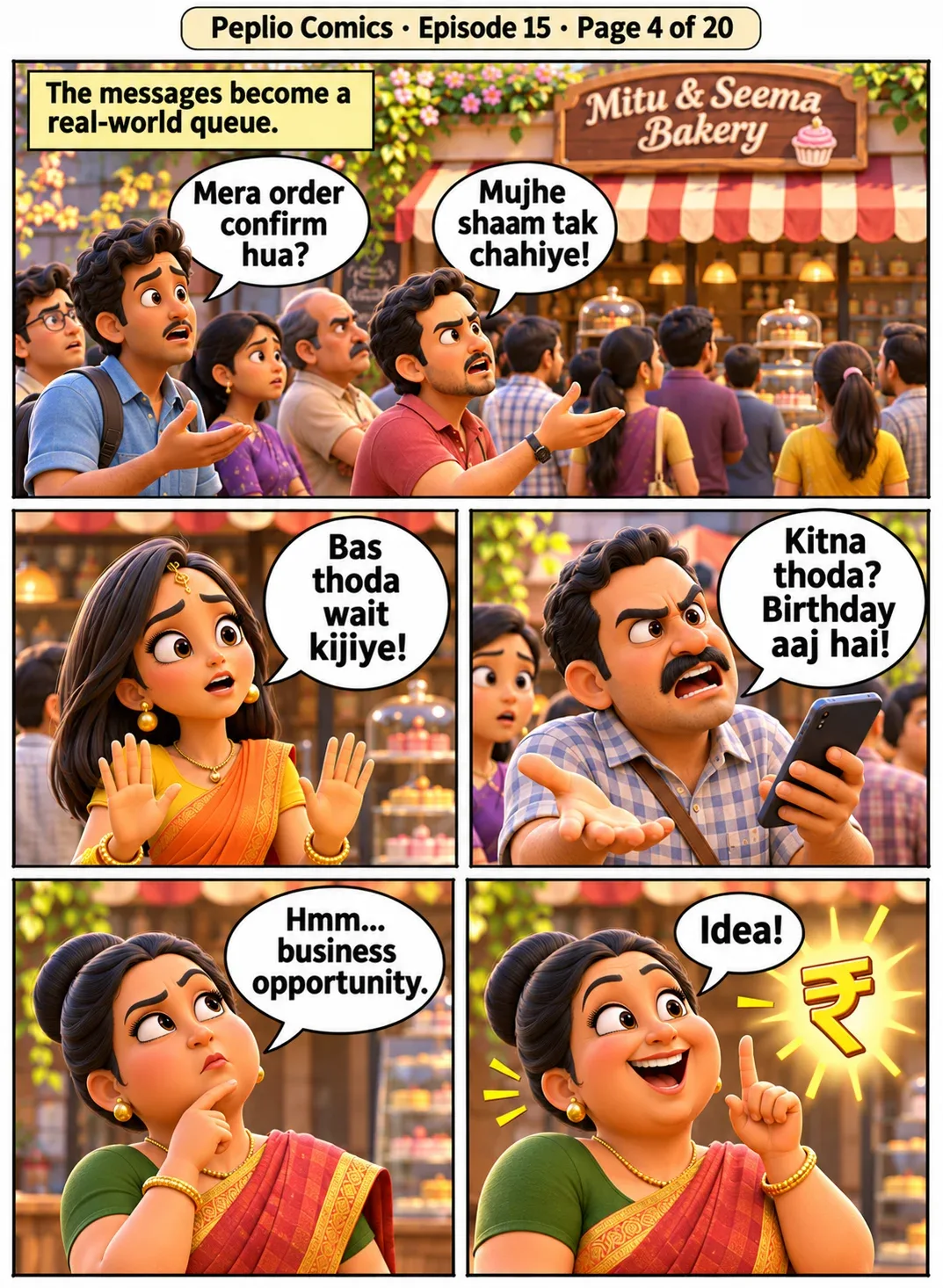
The messages turn into a real queue outside the bakery. One customer's birthday is today. Watching the crowd, Noisy Aunty strokes her chin and gets an idea.
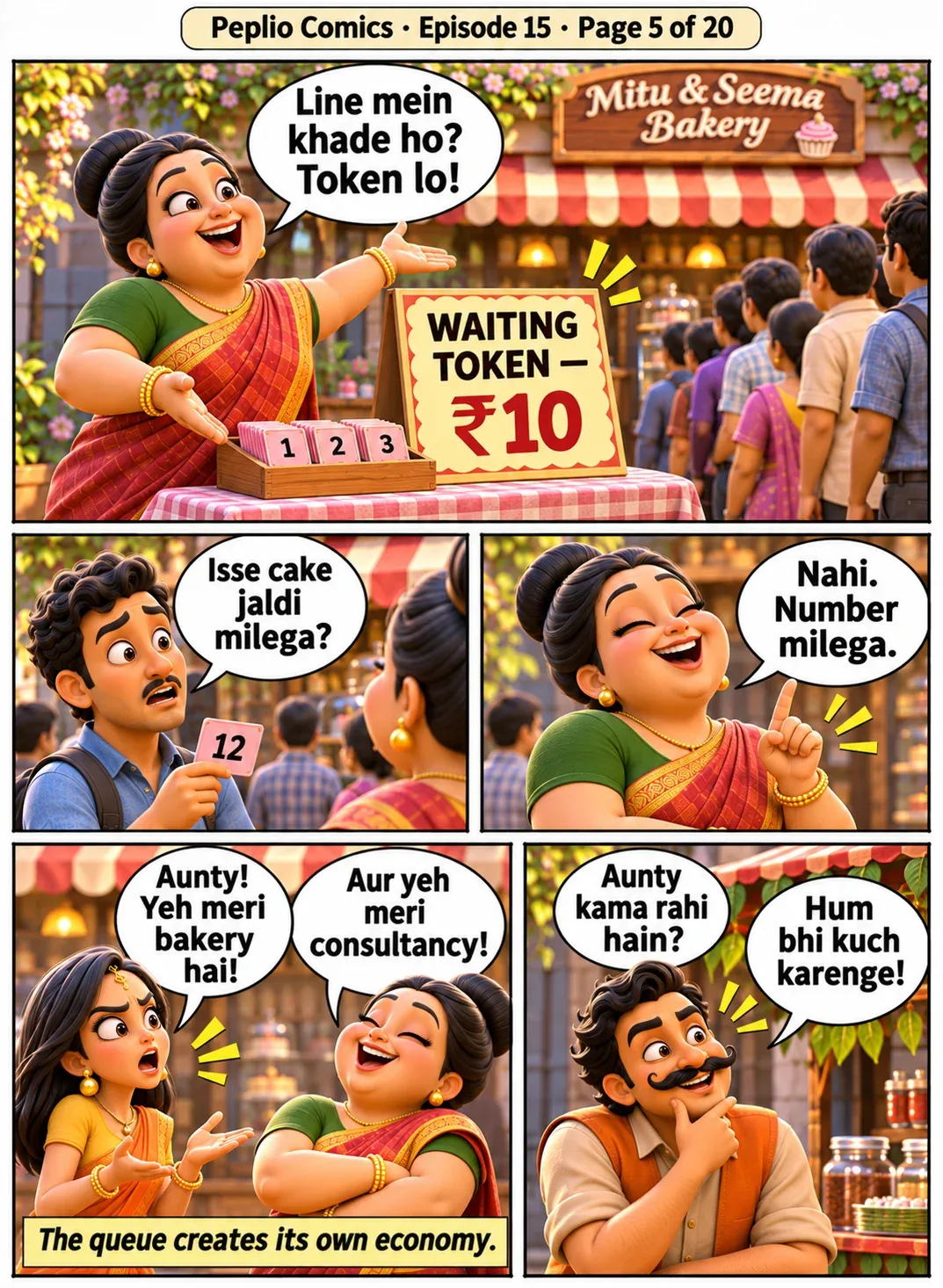
Noisy Aunty sets up a table selling ₹10 waiting tokens. They do not make the cake come faster, just give you a number. Mitu protests, Aunty calls it consultancy, and Paanwala decides he wants a share too.
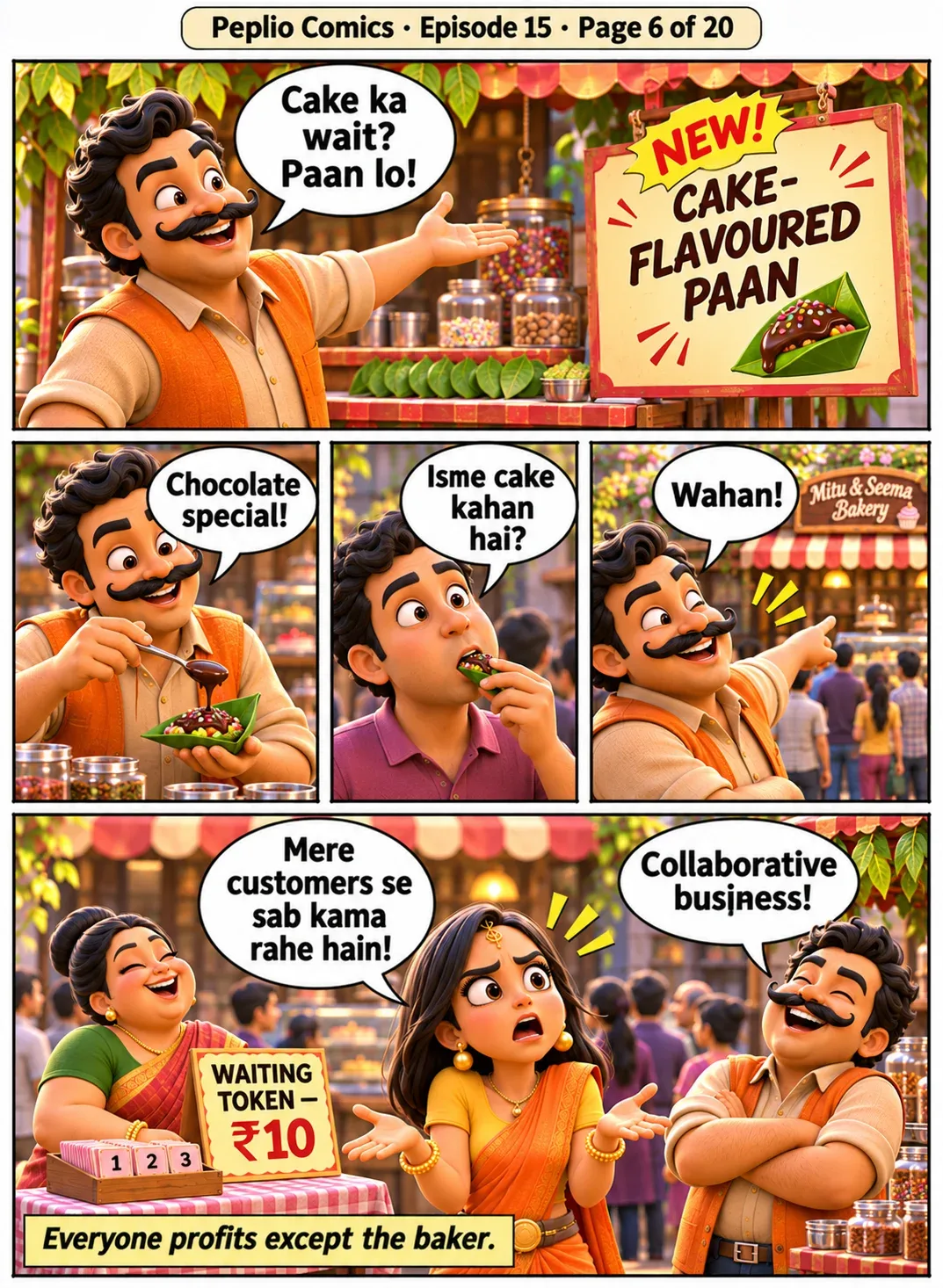
Paanwala launches cake-flavoured paan for people waiting in line. When a customer asks where the cake is, he points at the bakery. Mitu realises everyone is making money from her customers except her.
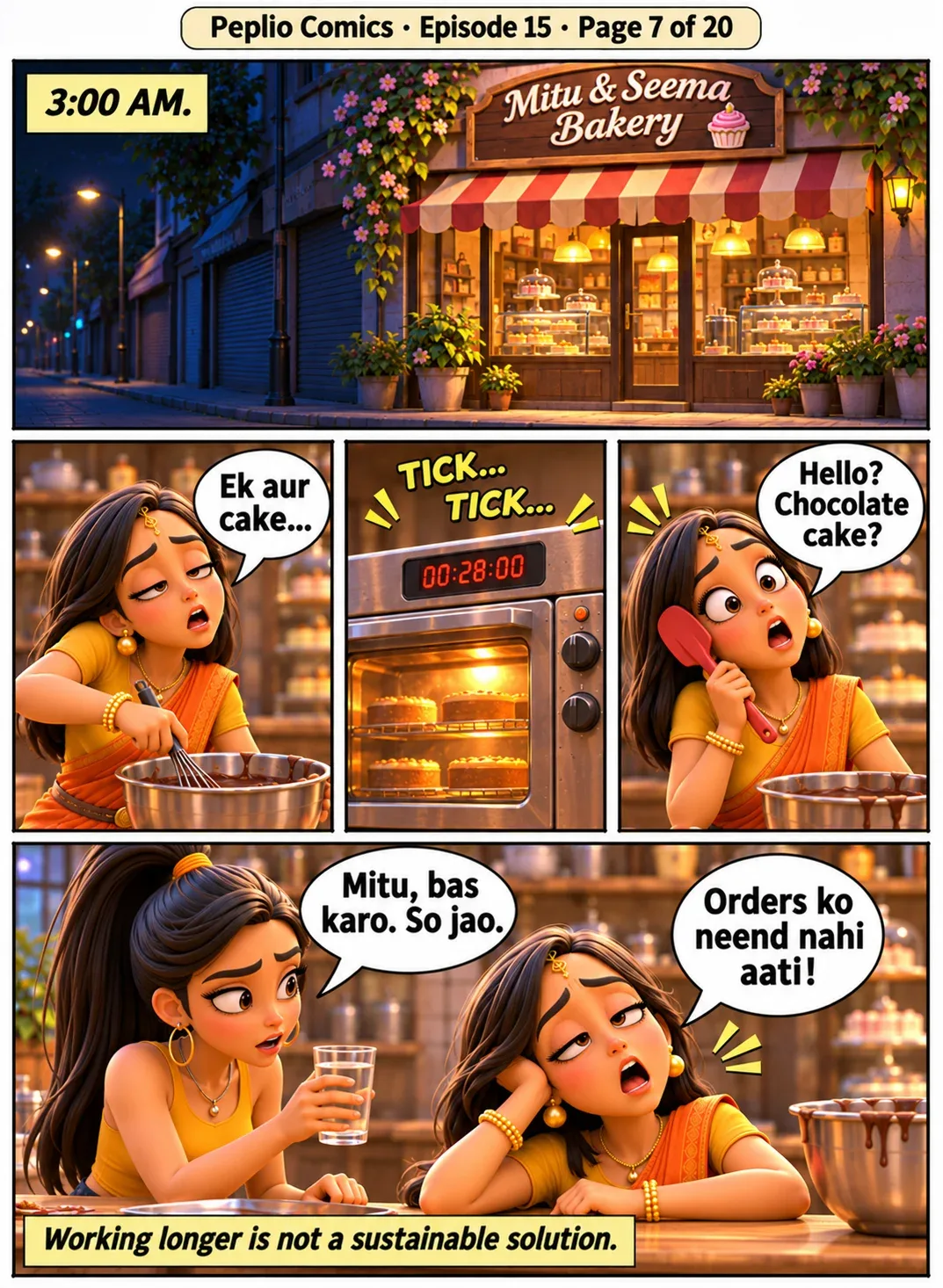
At 3 AM the only light on the street is the bakery. Mitu is half asleep, answering her phone with a spatula. Seema tells her to stop, but the orders never sleep. Working all night is not a plan, and Popeyes chicken sandwich marketing proves it.
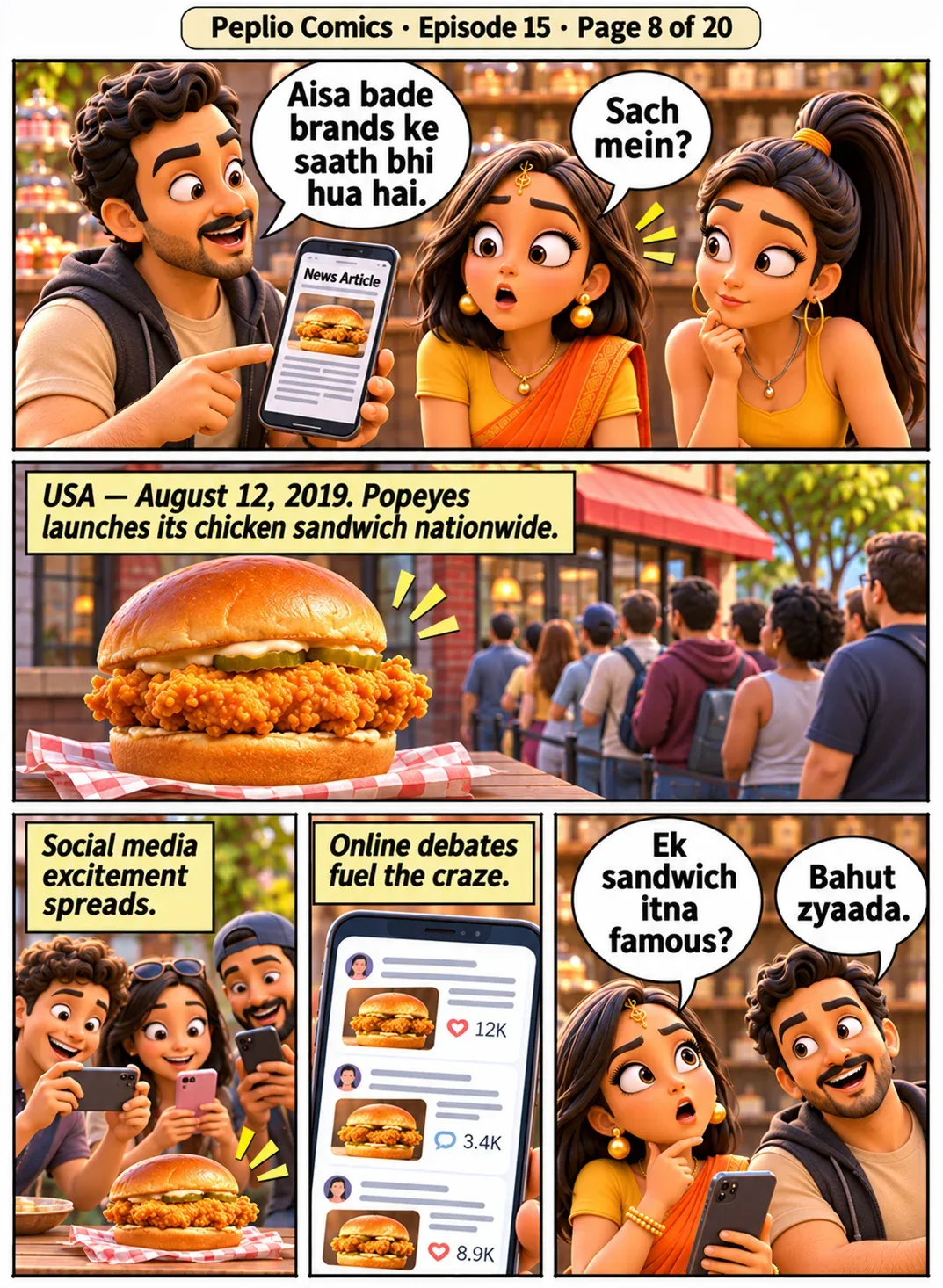
Sougan shows them that even big brands face this. On August 12, 2019, Popeyes launched its chicken sandwich across the US. People shared photos, argued online and the Popeyes chicken sandwich marketing buzz exploded.
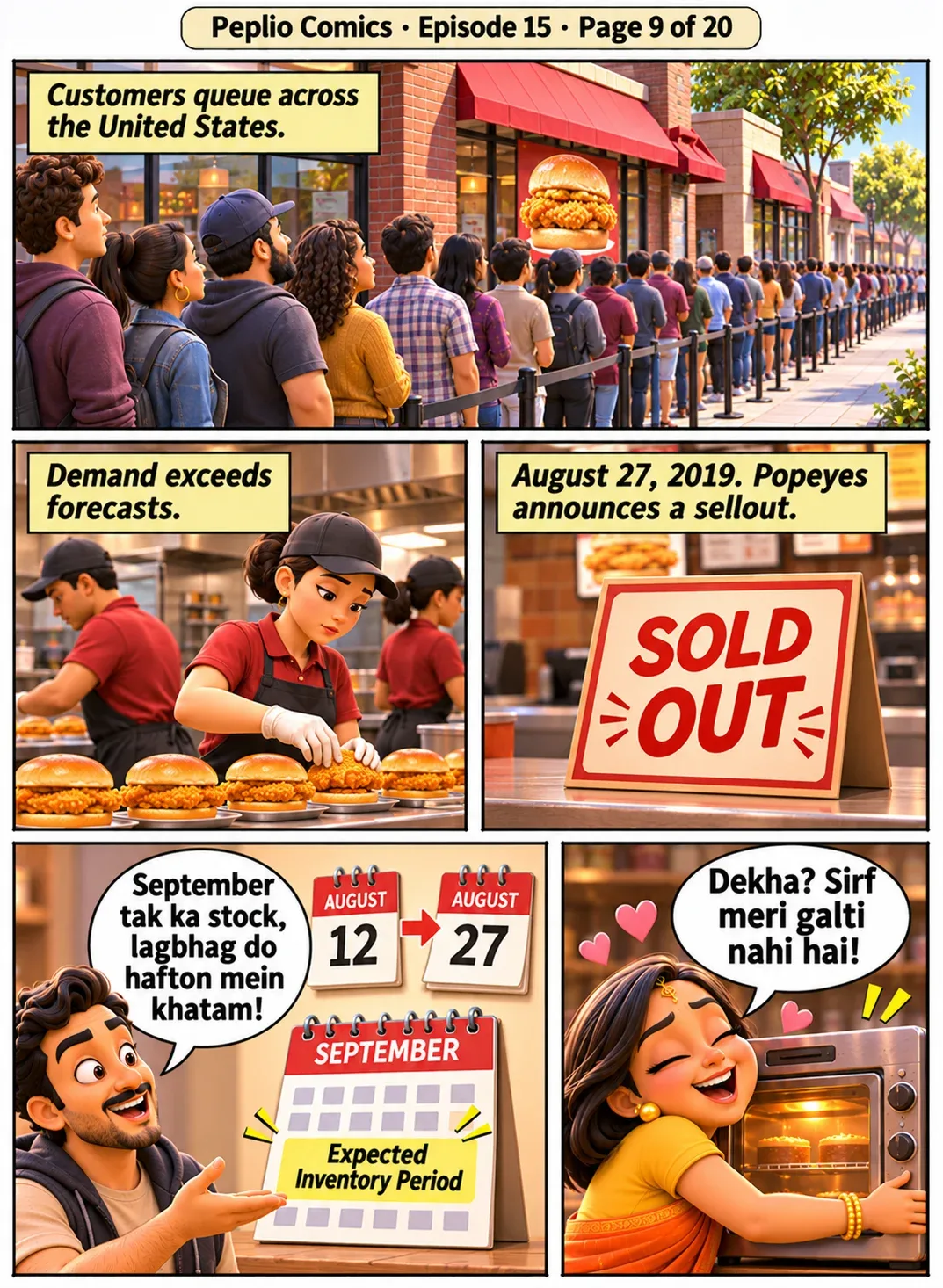
Queues stretched outside restaurants and demand beat every forecast. On August 27, 2019 Popeyes announced it had sold out. Supply meant to last until the end of September was gone in about two weeks. Mitu hugs her oven: it is not only her fault.
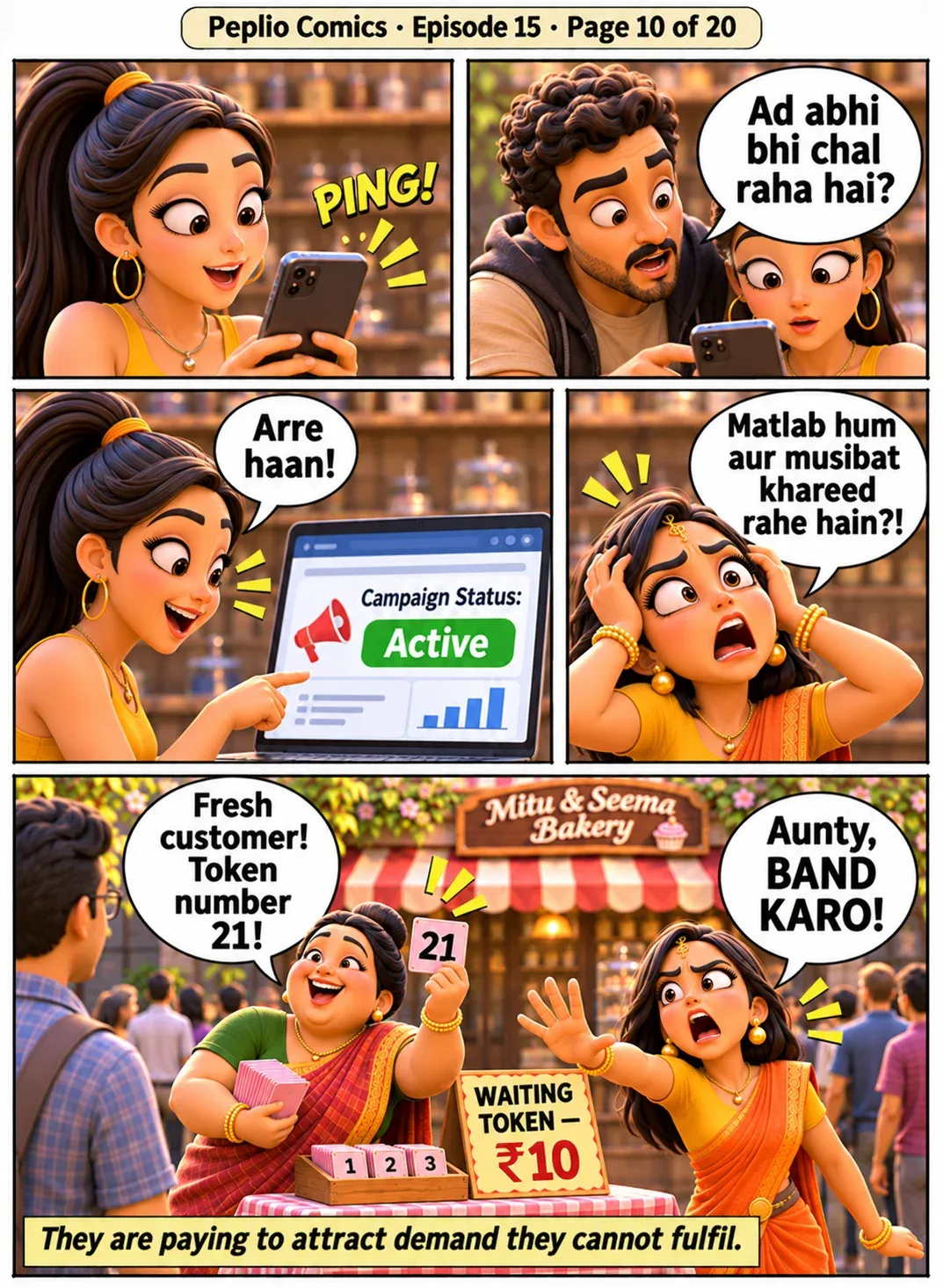
Another order pings in. Sougan asks if the ad is still running. It is. They are paying to attract demand they cannot fulfil, while Aunty gives out token number 21. This is exactly the mistake the Popeyes chicken sandwich marketing story warns about.
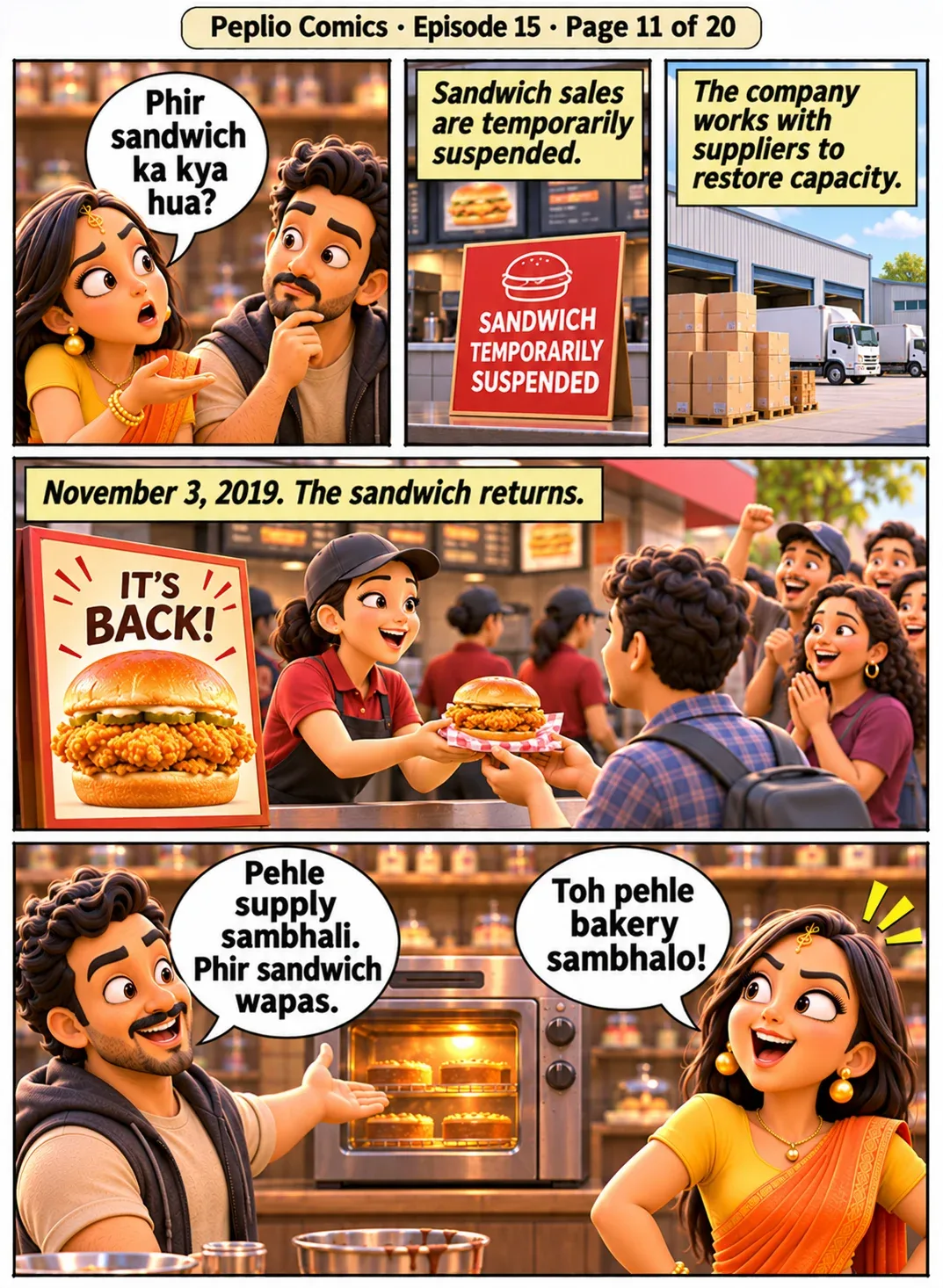
Popeyes paused the sandwich, worked on supply and brought it back on November 3, 2019, this time to stay. Sougan's point from the Popeyes chicken sandwich marketing story: fix supply first, then sell again. Mitu gets it: fix the bakery first.
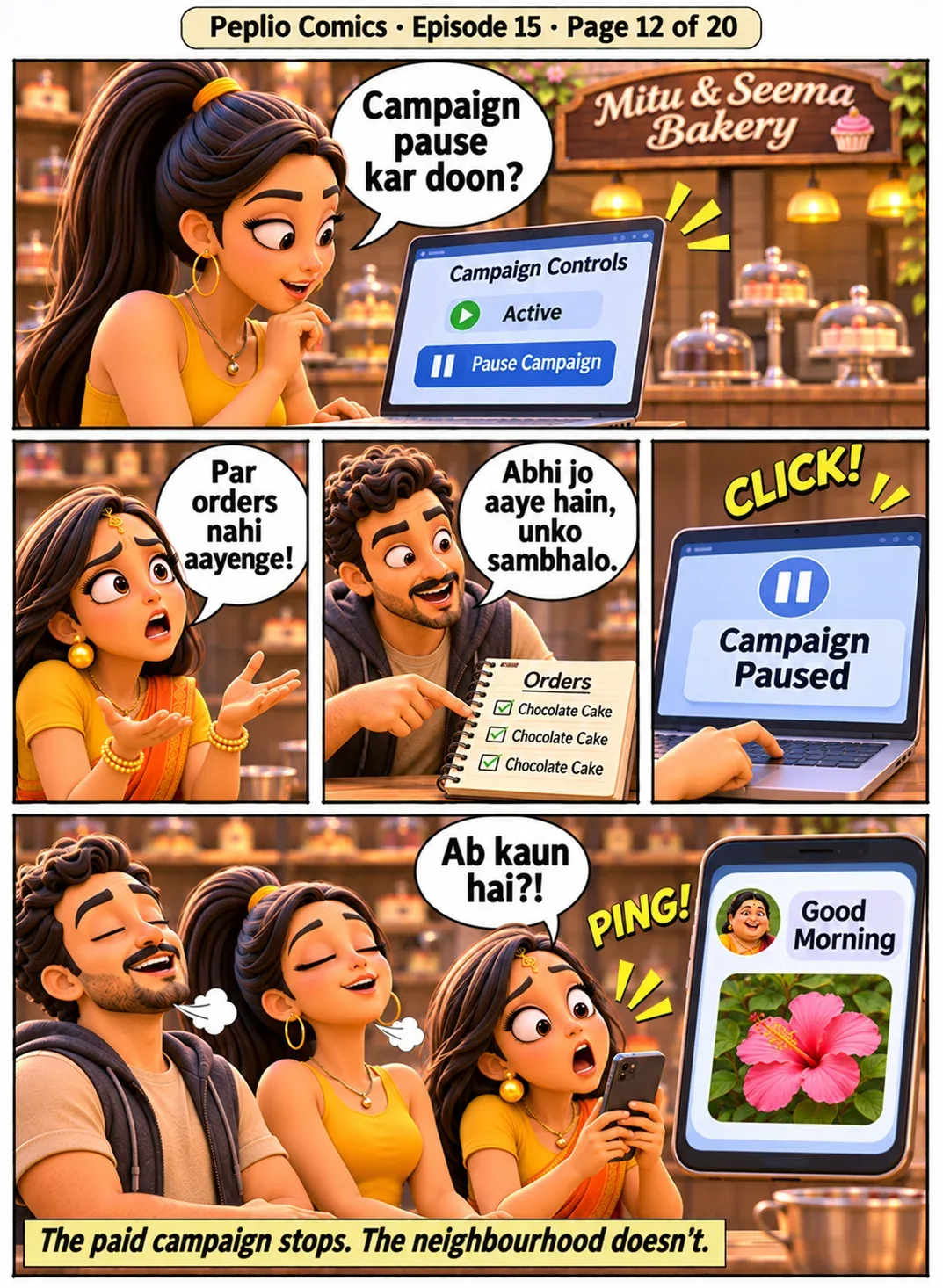
Seema pauses the campaign so they can serve the orders they already have. They finally breathe, until one more ping arrives. It is just a good morning flower from Noisy Aunty. Pausing was also the first move in the Popeyes chicken sandwich marketing comeback.
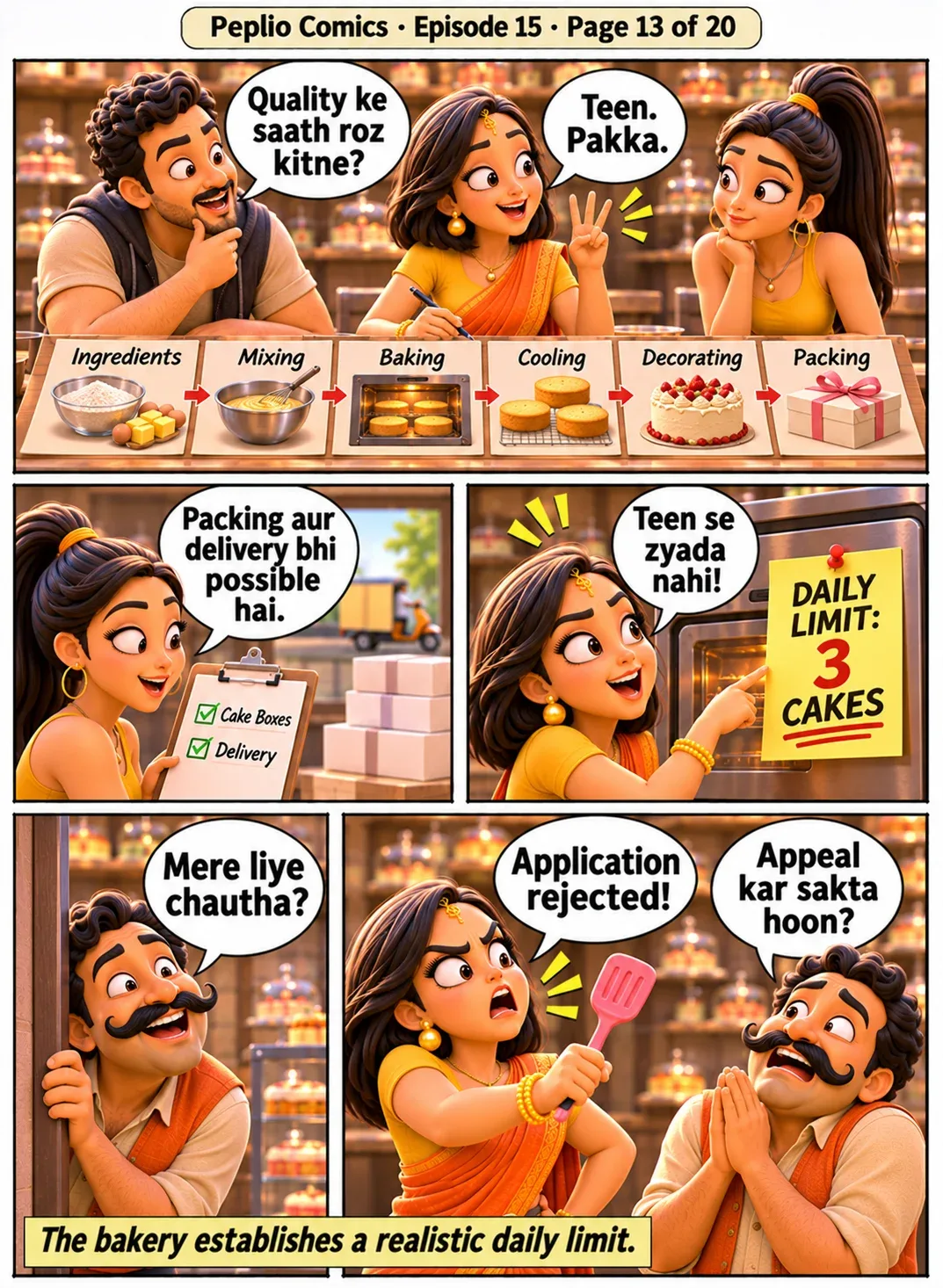
They walk through every step from mixing to packing and agree Mitu can make three good cakes a day. A note goes up on the oven: daily limit 3 cakes. Paanwala asks for a fourth. Application rejected. A daily limit is the small-shop version of fixing supply in Popeyes chicken sandwich marketing.
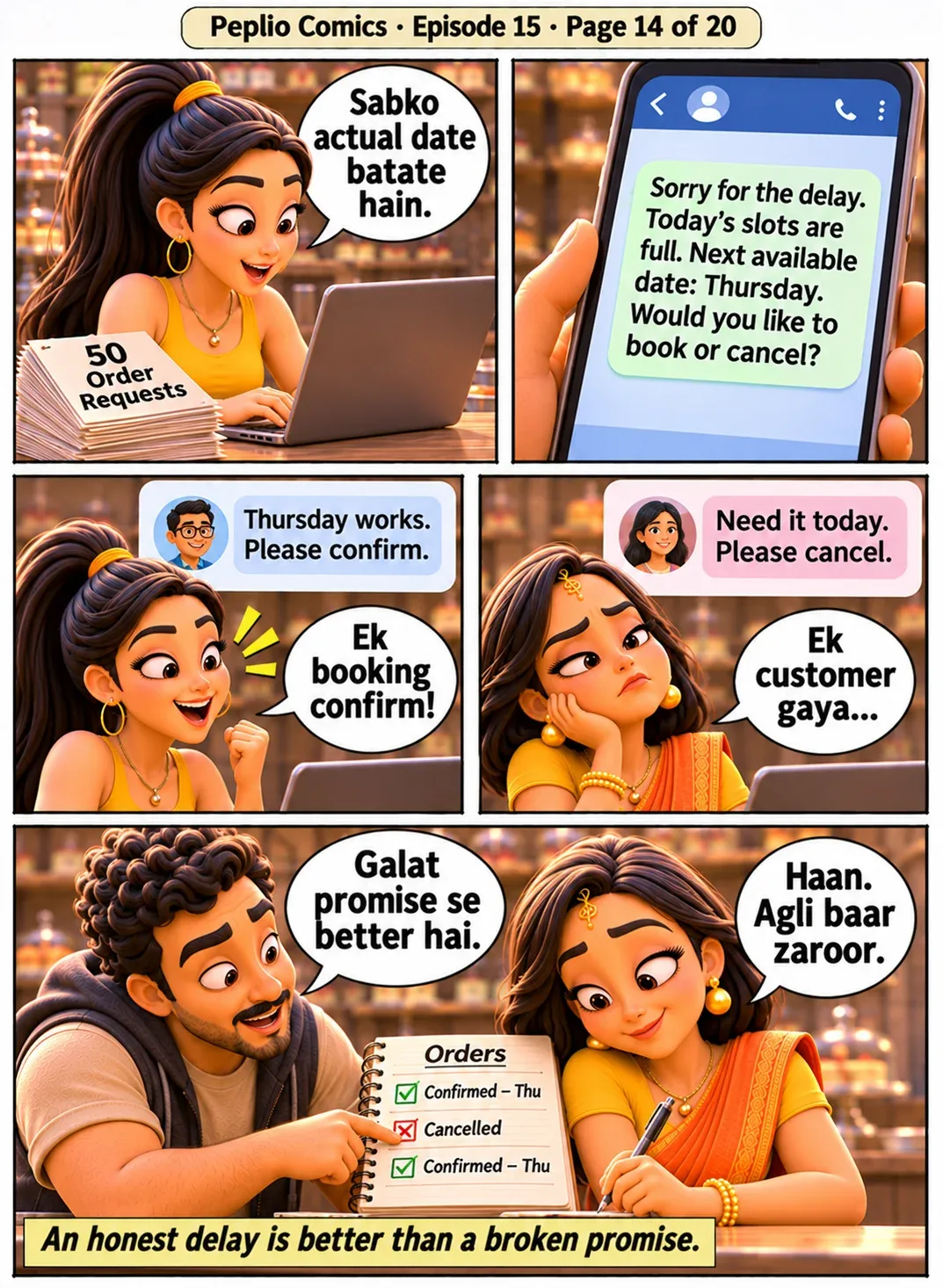
Seema messages every customer with a real date. One books Thursday, one needs the cake today and cancels. Sougan reminds Mitu that an honest delay is better than a broken promise.
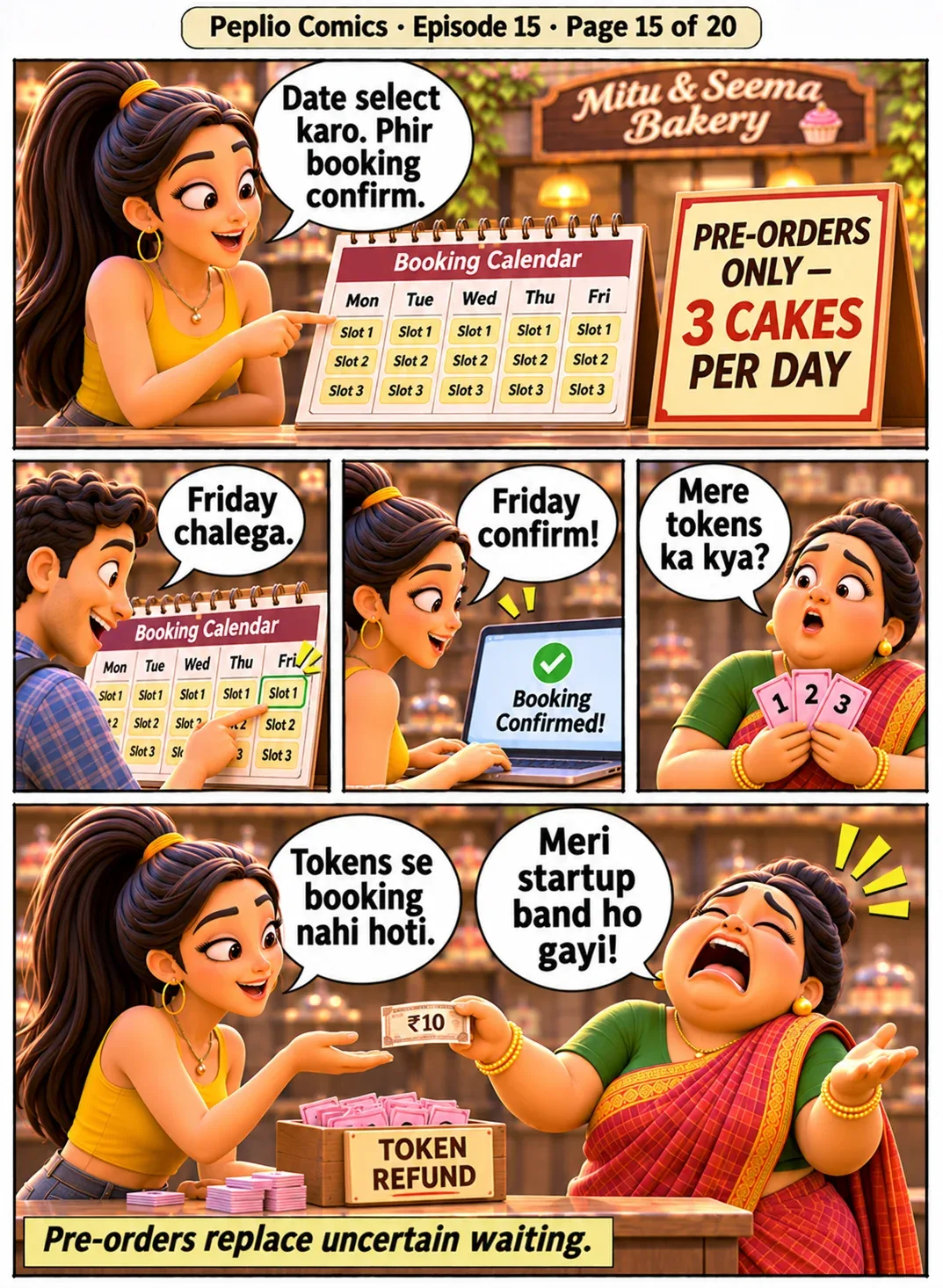
A booking calendar with three slots per day goes up at the counter. Customers pick a date and get a confirmation. Aunty's tokens are refunded and she declares her startup closed. Pre-orders keep the hype without the chaos, the lesson from Popeyes chicken sandwich marketing.
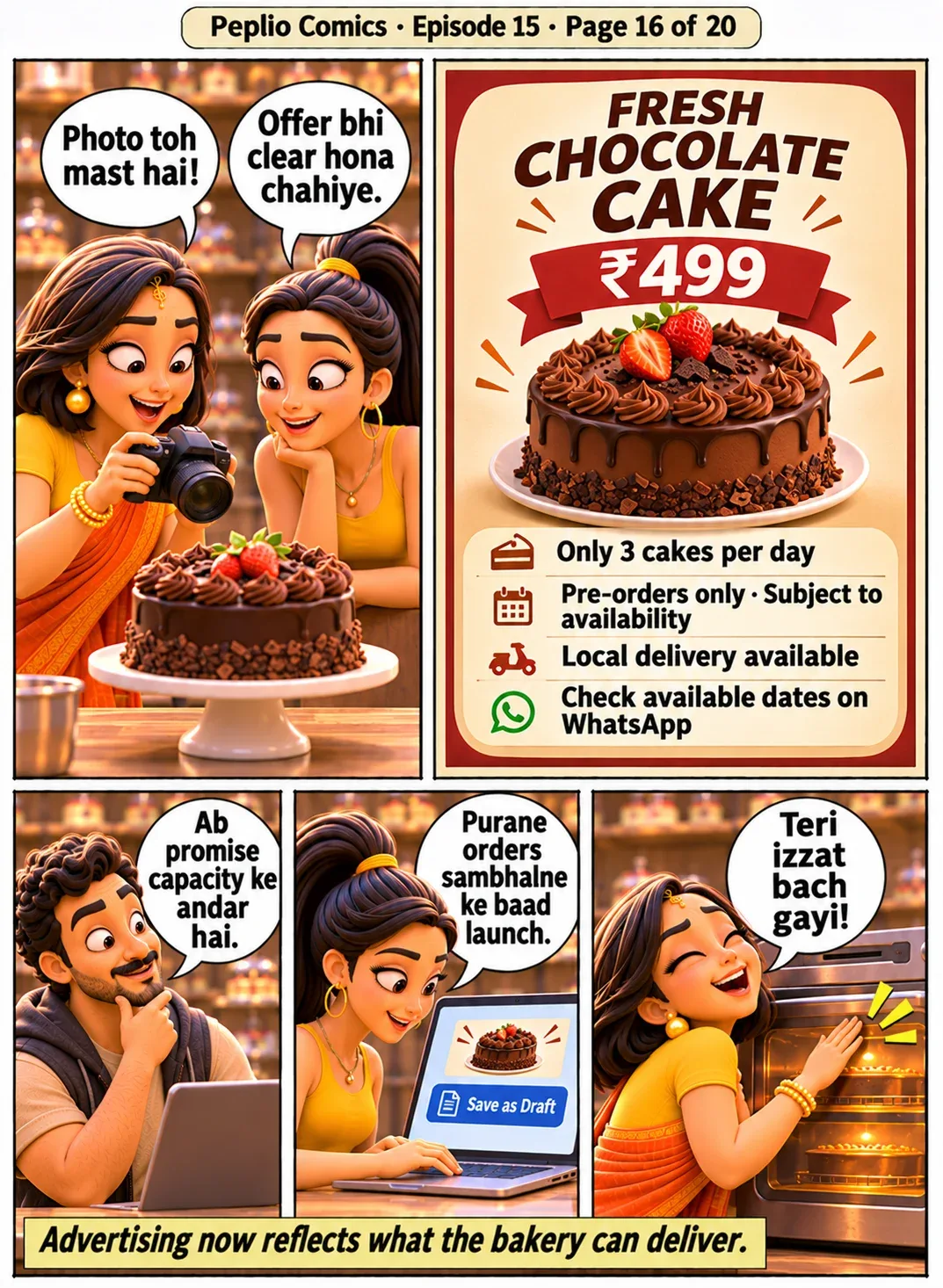
They photograph a fresh cake and write a new ad: ₹499, only 3 cakes per day, pre-orders only, check dates on WhatsApp. Sougan approves: now the promise fits the capacity. It stays a draft until the backlog is cleared. The new ad follows the Popeyes chicken sandwich marketing lesson: promise only what you can deliver.
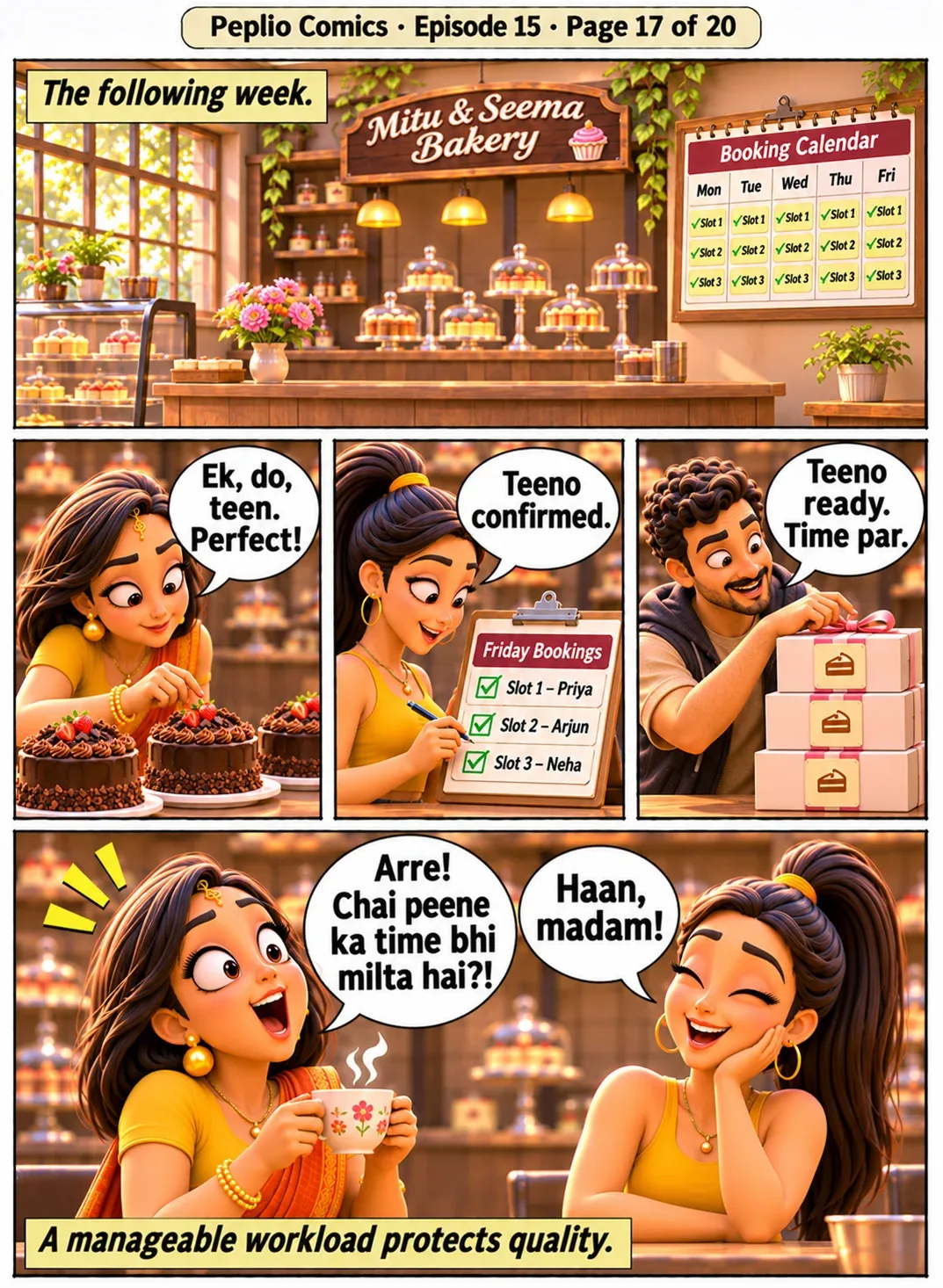
The following week the bakery is calm. Three cakes, three confirmed customers, all ready on time. Mitu is shocked to find she has time to drink tea.
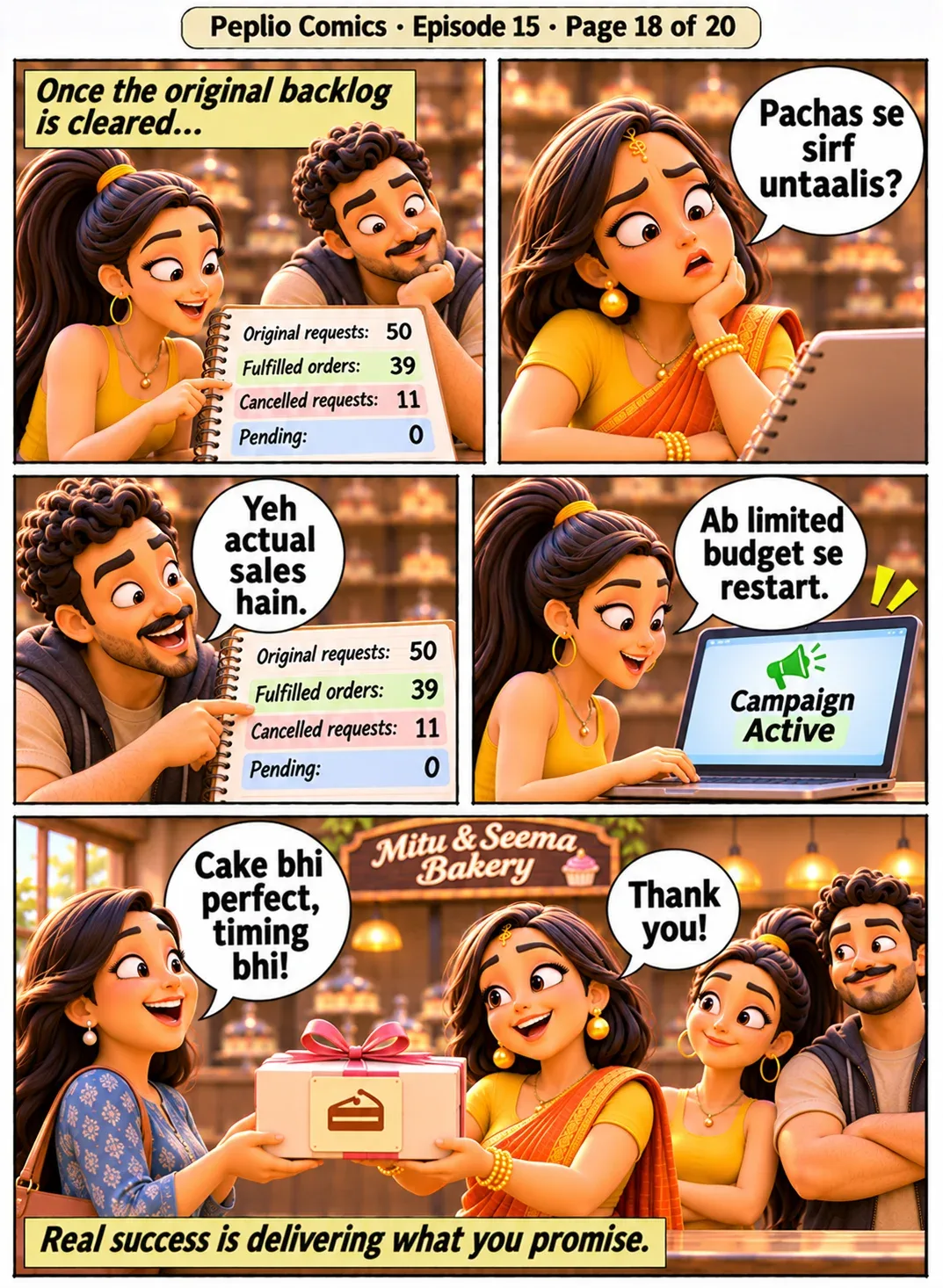
Once the backlog is cleared, the notebook shows 50 requests, 39 delivered and 11 cancelled. Mitu is disappointed, but Sougan says 39 is the real sales number. Seema restarts the ad with a small budget and a happy customer collects her cake on time. These numbers are fictional. Delivered orders, not hype, are what Popeyes chicken sandwich marketing teaches us to count.
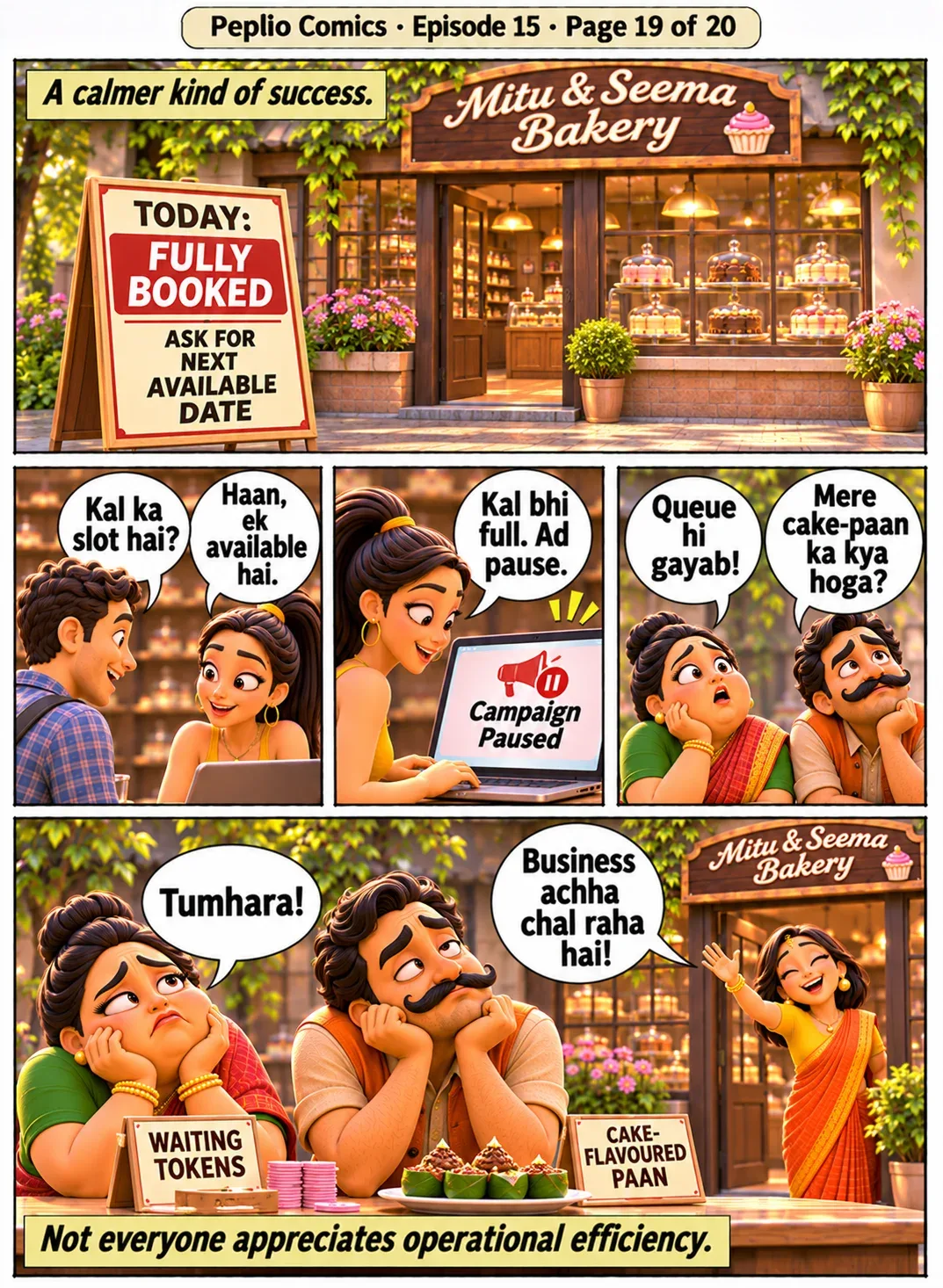
The sign says fully booked, so Seema pauses the ad again. With no queue, Aunty's tokens and Paanwala's cake-paan have no customers. Mitu says business is going well. Aunty: yours, maybe.
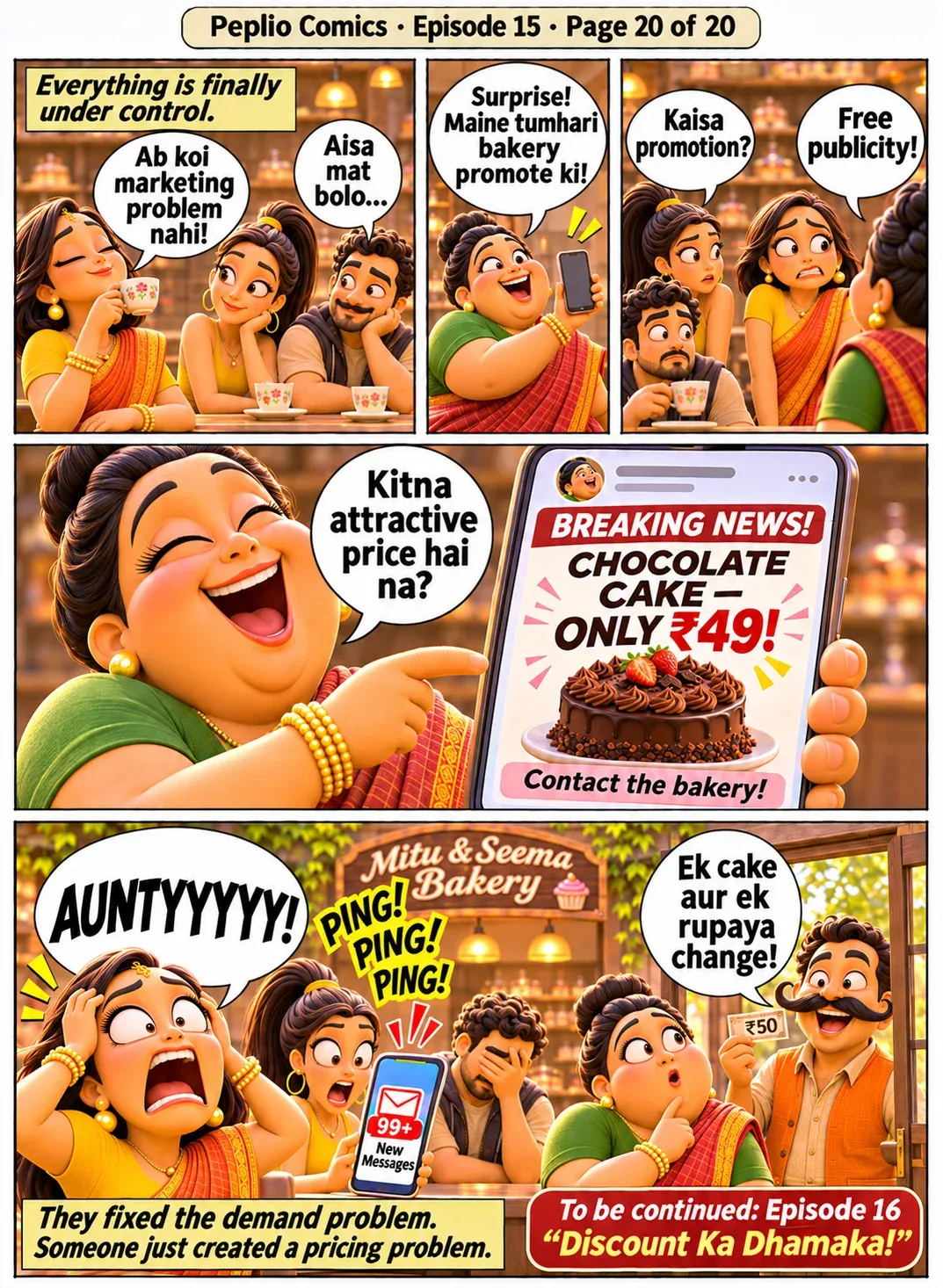
Just when everything is under control, Noisy Aunty proudly announces she promoted the bakery for free, with chocolate cake at only ₹49 instead of ₹499. 99 plus messages flood in and Paanwala arrives with a ₹50 note. To be continued in Episode 16.
End of Episode 15
Noisy Aunty just promoted the ₹499 chocolate cake at ₹49 and 99 plus messages are pouring in. Find out what happens in Episode 16.
What we learned today
- Count your daily capacity before you spend on ads
- Pause the ad when you are fully booked
- An honest delay beats a broken promise
- Pre-orders and daily limits turn chaos into a calendar
- Delivered orders are the real sales number
- Popeyes chicken sandwich marketing lesson: hype without supply backfires
Learn it and use it
Read the story and dialogue
The morning after their improved ad went live, Seema finds 50 new chocolate cake orders on WhatsApp. Mitu dreams of a mountain of money, until Sougan asks how many cakes she can bake in one night. Three. It is the bakery version of the Popeyes chicken sandwich marketing problem.
Seema does the maths: 50 cakes at 3 a night means at least 17 nights. Mitu scolds her oven, then begs it to cooperate. Every customer wants their cake today. Big brands hit the same wall, as the Popeyes chicken sandwich marketing story will show.
Seema is buried in messages asking when the cake will arrive. Mitu says to reply that the cake is being made, but which one? All 50 orders are for chocolate cake.
The messages turn into a real queue outside the bakery. One customer's birthday is today. Watching the crowd, Noisy Aunty strokes her chin and gets an idea.
Noisy Aunty sets up a table selling ₹10 waiting tokens. They do not make the cake come faster, just give you a number. Mitu protests, Aunty calls it consultancy, and Paanwala decides he wants a share too.
Paanwala launches cake-flavoured paan for people waiting in line. When a customer asks where the cake is, he points at the bakery. Mitu realises everyone is making money from her customers except her.
At 3 AM the only light on the street is the bakery. Mitu is half asleep, answering her phone with a spatula. Seema tells her to stop, but the orders never sleep. Working all night is not a plan, and Popeyes chicken sandwich marketing proves it.
Sougan shows them that even big brands face this. On August 12, 2019, Popeyes launched its chicken sandwich across the US. People shared photos, argued online and the Popeyes chicken sandwich marketing buzz exploded.
Queues stretched outside restaurants and demand beat every forecast. On August 27, 2019 Popeyes announced it had sold out. Supply meant to last until the end of September was gone in about two weeks. Mitu hugs her oven: it is not only her fault.
Another order pings in. Sougan asks if the ad is still running. It is. They are paying to attract demand they cannot fulfil, while Aunty gives out token number 21. This is exactly the mistake the Popeyes chicken sandwich marketing story warns about.
Popeyes paused the sandwich, worked on supply and brought it back on November 3, 2019, this time to stay. Sougan's point from the Popeyes chicken sandwich marketing story: fix supply first, then sell again. Mitu gets it: fix the bakery first.
Seema pauses the campaign so they can serve the orders they already have. They finally breathe, until one more ping arrives. It is just a good morning flower from Noisy Aunty. Pausing was also the first move in the Popeyes chicken sandwich marketing comeback.
They walk through every step from mixing to packing and agree Mitu can make three good cakes a day. A note goes up on the oven: daily limit 3 cakes. Paanwala asks for a fourth. Application rejected. A daily limit is the small-shop version of fixing supply in Popeyes chicken sandwich marketing.
Seema messages every customer with a real date. One books Thursday, one needs the cake today and cancels. Sougan reminds Mitu that an honest delay is better than a broken promise.
A booking calendar with three slots per day goes up at the counter. Customers pick a date and get a confirmation. Aunty's tokens are refunded and she declares her startup closed. Pre-orders keep the hype without the chaos, the lesson from Popeyes chicken sandwich marketing.
They photograph a fresh cake and write a new ad: ₹499, only 3 cakes per day, pre-orders only, check dates on WhatsApp. Sougan approves: now the promise fits the capacity. It stays a draft until the backlog is cleared. The new ad follows the Popeyes chicken sandwich marketing lesson: promise only what you can deliver.
The following week the bakery is calm. Three cakes, three confirmed customers, all ready on time. Mitu is shocked to find she has time to drink tea.
Once the backlog is cleared, the notebook shows 50 requests, 39 delivered and 11 cancelled. Mitu is disappointed, but Sougan says 39 is the real sales number. Seema restarts the ad with a small budget and a happy customer collects her cake on time. These numbers are fictional. Delivered orders, not hype, are what Popeyes chicken sandwich marketing teaches us to count.
The sign says fully booked, so Seema pauses the ad again. With no queue, Aunty's tokens and Paanwala's cake-paan have no customers. Mitu says business is going well. Aunty: yours, maybe.
Just when everything is under control, Noisy Aunty proudly announces she promoted the bakery for free, with chocolate cake at only ₹49 instead of ₹499. 99 plus messages flood in and Paanwala arrives with a ₹50 note. To be continued in Episode 16.
Sougan's TakeWhat this episode teaches, in plain words
An ad that works too well can hurt you as much as an ad that fails. Capacity comes first.
After their improved ad goes live, Mitu and Seema get 50 cake orders overnight but can bake only three cakes a night. Sougan explains the real Popeyes chicken sandwich marketing story from 2019, when a viral sandwich sold out in about two weeks, and the bakery fixes its problem by pausing the ad, setting a daily limit, giving honest dates and taking pre-orders.
I run digital marketing for a chemical company in Durgapur, and the most common complaint I hear after an ad finally works is not about money. It is about being overwhelmed. This comic is about that problem, and about the Popeyes chicken sandwich marketing story that shows what happens when demand runs faster than supply.
Read all 20 pages below. It continues straight from Episode 14. If you are new, catch up on all Peplio comic episodes first.
Too Many Orders? Check Capacity Before You Advertise
Seema's improved ad worked, but Mitu can bake only three cakes a night. Fifty orders turned into angry customers, a queue and a baker awake at 3 AM. Before you spend on ads, count how many orders you can actually deliver each day. If you need a refresher on building that ad in the first place, read Episode 14: The ₹500 Ad That Almost Ruined the Bakery.
What Popeyes Chicken Sandwich Marketing Teaches About Demand
Popeyes launched its chicken sandwich on August 12, 2019. Social media arguments made it go viral, queues formed, and on August 27 the company said it had sold out. Supply that was meant to last until the end of September was gone in a little over two weeks. Popeyes paused, worked on supply and brought the sandwich back on November 3, 2019, and even then some stores ran short within days. The Popeyes chicken sandwich marketing story shows that hype without supply turns fans into frustrated customers. Read the reports from CNBC, Restaurant Dive, Marketing Dive, TIME.
Pause the Ad When You Are Full
While the bakery struggled, its ad was still running and paying for even more orders. Pausing a campaign is not failure. It protects your money and your reputation until you can serve the people who already ordered. In Popeyes chicken sandwich marketing, the pause came from empty shelves; for a small shop it should be a choice.
Use Daily Limits, Pre-Orders and Honest Dates
Mitu set a daily limit of three cakes, Seema messaged every customer with a real date, and a pre-order calendar replaced Aunty's tokens. An honest delay is better than a broken promise. A simple WhatsApp QR code at the counter makes booking a slot easy.
Advertise Only What You Can Deliver
The new ad said it plainly: ₹499, only 3 cakes per day, pre-orders only. The real score was 39 delivered cakes out of 50 requests, and those 39 are the sales that count. For steady growth that does not depend on one ad, see SEO vs paid ads for small businesses.
Small shops around Durgapur often celebrate their first busy week and then lose customers because orders run late. The Popeyes chicken sandwich marketing story is the big-brand version of the same mistake. The fix is boring but it works: a daily limit, a booking calendar and an ad that only promises what you can deliver.
That is the end of Episode 15. The Popeyes chicken sandwich marketing lesson is simple: hype is only good news if you can deliver it. Mitu and Seema learned to pause, limit and pre-book, and then Noisy Aunty posted a ₹49 price. Episode 16 is coming next.
Quick questions
What is the Popeyes chicken sandwich marketing story?
Popeyes launched a fried chicken sandwich in the US on August 12, 2019. It went viral through social media debates, sold out about two weeks later on August 27, and returned on November 3, 2019 after the company worked on supply.
Why did the Popeyes chicken sandwich sell out?
Demand was far higher than expected. Supply planned to last until the end of September ran out in a little over two weeks, according to news reports from the time.
What should a small business do when it gets too many orders?
Pause paid ads, count how many orders you can really fulfil each day, give every customer an honest date, and switch to pre-orders with a daily limit. That is the Popeyes chicken sandwich marketing lesson for small shops.
Is it bad to pause an ad campaign?
No. Pausing an ad when you are fully booked saves money and protects your reputation. Restart it when you have capacity again. Popeyes chicken sandwich marketing shows a pause can even build more excitement for the return.
How do pre-orders help a small bakery?
Pre-orders turn a chaotic queue into a calendar. Customers pick a date, you bake only what you can, and nobody waits without knowing when their order will be ready.
Is Mitu's bakery story real?
No. Mitu and Seema's bakery and its numbers are fictional examples. The Popeyes chicken sandwich story is real and the flashback pages are illustrated reconstructions.
Sources: CNBC, Restaurant Dive, Marketing Dive, TIME. The bakery story and its numbers are fictional. Flashback scenes are illustrated reconstructions and their dialogue is dramatized.