
What Are Backlinks in SEO? 7 Powerful Types + How I Built Mine for Free (2026)
Last updated: September 2026
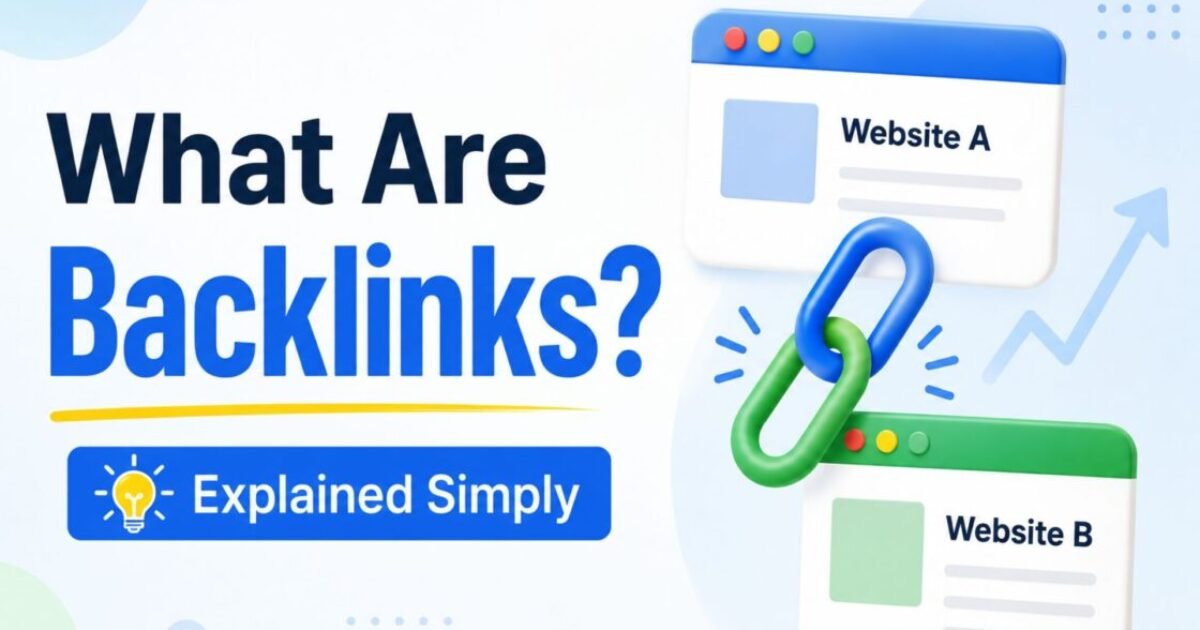
What are backlinks? A backlink is a link from one website that points to another website. When another site links to your page, that is a backlink for you. Google treats backlinks as votes of confidence — the more high-quality backlinks a page has, the more authoritative Google considers it. Backlinks are the #1 off-page ranking factor in 2026, and 93% of pages with zero backlinks receive zero organic traffic from Google.
The first time I heard the phrase what are backlinks I thought it was just another SEO buzzword I could ignore. So I did — for about four months while I focused on writing articles for Peplio.
Four months later: zero rankings, near-zero traffic. When I finally investigated why every competitor was ranking above me, the answer was painfully clear. They had backlinks. I had none. That mistake cost me months of growth I cannot get back.
In Episode 2 of Peplio Originals, Mitu thought aesthetics would beat the café next door. Sougan showed her that backlinks — other websites vouching for you — is what actually wins the visibility war. My four months of zero backlinks was exactly Mitu’s mistake before Sougan walked in.
This guide answers what are backlinks completely — not just the definition, but why Google treats them as its most powerful ranking signal, which of the 7 types actually move rankings in 2026, and exactly how I built backlinks for Peplio from scratch without spending a rupee. If you are still laying your SEO foundation, first read why is SEO important in 2026 — then this guide will make complete sense.
- What are backlinks in SEO — the simple definition
- Why backlinks matter to Google and AI search in 2026
- 7 types of backlinks — which ones actually move rankings
- Good backlinks vs bad backlinks — the critical difference
- How to build backlinks as a beginner in 2026 (zero budget)
- What no longer works after Google’s spam updates
- How to check your backlinks for free
- People also asked
- Full FAQ
What Are Backlinks in SEO? The Simple Definition
A backlink is a link from one website that points to another website. When an external site links to a page on your site, that is a backlink for you. The easiest way to understand what are backlinks is to think of them as citations in academic research.
Imagine you wrote a research paper. If ten other researchers cite your paper in their work, that is evidence your paper is credible and worth referencing. Google thinks about backlinks almost identically — every link from another site to yours is a vote of confidence that your content is worth reading.
If the Moz blog links to one of my Peplio articles, Google sees a high-authority site vouching for my content. That single link from Moz does more for my rankings than 100 backlinks from random low-quality directories. Quality matters far more than quantity — and that is the core of what makes backlinks both powerful and complicated to build correctly.
Backlinks are also called inbound links, incoming links, or external links — depending on which tool or guide you are reading. They all mean the same thing: a link pointing from someone else’s website to yours. That is the complete answer to what are backlinks at their most fundamental level.
Why Backlinks Matter to Google — And to AI Search in 2026
Once you understand what are backlinks, the natural next question is: why does Google care about them so much? Google’s original algorithm — PageRank, created by Larry Page and Sergey Brin at Stanford in 1998 — was built entirely around backlinks. The insight was simple: a page that many other pages link to is probably more valuable than one nobody links to.
27 years later, backlinks are still the single most powerful off-page ranking signal Google uses. Here is why Google still relies on them so heavily in 2026:
Anyone can write keyword-optimised content. Anyone can fix their meta tags. But earning genuine editorial backlinks from real websites requires content good enough that others actually want to reference it. Google trusts backlinks precisely because manufacturing them at scale is difficult and detectable.
When a high-authority site links to yours, it passes a portion of its authority to your page. This directly improves your ability to rank. According to Backlinko’s ranking factors study, pages in position 1 on Google have 3.8× more backlinks on average than pages in position 10.
When a well-crawled, established site links to your new article, Googlebot follows that link and finds your page quickly. For new sites, a backlink from an indexed domain can cut the time to first indexing from weeks to days — which means your content starts ranking sooner.
This is the dimension of what are backlinks that most guides completely miss in 2026. Google AI Overviews, ChatGPT Search, and Perplexity all heavily bias toward sources with strong backlink profiles when deciding which pages to cite. If you want to appear in AI search — not just traditional rankings — backlinks are not optional. For a full breakdown of AI search optimisation, read my guide on AEO vs SEO vs GEO in 2026.
7 Types of Backlinks — Which Ones Actually Move Your Rankings
Now that you understand what are backlinks and why they matter, you need to know the different types — because some directly improve your rankings, some do nothing, and some can trigger a Google penalty.
Dofollow vs Nofollow — The Most Important Distinction
This is the first distinction anyone learning what are backlinks needs to understand. It separates useful links from useless ones.
| Type | What It Does | Passes Authority? | Common Sources |
|---|---|---|---|
| Dofollow | Default link — tells Google to follow and pass authority | ✅ Yes | Editorial mentions, guest posts, Pinterest |
| Nofollow | rel=”nofollow” — tells Google not to pass authority | ❌ No | Wikipedia, most blog comments |
| Sponsored | rel=”sponsored” — marks paid or affiliate links | ❌ No | Paid placements, affiliate links |
| UGC | rel=”ugc” — marks user-generated content | ❌ No | Forum posts, blog comments |
Dofollow backlinks are what you need to build. They are the only type that directly passes authority and moves your rankings. Nofollow, sponsored, and UGC links still have indirect value — they drive referral traffic and create a natural-looking link profile — but they do not directly improve where you rank in search results.
7 Types of Backlinks by Source
A journalist, blogger, or creator links to your page because they genuinely found it useful. These are the most valuable backlinks possible. Earned entirely on content quality, almost always dofollow, and impossible to fake. Getting them requires building content genuinely good enough that others want to reference it.
You write a full article for another website in your niche and include a contextual link back to your own site. The most reliable white-hat link building method for beginners in 2026 — as long as the guest post is genuinely good content on a relevant site, not thin filler placed purely for the link.
Pinterest links are dofollow from a domain with authority over 90. Every pin you create with a link back to your article is a genuine dofollow backlink. Takes 5 minutes per article, zero cost, and Pinterest also drives real referral traffic. Most SEO guides skip this entirely — they should not.
Many websites maintain “useful resources” or “recommended tools” pages in their niche. Getting listed on a relevant resource page earns a dofollow backlink and consistent referral traffic. Outreach is straightforward: find the page, check your content fits, email the site owner with a specific reason why your page adds value to their list.
Find a broken link on a relevant site, identify what the dead page covered, create content on that topic, and email the webmaster suggesting your page as a replacement. High effort but effective — because you are solving a real problem for the site owner rather than asking a favour.
For tool-based websites like Peplio, getting listed on free AI tool directories (futuretools.io, aiwebsitedirectory.com, fazier.com) earns dofollow backlinks from relevant, established domains. These take 15 minutes to submit and contribute to both authority and referral traffic from people actively looking for tools in your niche.
Internal links between your own pages are not technically backlinks — but they pass ranking authority between your pages in a similar way. Every new article you publish should link to 2–3 existing articles on your site. This helps Googlebot discover your content and distributes authority to your most important pages.
Good Backlinks vs Bad Backlinks — The Difference That Determines Your Rankings
One of the most important lessons I learned while understanding what are backlinks worth: not all backlinks are equal — and some actively damage your rankings. Google’s Penguin algorithm, which runs in real-time since 2016, specifically targets manipulative link building. After Google’s October 2025 spam update, it is more effective than ever at identifying low-quality links.
| ✅ Good Backlinks | ❌ Bad Backlinks |
|---|---|
| From websites relevant to your niche | From completely unrelated websites |
| From high-authority, established domains | From newly created, low-authority sites |
| Editorial — placed because content is genuinely valuable | Paid without disclosure or from link farms |
| From sites with real traffic and real audiences | From sites that exist only to sell links |
| Natural variety in anchor text (brand, URL, keyword mix) | All anchors are exact-match target keywords |
| Dofollow from legitimate editorial sources | From private blog networks (PBNs) |
How to Build Backlinks as a Beginner in 2026 — Zero Budget Methods That Work
I built every backlink Peplio has with zero budget. Here is exactly what works in 2026 for anyone starting from scratch — after understanding what are backlinks and why they matter.
Method 1 — Create Content Worth Linking To First
Before any outreach tactic, ask yourself honestly: is there anything on my site another website would genuinely want to reference? The best link magnets are:
- Original data or case studies with specific results
- Genuinely comprehensive guides that go deeper than anything ranking
- Free tools that solve a real problem (Peplio’s AEO Content Scorer and AI Visibility Tracker get the most organic backlinks on Peplio)
- Expert opinions backed by real numbers and personal experience
Build something worth linking to first. Outreach without good content is wasted effort — no matter how many emails you send.
Method 2 — Guest Posting on Relevant Blogs
Guest posting is the most reliable link building method for beginners when learning what are backlinks worth building. Search Google for “your niche” + “write for us” to find blogs that accept contributions. Read their content to understand their audience. Pitch a specific, well-researched article idea.
Write the best article you possibly can. Include one natural contextual link back to a relevant page on your site. The key word is relevant — a guest post on a digital marketing blog linking to Peplio carries real weight. A guest post on an unrelated blog carries almost none. For a list of free guest blogging sites worth targeting, read my guide on free guest blogging sites 2026.
Method 3 — Pinterest: Dofollow Backlinks in 5 Minutes
Most SEO guides skip Pinterest entirely — which is a significant mistake. Pinterest links are dofollow from a domain with authority over 90. Every pin you create with a link back to your article is a genuine dofollow backlink from one of the highest-authority domains on the internet.
Setup: Create a Pinterest business account. Make a 1000×1500px vertical pin for every article you publish. Link it back to the article URL. Done. Five minutes per article, zero cost, and Pinterest drives real referral traffic particularly for how-to guides, tool comparisons, and visual content like Peplio’s AI image articles.
Method 4 — Broken Link Building
Find a broken link on a relevant website using Ahrefs’ free broken link checker. Identify what content the dead link was pointing to. Create a page covering that topic. Email the webmaster: tell them the link is broken, what it pointed to, and suggest your content as a replacement.
Most webmasters appreciate the heads-up and a meaningful percentage will update the link. High effort but high conversion rate — because you are solving their problem, not asking for a favour.
Method 5 — The Demech Chemical Cross-Link Strategy
I work as Digital Marketing Executive at Demech Chemical Products. I wrote an article about applying crusher backing compound (a genuine, useful guide for our product) and embedded a natural dofollow editorial credit link to Peplio within it. This created a legitimate backlink between two real websites that Google treats as a genuine editorial reference — because it is one. If you have a day job or any professional affiliation, a genuine editorial mention on that organisation’s website is one of the easiest backlinks you can earn.
What No Longer Works — Backlink Tactics Killed by Google’s Spam Updates
Understanding what are backlinks worth building also means knowing which tactics are now dead or dangerous. After Google’s October 2025 spam update — the most aggressive link spam crackdown in recent years — these tactics are either completely ineffective or actively harmful:
How to Check Your Backlinks for Free — 4 Tools That Cover Everything
Before building new backlinks, check what you already have. Understanding what are backlinks pointing to your site is the starting point for any link building strategy. These are the best free tools:
| Tool | What It Shows | Cost |
|---|---|---|
| Google Search Console | Every backlink Google has found — links report, top linking domains, anchor text | Free |
| Ahrefs Free Checker | Top 100 backlinks to any domain, Domain Rating, referring domain count | Free (limited) |
| Moz Link Explorer | Domain Authority score, top linking domains, spam score | Free (10/month) |
| Semrush Backlink Analytics | Full backlink profile, authority scores, anchor text distribution | Free (limited daily) |
For most beginners, Google Search Console is enough. Go to Search Console → Links → External links. This shows every domain linking to your site and which pages they point to. Check this monthly to track growth and spot suspicious links early. Pair it with Google Analytics 4 to see how much referral traffic those backlinks are actually sending — because a backlink that sends zero traffic may not be as valuable as it appears in a link report.
The biggest backlink mistake isn’t building bad ones — it’s building none at all.
I ignored backlinks for 4 months on Peplio. I told myself content quality would be enough. It wasn’t. The day I checked my competitors in GSC and saw they had 200+ referring domains while I had 6, everything clicked. Pinterest was my first move — 5 minutes per article, dofollow from a 90+ authority domain. That one habit alone added 40+ backlinks in 60 days at zero cost. Start there before anything else.
My Honest Take on Backlinks After 3 Years of Building Peplio
Backlinks are genuinely valuable — but their effectiveness depends entirely on building them correctly. Beginners either focus on them too soon (before having content worth linking to) or neglect them for too long (like I did in my first four months, which cost me months of growth).
The compounding effect of backlinks kicks in slowly — but once it does, it is durable in a way that no shortcut ever is. Every spammy backlink tactic I tested produced either nothing or a temporary rankings drop. Every real editorial backlink I earned has stayed in place and kept contributing to rankings month after month.
Start with creating one piece of content genuinely worth linking to. Then create a Pinterest pin for it. Then identify one relevant blog that accepts guest posts. Those three actions — done properly — will build you more valuable backlinks in 60 days than 1,000 blog comment spam links could in a lifetime.
- What are backlinks? Links from another website to yours — votes of confidence in Google’s eyes
- Backlinks are the #1 off-page ranking factor and now affect AI search visibility too
- Dofollow links pass authority — nofollow, sponsored, and UGC links do not
- Quality beats quantity — one editorial link from a high-authority site beats 500 directory submissions
- Guest posting and Pinterest are the two most reliable zero-budget tactics for beginners
- Web 2.0 sites, generic directories, forum profiles, and blog comments are dead after October 2025
- 93% of pages with zero backlinks get zero organic traffic — this is non-negotiable
- Check your backlinks monthly in Google Search Console — it is completely free
People Also Asked About Backlinks
What are backlinks and why do they matter for SEO?
What are backlinks in simple terms: a backlink is any link from another website that points to your website. Google treats each backlink as a vote of confidence — evidence that another site considers your content credible enough to reference. Backlinks matter for SEO because pages in position 1 on Google have 3.8× more backlinks on average than pages in position 10, and 93% of pages with zero backlinks receive zero organic traffic. In 2026, what are backlinks worth also extends to AI search — Google AI Overviews and Perplexity both bias toward pages with established backlink profiles when choosing what to cite. For the full SEO picture, read my guide on why SEO is important in 2026.
How many backlinks do I need to rank on page 1?
There is no fixed number — it depends entirely on keyword competition. For low-competition long-tail keywords (the type I recommend targeting in my guide on how to choose low competition keywords), you can rank with zero backlinks if your content is genuinely strong and well-structured. For competitive keywords, you may need dozens of high-quality backlinks from relevant domains. The most practical approach: use Ahrefs’ free backlink checker to look at the top-ranking pages for your target keyword and check how many referring domains they have. That number is your realistic benchmark.
Do social media links count as backlinks for SEO?
Almost all social media links — Facebook, X/Twitter, LinkedIn, Instagram — are nofollow and do not pass direct ranking authority. Pinterest is the critical exception: Pinterest links are dofollow and pass genuine authority from a domain with over 90 authority score. Social media links still have indirect SEO value by driving traffic and increasing content visibility, which can lead to real editorial backlinks from people who discover your content through social channels. For a complete breakdown of free SEO tools that help you track backlinks and social referrals, read my guide on the best free SEO tools in 2026.
Frequently Asked Questions — What Are Backlinks
What are backlinks in SEO — full explanation?
Backlinks in SEO are links from one website that point to another. When an external site links to a page on your site, that is a backlink for you. Google treats backlinks as votes of confidence — the more high-quality backlinks a page has, the more authoritative Google considers it, and the higher it tends to rank. Backlinks have been a core Google ranking signal since PageRank was built in 1998 and remain the #1 off-page ranking factor in 2026. They now also influence visibility in AI-generated search answers from ChatGPT, Perplexity, and Google AI Overviews.
What is the difference between a dofollow and nofollow backlink?
A dofollow backlink is the default link type — it passes authority (link juice) from the linking site to yours and directly improves your rankings. A nofollow backlink includes a rel=”nofollow” attribute that tells Google not to pass authority through the link. Most editorial backlinks are dofollow. Wikipedia, most blog comments, and many social platform links are nofollow. For SEO purposes, dofollow backlinks are what you need to build — nofollow links have indirect value through traffic and brand visibility but do not directly move your rankings.
How do I get backlinks for a new blog with no budget?
The most effective zero-budget backlink tactics in 2026: guest posting on relevant blogs in your niche (search “your niche + write for us”), creating a Pinterest pin with a link back to every article you publish (Pinterest links are dofollow from a 90+ authority domain), and broken link building — finding dead links on relevant sites and offering your content as a replacement. All three require effort but zero spend. Building content genuinely worth linking to is the foundation that makes all three more effective.
Can bad backlinks hurt my SEO?
Yes. Spammy backlinks from irrelevant, low-quality, or link-farm sites can trigger Google’s Penguin algorithm (which runs in real-time) or a manual penalty from Google’s spam team. If you notice an unexplained rankings drop, check your backlink profile in Google Search Console → Links → External links. If you find large volumes of suspicious links, you can submit a disavow file through Google Search Console’s Disavow Tool to ask Google to ignore those links while you investigate further.
What are backlinks worth in terms of AI search visibility in 2026?
Backlinks now affect AI search visibility significantly. Google AI Overviews, ChatGPT Search, and Perplexity all heavily bias toward pages with established backlink profiles when deciding which sources to cite. Pages with strong backlink profiles are far more likely to appear in AI-generated answers. This makes backlink building even more important in 2026 than it was for traditional SEO alone — investing in backlinks now improves both Google rankings and AI citation probability simultaneously.
How do I check my backlinks for free?
Google Search Console is the best free backlink checker for your own site. Go to Search Console → Links → External links to see every domain linking to you, which pages they link to, and what anchor text they use. For checking competitor backlinks or getting more detail, use Ahrefs’ free backlink checker (top 100 links for any domain) or Moz Link Explorer (10 free queries per month). Both are sufficient for a beginner without paid tools.
Final Thoughts — What Are Backlinks Worth in 2026?
What are backlinks worth in 2026? They are worth exactly what they have always been worth — plus more, because they now determine your AI search visibility on top of your Google rankings.
The basics have not changed: earn genuine editorial backlinks from relevant, authoritative sites, avoid any tactic that tries to manufacture links at scale, and be patient while the compounding effect kicks in. What has changed is the urgency — every month you delay building a real backlink profile is a month your competitors are getting further ahead in both traditional and AI search.
For your complete SEO toolkit alongside backlinks, read my guides on how to choose low competition keywords, the best free SEO tools in 2026, and what Google Analytics does to track your backlink-driven traffic growth.
- Why Is SEO Important? 10 Brutally Honest Reasons in 2026
- 9 Best Free SEO Tools — I Tested Every One on a Real Website
- How to Choose Low Competition Keywords — 7 Powerful Free Steps
- What Does Google Analytics Do? 10 Powerful GA4 Functions Explained
- AEO vs SEO vs GEO — The Complete 2026 Comparison Guide
- Free Guest Blogging Sites List 2026 — Tested and Verified
- Free SimilarWeb Traffic Checker — Analyse Competitor Backlink Traffic


