Sougan Kumar Mandi
Founder, Peplio · Digital Marketing Executive, Demech Chemical Products · Last updated: October 2026 — Written from real AI image generation experiments for Peplio content and Demech Chemical marketing materials
Quick Answer- To generate realistic AI images, stop asking for perfection — real photos have uneven lighting, natural skin texture, slight blur, and small imperfections that AI removes when you ask for “perfect”
- The 7 strategies: stop asking for perfect, add real-life context, use natural lighting prompts, add skin texture keywords, include intentional imperfections, specify environment details, and use hybrid AI plus real photography
- The single most impactful prompt change: replace “ultra HD 4K cinematic” with “natural lighting, slight imperfections, real skin texture” — this alone makes images feel significantly more human
- AI predicts patterns from training data — it does not experience the world. That is why it consistently misses the small details that make real photography feel authentic
- For US businesses and content creators: realistic AI images directly affect brand trust — customers can sense artificial visuals subconsciously even when they cannot explain why
- The best approach in 2026: use AI for concept and speed, combine with real photography for authenticity — neither alone is as effective as the hybrid approach
In Episode 4 of the Peplio comic series, Mitu tries to make her bakery’s Instagram look perfect with polished visuals — and gets less engagement than her unedited phone photos. That episode captures exactly the core lesson of realistic AI image generation: authenticity outperforms polish every time.
Read Episode 4: Viral Reel Banayenge KyaI remember sitting in front of my screen thinking I had finally figured it out. I had generated an AI image that looked sharp, colourful, and honestly better than most stock photos I had seen online. But after staring at it for a few seconds, something felt off. The image looked good — but it did not feel real. That moment is when I realised that learning how to generate realistic AI images is not about clicking generate and hoping — it is about understanding what makes an image feel human in the first place. I am Sougan Kumar Mandi, founder of Peplio.com and Digital Marketing Executive at Demech Chemical Products in Durgapur, West Bengal. I have tested AI image generation extensively for Peplio content and Demech Chemical marketing materials. This guide documents the 7 strategies that actually worked — and the mistakes I made before finding them.
7
Prompt strategies that produce noticeably more realistic AI images
Perfect
The word that makes AI images look most fake — replace with “natural” every time
Lighting
The single most impactful prompt element for realism — natural light beats cinematic every time
Trust
What realistic visuals build for US businesses — customers sense artificial images subconsciously
Hybrid
AI plus real photography — the most effective approach for brand authenticity in 2026
Free
Peplio’s AI Image Generator — no login required, test these strategies immediately
Why AI Images Look Fake — The Real Reason
Before understanding how to generate realistic AI images, you need to understand why AI images look fake in the first place. The answer is not about the quality of the AI model — even the most advanced models produce images that feel slightly artificial to the human eye. The reason is fundamental: AI generates images by predicting patterns based on training data. It does not experience the world the way a photographer does. It does not know what a coffee shop smells like at 7 AM, what skin looks like after a long day, or how light falls through a specific window at a specific time of year. It knows what images of those things tend to look like — and it predicts what a new version should look like based on those patterns.
This prediction process is why AI images tend toward a specific kind of perfection that real photography never achieves. Real photographers capture imperfect moments: slightly uneven lighting, a person whose eyes are not perfectly symmetrical, a background element that was not planned but adds authenticity. AI removes these imperfections by default because the patterns in its training data — especially stock photography — have been selected and edited to remove them. The result is images that are technically excellent and experientially hollow. Learning how to generate realistic AI images means learning how to reintroduce the imperfections that AI systematically removes.
According to Adobe’s research on AI image generation, human viewers detect AI-generated images through subtle cues — skin texture that is too smooth, lighting that is too symmetrical, backgrounds that are too clean. These cues are processed subconsciously before the viewer can articulate why the image feels artificial. For businesses trying to build brand trust through visual content, this subconscious detection is a real conversion problem — customers sense inauthenticity even when they cannot explain it.
Peplio Experiment — What I Tested and What Changed
Starting point — what generic prompts produced
I started with the prompts most beginners use: “realistic portrait, ultra HD, 4K, cinematic lighting, perfect skin, high detail.” The images looked impressive at first glance — sharp, detailed, visually striking. But every image had the same quality: it looked like a stock photo from a premium catalogue rather than a real moment captured in real life. Nobody would believe these images showed actual people doing actual things.
First change — removing perfection keywords
I removed “ultra HD,” “4K,” “cinematic,” and “perfect” from every prompt and replaced them with “natural lighting,” “candid moment,” and “slightly imperfect composition.” The difference was immediately noticeable. Images felt warmer, less produced, more like something someone had actually photographed. The resolution was technically lower but the perceived authenticity was significantly higher.
Second change — adding environment and context
Generic prompts produce generic results. “Man in office” produces a generic office. “Middle-aged man at a cluttered desk near a window, morning light, coffee mug with a small ring stain, papers slightly messy” produces something that feels like a real moment in a real place. Adding environmental context and specific realistic details — including minor imperfections like the coffee stain — produced the most realistic results across all my experiments.
The key insight
The more perfect I asked the image to be, the more artificial it looked. The more I described a real moment with real imperfections, the more human the result felt. This is the counterintuitive core of how to generate realistic AI images: you have to intentionally work against the AI’s default tendency toward perfection.
7 Strategies for How to Generate Realistic AI Images
Strategy 1 — Stop asking for “perfect” images. This is the most important change for anyone learning how to generate realistic AI images. Replace these words in every prompt: “ultra HD,” “4K,” “cinematic,” “perfect lighting,” “flawless,” “high detail.” Replace them with: “natural,” “candid,” “slightly imperfect,” “real texture,” “unposed.” This single change produces a noticeable shift in image quality from stock-photo-like to photograph-like. Real photography never uses these perfection descriptors — and AI should not either when realism is the goal.
Strategy 2 — Add real-life context and environment. AI generates more realistic images when prompts describe a specific situation rather than a generic category. “Woman smiling” produces a stock photo. “Woman in her late 30s laughing at her phone while sitting at a kitchen table, morning light through venetian blinds, coffee cup nearby, hair slightly dishevelled” produces something that feels like a real moment. The more specific the environmental context — the time of day, the specific objects nearby, the quality of light, the emotional situation — the more realistic the output.
Strategy 3 — Use natural lighting keywords specifically. Lighting is the single most impactful element for realism in AI image generation. Artificial, cinematic, or balanced lighting immediately signals “produced” to the human eye. Use these lighting descriptors for realistic results: “morning window light with natural shadows,” “overcast day, soft diffused light,” “warm afternoon sun from the left side,” “indoor fluorescent light with slight colour cast,” “candlelight with uneven illumination.” Each describes how real light actually behaves — with direction, temperature, and imperfection — rather than how staged photography presents it.
Strategy 4 — Add skin texture keywords for portraits. Smooth, poreless, perfectly even skin is the fastest way for a viewer to identify an AI portrait. Add these keywords to portrait prompts: “natural skin pores,” “slight skin texture,” “realistic wrinkles,” “natural skin imperfections,” “no airbrushing.” These phrases tell the AI to preserve the realistic texture that it tends to smooth away by default. The result is portraits that look like photographs of real people rather than illustrations of idealised people.
Strategy 5 — Include intentional imperfections. This was my most counterintuitive discovery when testing how to generate realistic AI images. Real photographs have imperfections: slight blur on background elements, a strand of hair out of place, a shirt that is not perfectly straight, a background element that was not planned. Adding these intentional imperfections to prompts — “slight motion blur on background,” “hair slightly out of place,” “clothing naturally wrinkled,” “background slightly out of focus” — produces images that feel captured rather than constructed.
Strategy 6 — Specify camera and photography style terms. Describing the image as though it was taken by a specific type of camera or photographer adds realism signals the AI responds to. Use terms like: “shot on 35mm film,” “documentary photography style,” “phone camera quality with slight grain,” “photojournalism style,” “candid street photography.” These descriptions pull the AI toward the aesthetic of real photography rather than the aesthetic of digital illustration or stock photography.
Strategy 7 — Edit AI images before using them. Even the most carefully prompted AI images benefit from editing that adds the final layer of realism. Add very slight grain or film texture in Canva or any photo editor. Adjust colour temperature to feel warmer or cooler rather than perfectly neutral. Slightly reduce clarity or add subtle vignetting. These editing steps take 2 to 3 minutes and move the image from “good AI generation” to “actually looks like a photograph.” Use Peplio’s free Image Optimizer to prepare AI images for web use after editing.
Free AI Image GeneratorTest these 7 strategies immediately — no login required, generate realistic AI images for free
Generate Images FreeRealistic Prompt Examples — Before and After
The difference between artificial-looking and realistic AI images often comes down to specific word choices in the prompt. Here are direct before-and-after comparisons based on Peplio experiments with how to generate realistic AI images.
| Scenario | Artificial Prompt (avoid) | Realistic Prompt (use instead) |
|---|
| Business portrait | “Professional businessman, ultra HD, perfect lighting, flawless skin, 4K” | “Man in his 40s at a desk, natural window light from the left, slight skin texture, shirt slightly creased, candid expression” |
| Food photography | “Perfect burger, cinematic lighting, studio quality, ultra detailed” | “Burger on a wooden table, natural afternoon light, slight condensation on drink, crumbs nearby, slightly imperfect plating” |
| Group of people | “Happy friends laughing, high quality, perfect smiles, vibrant colors” | “Three friends at a cafe table, candid laughter, one person slightly turned away, morning light, phone on table” |
| Office environment | “Modern office, perfect lighting, clean desk, professional” | “Open plan office, overcast daylight through windows, papers on desks, a few coffee cups, someone standing at a whiteboard in background” |
| Product on surface | “Product hero shot, cinematic lighting, perfect shadows, 4K” | “Product on a slightly scratched wooden surface, soft morning light from window, gentle natural shadow, slight dust particles visible” |
The pattern across every comparison: realistic prompts describe a specific moment with specific environmental details and specific imperfections. Artificial prompts describe technical quality attributes. Real photography captures moments — and prompts for how to generate realistic AI images should describe moments, not quality specifications.
How US Businesses Are Using Realistic AI Images in 2026
For US business owners — whether running a bakery in Texas, a real estate agency in Florida, or a consulting service in California — realistic visuals directly affect how customers perceive brand trustworthiness. US consumers in 2026 have been exposed to enough AI-generated content that they have developed a subconscious detection sensitivity for artificial visuals. Images that feel produced rather than genuine create a small but real trust deficit that affects conversion rates.
The smart approach US businesses are taking: use AI for concept speed and cost efficiency, then edit for authenticity. A small bakery generates product concept images with AI using realistic prompts, then takes 3 to 5 minutes to add warmth, grain, and slight imperfection in Canva before publishing. A digital agency uses AI for client presentation mockups but combines them with real photography for final campaign materials. A consultant uses AI for article header images but specifically prompts for the natural, slightly informal style that feels like a real working environment rather than a stock photo.
The key insight for any US business learning how to generate realistic AI images: your customers are not evaluating your images consciously for realism. They are forming a gut-level trust signal about your brand based on whether your visuals feel authentic. Realistic AI images — generated using the strategies in this guide — contribute positively to that trust signal. Overly perfect AI images subtract from it. For the complete guide on using AI tools for marketing content, read the digital marketing skills guide for 2026.
The Hybrid Approach — AI Plus Real Photography
The most effective approach to visual content in 2026 is not choosing between AI images and real photography — it is using both strategically. AI is excellent for concept speed, consistency, and cost: generating multiple variations of a visual idea quickly, maintaining consistent style across a content series, and producing images without expensive photography sessions. Real photography is excellent for authenticity, trust, and uniqueness: capturing the actual founder, the actual product, the actual team in actual situations that AI cannot fabricate convincingly.
The hybrid workflow I now use at Peplio: use AI images for article header images, tool screenshots, and concept illustrations where speed matters and authenticity is secondary. Use real photography for author images, Peplio team content, and any visual that is meant to show real people in real situations. Edit all AI images before using them — adding grain, adjusting warmth, and reducing perfection takes 3 minutes and makes the images feel significantly more genuine alongside real photography.
For the AI portion of this hybrid workflow, use the prompt strategies from this guide to ensure the AI images feel as authentic as possible. Use Peplio’s free AI Image Generator to generate images without login, Peplio’s Image Optimizer to compress and prepare images for web use, and Peplio’s Image Resizer to prepare images for the specific dimensions different platforms require.
Free Image Optimizer ToolCompress and prepare your AI images for web use — slow image loading hurts SEO rankings
Optimize Images FreeSougan’s Take
Learning how to generate realistic AI images taught me something more important than any prompt technique: authenticity is a feeling, not a specification. You cannot prompt your way to genuine human connection.
Every experiment I ran while testing how to generate realistic AI images pointed to the same conclusion: the images that felt most real were the ones where I described a real moment rather than a technical quality standard. A coffee mug with a ring stain. Hair slightly out of place. Morning light that was not quite balanced. These details are what real photographers capture because they cannot control everything in the frame. Asking AI to include them forces it toward the aesthetic of real photography rather than the aesthetic of stock illustration. At Peplio, this matters practically: our content images need to feel like they were created by a real team in a real place, not generated by a machine that has never been to Durgapur. The hybrid approach — AI for speed and concept, real photography for authenticity, prompt strategy for making AI images feel as human as possible — is the most practical way to build a visual content library that builds brand trust rather than undermining it. If you are starting today, spend one hour testing these seven strategies on Peplio’s free AI Image Generator. The difference between your first prompt and your seventh iteration will be immediately visible. That is how you learn how to generate realistic AI images — not by reading guides, but by testing prompts and observing what makes your eye stop and believe.
Mitu’s unedited phone photos outperformed her polished AI visuals — follow the full story to understand why authenticity wins
India’s first Digital Marketing Comic Universe — where every real marketing lesson comes to life through story.
Read the Comics Get the eBooksHow to Generate Realistic AI Images — Complete Summary- AI images look fake because AI predicts patterns toward perfection — real photography captures imperfect moments
- Strategy 1: Remove perfection keywords (ultra HD, 4K, cinematic) — replace with natural, candid, slightly imperfect
- Strategy 2: Add specific real-life context — describe the moment, not the technical quality
- Strategy 3: Use natural lighting descriptions — morning window light, overcast diffused light, indoor fluorescent
- Strategy 4: Add skin texture keywords for portraits — natural skin pores, slight texture, realistic wrinkles
- Strategy 5: Include intentional imperfections — slight blur, hair out of place, clothing naturally wrinkled
- Strategy 6: Use photography style terms — documentary style, shot on 35mm film, candid street photography
- Strategy 7: Edit AI images before using — add slight grain, adjust warmth, reduce clarity slightly
- Best approach: hybrid AI plus real photography — AI for speed and concept, real photography for brand authenticity
People Also AskedWhy do AI images still look fake even when using advanced models?
AI generates images by predicting patterns from training data — it does not experience the world. This means it consistently produces images that trend toward a specific kind of perfection that real photography never achieves: too-smooth skin, too-balanced lighting, too-clean backgrounds. Human viewers detect these patterns subconsciously even when they cannot articulate why the image feels artificial. The solution is to prompt specifically for imperfections rather than quality specifications — natural lighting, skin texture, slight environmental details that signal a real captured moment rather than a generated idealised scene.
What is the single most important change to make AI images look more realistic?
Replace all perfection-related keywords with naturalness-related keywords. Remove “ultra HD,” “4K,” “cinematic lighting,” “flawless,” and “perfect” from every prompt. Replace them with “natural lighting,” “candid moment,” “slightly imperfect composition,” and “real texture.” This single change produces the most noticeable shift toward realism because it stops the AI from actively working against natural photographic qualities. Every other strategy in this guide builds on this foundation.
Can AI images replace real photography for business marketing?
Not completely — and the hybrid approach is more effective than either alone. AI images offer speed, consistency, and cost efficiency for concept visuals, article headers, and product concept images. Real photography provides authenticity, uniqueness, and genuine trust signals for content showing actual people, actual products, and actual situations. US businesses that use AI for concept speed while maintaining real photography for trust-critical content — founder images, team photos, actual product shots — build stronger visual brand identity than businesses relying entirely on either approach.
Frequently Asked Questions — How to Generate Realistic AI Images
What prompts make AI images look more realistic?
The most effective prompts for how to generate realistic AI images describe specific real moments rather than technical quality attributes. Include: natural lighting direction (morning window light, overcast diffused), specific environmental context (cluttered desk, condensation on glass), intentional imperfections (slightly wrinkled clothing, hair slightly out of place), skin texture keywords for portraits (natural skin pores, slight texture), and photography style terms (documentary style, candid, shot on 35mm film). Avoid: ultra HD, 4K, cinematic, perfect, flawless, high detail — these push AI toward artificial-looking perfection.
How do I make AI portrait images look less fake?
The key for realistic AI portraits is skin texture and lighting direction. Add “natural skin pores,” “slight skin texture,” “realistic wrinkles,” and “no airbrushing” to portrait prompts. For lighting, use specific directional descriptions: “morning light from the left side,” “soft window light creating natural shadows,” “indoor light with slight colour cast.” Also describe the specific environmental context — where the person is, what they are doing, what objects are nearby — rather than just describing the person. This gives the AI more to work with and produces more authentic-feeling results.
Is free AI image generation good enough for business use?
Yes — free AI image generators produce images that are more than sufficient for blog headers, social media content, and concept visuals when used with the right prompting strategies. The quality difference between free and paid generators has narrowed significantly in 2026. The bigger factor is prompt quality, not tool cost. An excellent prompt in a free tool will produce better results than a poor prompt in a paid tool. Try Peplio’s free AI Image Generator to test these strategies without any cost or login required.
How do I edit AI images to make them look more real after generating?
Three quick editing steps that noticeably improve AI image realism: add very slight film grain or noise (3 to 5% in any photo editor), adjust colour temperature slightly warm or slightly cool rather than leaving it perfectly neutral, and apply very subtle vignetting (darkening around the edges). These three changes take 2 to 3 minutes in Canva or any photo editing tool and move the image from “obvious AI generation” to “looks like it could be a photograph.” After editing, use Peplio’s Image Optimizer to compress for web use without quality loss.
Why does adding imperfections make AI images look more realistic?
Real photography captures moments without complete control — photographers cannot eliminate all imperfections in the frame. This means real photos always have slight uneven lighting, minor background elements that were not planned, slight motion blur, imperfect composition. AI images prompted toward perfection lack all of these because the AI actively removes them. When you prompt specifically for imperfections — slight blur, natural wrinkles, environmental details that were not deliberately placed — you are prompting the AI to preserve the authentic characteristics that signal a real captured moment rather than a generated perfect scene. This is the core principle of how to generate realistic AI images that actually feel human.
How many times should I iterate on a prompt before being satisfied?
Expect 3 to 7 iterations before producing an image that satisfies the realism standard for professional use. The first generation shows whether the basic concept and lighting direction are working. The second and third iterations refine environmental details and imperfection keywords. By iterations 4 to 7 you are usually making small adjustments to very specific details — the exact quality of light, the specific type of background element, the exact amount of texture. For how to generate realistic AI images for business use, spending 15 to 20 minutes on prompt iteration produces significantly better results than accepting the first or second generation.
Related Reading on AI Images and Visual Marketing Data sources: Adobe — What Is AI Art and How Does It Work, OpenAI DALL-E 3 research, Unsplash — reference for authentic photography aesthetics. Personal experiment data from Peplio and Demech Chemical AI image generation testing 2025 to 2026. Updated October 2026.
Learning how to generate realistic AI images is fundamentally about understanding the difference between what makes an image technically impressive and what makes it feel genuinely human. How to generate realistic AI images effectively requires reversing one deeply ingrained instinct: the instinct to ask AI for the best, sharpest, most perfect version of an image. Perfection is the enemy of realism in AI image generation because real photography captures imperfect moments, and the imperfections are what signal authenticity to the human eye. The 7 strategies in this guide for how to generate realistic AI images — removing perfection keywords, adding real-life context, using natural lighting descriptions, including skin texture keywords, incorporating intentional imperfections, specifying photography style terms, and editing after generation — work together to counteract AI’s default tendency toward the kind of technical perfection that no real photograph ever has.
For US businesses and content creators building visual brand identity in 2026, knowing how to generate realistic AI images is a practical competitive advantage — not because AI images are superior to real photography, but because they are significantly faster and cheaper for concept and content visuals when used correctly. How to generate realistic AI images well enough for professional brand use requires the prompt iteration discipline to move past the first generation, the willingness to deliberately include imperfections that feel counterintuitive, and the editing discipline to add the final layer of naturalness that even well-prompted AI images benefit from. The businesses getting the most value from how to generate realistic AI images in 2026 are the ones treating it as a skill that improves with deliberate practice — not a button to click once and accept whatever appears.
Sougan Kumar Mandi
Founder, Peplio · Digital Marketing Executive, Demech Chemical Products · Last updated: October 2026 — Written from real AI image generation experiments for Peplio content and Demech Chemical marketing materials
Quick Answer- To generate realistic AI images, stop asking for perfection — real photos have uneven lighting, natural skin texture, slight blur, and small imperfections that AI removes when you ask for “perfect”
- The 7 strategies: stop asking for perfect, add real-life context, use natural lighting prompts, add skin texture keywords, include intentional imperfections, specify environment details, and use hybrid AI plus real photography
- The single most impactful prompt change: replace “ultra HD 4K cinematic” with “natural lighting, slight imperfections, real skin texture” — this alone makes images feel significantly more human
- AI predicts patterns from training data — it does not experience the world. That is why it consistently misses the small details that make real photography feel authentic
- For US businesses and content creators: realistic AI images directly affect brand trust — customers can sense artificial visuals subconsciously even when they cannot explain why
- The best approach in 2026: use AI for concept and speed, combine with real photography for authenticity — neither alone is as effective as the hybrid approach
In Episode 4 of the Peplio comic series, Mitu tries to make her bakery’s Instagram look perfect with polished visuals — and gets less engagement than her unedited phone photos. That episode captures exactly the core lesson of realistic AI image generation: authenticity outperforms polish every time.
Read Episode 4: Viral Reel Banayenge KyaI remember sitting in front of my screen thinking I had finally figured it out. I had generated an AI image that looked sharp, colourful, and honestly better than most stock photos I had seen online. But after staring at it for a few seconds, something felt off. The image looked good — but it did not feel real. That moment is when I realised that learning how to generate realistic AI images is not about clicking generate and hoping — it is about understanding what makes an image feel human in the first place. I am Sougan Kumar Mandi, founder of Peplio.com and Digital Marketing Executive at Demech Chemical Products in Durgapur, West Bengal. I have tested AI image generation extensively for Peplio content and Demech Chemical marketing materials. This guide documents the 7 strategies that actually worked — and the mistakes I made before finding them.
7
Prompt strategies that produce noticeably more realistic AI images
Perfect
The word that makes AI images look most fake — replace with “natural” every time
Lighting
The single most impactful prompt element for realism — natural light beats cinematic every time
Trust
What realistic visuals build for US businesses — customers sense artificial images subconsciously
Hybrid
AI plus real photography — the most effective approach for brand authenticity in 2026
Free
Peplio’s AI Image Generator — no login required, test these strategies immediately
Why AI Images Look Fake — The Real Reason
Before understanding how to generate realistic AI images, you need to understand why AI images look fake in the first place. The answer is not about the quality of the AI model — even the most advanced models produce images that feel slightly artificial to the human eye. The reason is fundamental: AI generates images by predicting patterns based on training data. It does not experience the world the way a photographer does. It does not know what a coffee shop smells like at 7 AM, what skin looks like after a long day, or how light falls through a specific window at a specific time of year. It knows what images of those things tend to look like — and it predicts what a new version should look like based on those patterns.
This prediction process is why AI images tend toward a specific kind of perfection that real photography never achieves. Real photographers capture imperfect moments: slightly uneven lighting, a person whose eyes are not perfectly symmetrical, a background element that was not planned but adds authenticity. AI removes these imperfections by default because the patterns in its training data — especially stock photography — have been selected and edited to remove them. The result is images that are technically excellent and experientially hollow. Learning how to generate realistic AI images means learning how to reintroduce the imperfections that AI systematically removes.
According to Adobe’s research on AI image generation, human viewers detect AI-generated images through subtle cues — skin texture that is too smooth, lighting that is too symmetrical, backgrounds that are too clean. These cues are processed subconsciously before the viewer can articulate why the image feels artificial. For businesses trying to build brand trust through visual content, this subconscious detection is a real conversion problem — customers sense inauthenticity even when they cannot explain it.
Peplio Experiment — What I Tested and What Changed
Starting point — what generic prompts produced
I started with the prompts most beginners use: “realistic portrait, ultra HD, 4K, cinematic lighting, perfect skin, high detail.” The images looked impressive at first glance — sharp, detailed, visually striking. But every image had the same quality: it looked like a stock photo from a premium catalogue rather than a real moment captured in real life. Nobody would believe these images showed actual people doing actual things.
First change — removing perfection keywords
I removed “ultra HD,” “4K,” “cinematic,” and “perfect” from every prompt and replaced them with “natural lighting,” “candid moment,” and “slightly imperfect composition.” The difference was immediately noticeable. Images felt warmer, less produced, more like something someone had actually photographed. The resolution was technically lower but the perceived authenticity was significantly higher.
Second change — adding environment and context
Generic prompts produce generic results. “Man in office” produces a generic office. “Middle-aged man at a cluttered desk near a window, morning light, coffee mug with a small ring stain, papers slightly messy” produces something that feels like a real moment in a real place. Adding environmental context and specific realistic details — including minor imperfections like the coffee stain — produced the most realistic results across all my experiments.
The key insight
The more perfect I asked the image to be, the more artificial it looked. The more I described a real moment with real imperfections, the more human the result felt. This is the counterintuitive core of how to generate realistic AI images: you have to intentionally work against the AI’s default tendency toward perfection.
7 Strategies for How to Generate Realistic AI Images
Strategy 1 — Stop asking for “perfect” images. This is the most important change for anyone learning how to generate realistic AI images. Replace these words in every prompt: “ultra HD,” “4K,” “cinematic,” “perfect lighting,” “flawless,” “high detail.” Replace them with: “natural,” “candid,” “slightly imperfect,” “real texture,” “unposed.” This single change produces a noticeable shift in image quality from stock-photo-like to photograph-like. Real photography never uses these perfection descriptors — and AI should not either when realism is the goal.
Strategy 2 — Add real-life context and environment. AI generates more realistic images when prompts describe a specific situation rather than a generic category. “Woman smiling” produces a stock photo. “Woman in her late 30s laughing at her phone while sitting at a kitchen table, morning light through venetian blinds, coffee cup nearby, hair slightly dishevelled” produces something that feels like a real moment. The more specific the environmental context — the time of day, the specific objects nearby, the quality of light, the emotional situation — the more realistic the output.
Strategy 3 — Use natural lighting keywords specifically. Lighting is the single most impactful element for realism in AI image generation. Artificial, cinematic, or balanced lighting immediately signals “produced” to the human eye. Use these lighting descriptors for realistic results: “morning window light with natural shadows,” “overcast day, soft diffused light,” “warm afternoon sun from the left side,” “indoor fluorescent light with slight colour cast,” “candlelight with uneven illumination.” Each describes how real light actually behaves — with direction, temperature, and imperfection — rather than how staged photography presents it.
Strategy 4 — Add skin texture keywords for portraits. Smooth, poreless, perfectly even skin is the fastest way for a viewer to identify an AI portrait. Add these keywords to portrait prompts: “natural skin pores,” “slight skin texture,” “realistic wrinkles,” “natural skin imperfections,” “no airbrushing.” These phrases tell the AI to preserve the realistic texture that it tends to smooth away by default. The result is portraits that look like photographs of real people rather than illustrations of idealised people.
Strategy 5 — Include intentional imperfections. This was my most counterintuitive discovery when testing how to generate realistic AI images. Real photographs have imperfections: slight blur on background elements, a strand of hair out of place, a shirt that is not perfectly straight, a background element that was not planned. Adding these intentional imperfections to prompts — “slight motion blur on background,” “hair slightly out of place,” “clothing naturally wrinkled,” “background slightly out of focus” — produces images that feel captured rather than constructed.
Strategy 6 — Specify camera and photography style terms. Describing the image as though it was taken by a specific type of camera or photographer adds realism signals the AI responds to. Use terms like: “shot on 35mm film,” “documentary photography style,” “phone camera quality with slight grain,” “photojournalism style,” “candid street photography.” These descriptions pull the AI toward the aesthetic of real photography rather than the aesthetic of digital illustration or stock photography.
Strategy 7 — Edit AI images before using them. Even the most carefully prompted AI images benefit from editing that adds the final layer of realism. Add very slight grain or film texture in Canva or any photo editor. Adjust colour temperature to feel warmer or cooler rather than perfectly neutral. Slightly reduce clarity or add subtle vignetting. These editing steps take 2 to 3 minutes and move the image from “good AI generation” to “actually looks like a photograph.” Use Peplio’s free Image Optimizer to prepare AI images for web use after editing.
Free AI Image GeneratorTest these 7 strategies immediately — no login required, generate realistic AI images for free
Generate Images FreeRealistic Prompt Examples — Before and After
The difference between artificial-looking and realistic AI images often comes down to specific word choices in the prompt. Here are direct before-and-after comparisons based on Peplio experiments with how to generate realistic AI images.
| Scenario | Artificial Prompt (avoid) | Realistic Prompt (use instead) |
|---|
| Business portrait | “Professional businessman, ultra HD, perfect lighting, flawless skin, 4K” | “Man in his 40s at a desk, natural window light from the left, slight skin texture, shirt slightly creased, candid expression” |
| Food photography | “Perfect burger, cinematic lighting, studio quality, ultra detailed” | “Burger on a wooden table, natural afternoon light, slight condensation on drink, crumbs nearby, slightly imperfect plating” |
| Group of people | “Happy friends laughing, high quality, perfect smiles, vibrant colors” | “Three friends at a cafe table, candid laughter, one person slightly turned away, morning light, phone on table” |
| Office environment | “Modern office, perfect lighting, clean desk, professional” | “Open plan office, overcast daylight through windows, papers on desks, a few coffee cups, someone standing at a whiteboard in background” |
| Product on surface | “Product hero shot, cinematic lighting, perfect shadows, 4K” | “Product on a slightly scratched wooden surface, soft morning light from window, gentle natural shadow, slight dust particles visible” |
The pattern across every comparison: realistic prompts describe a specific moment with specific environmental details and specific imperfections. Artificial prompts describe technical quality attributes. Real photography captures moments — and prompts for how to generate realistic AI images should describe moments, not quality specifications.
How US Businesses Are Using Realistic AI Images in 2026
For US business owners — whether running a bakery in Texas, a real estate agency in Florida, or a consulting service in California — realistic visuals directly affect how customers perceive brand trustworthiness. US consumers in 2026 have been exposed to enough AI-generated content that they have developed a subconscious detection sensitivity for artificial visuals. Images that feel produced rather than genuine create a small but real trust deficit that affects conversion rates.
The smart approach US businesses are taking: use AI for concept speed and cost efficiency, then edit for authenticity. A small bakery generates product concept images with AI using realistic prompts, then takes 3 to 5 minutes to add warmth, grain, and slight imperfection in Canva before publishing. A digital agency uses AI for client presentation mockups but combines them with real photography for final campaign materials. A consultant uses AI for article header images but specifically prompts for the natural, slightly informal style that feels like a real working environment rather than a stock photo.
The key insight for any US business learning how to generate realistic AI images: your customers are not evaluating your images consciously for realism. They are forming a gut-level trust signal about your brand based on whether your visuals feel authentic. Realistic AI images — generated using the strategies in this guide — contribute positively to that trust signal. Overly perfect AI images subtract from it. For the complete guide on using AI tools for marketing content, read the digital marketing skills guide for 2026.
The Hybrid Approach — AI Plus Real Photography
The most effective approach to visual content in 2026 is not choosing between AI images and real photography — it is using both strategically. AI is excellent for concept speed, consistency, and cost: generating multiple variations of a visual idea quickly, maintaining consistent style across a content series, and producing images without expensive photography sessions. Real photography is excellent for authenticity, trust, and uniqueness: capturing the actual founder, the actual product, the actual team in actual situations that AI cannot fabricate convincingly.
The hybrid workflow I now use at Peplio: use AI images for article header images, tool screenshots, and concept illustrations where speed matters and authenticity is secondary. Use real photography for author images, Peplio team content, and any visual that is meant to show real people in real situations. Edit all AI images before using them — adding grain, adjusting warmth, and reducing perfection takes 3 minutes and makes the images feel significantly more genuine alongside real photography.
For the AI portion of this hybrid workflow, use the prompt strategies from this guide to ensure the AI images feel as authentic as possible. Use Peplio’s free AI Image Generator to generate images without login, Peplio’s Image Optimizer to compress and prepare images for web use, and Peplio’s Image Resizer to prepare images for the specific dimensions different platforms require.
Free Image Optimizer ToolCompress and prepare your AI images for web use — slow image loading hurts SEO rankings
Optimize Images FreeSougan’s Take
Learning how to generate realistic AI images taught me something more important than any prompt technique: authenticity is a feeling, not a specification. You cannot prompt your way to genuine human connection.
Every experiment I ran while testing how to generate realistic AI images pointed to the same conclusion: the images that felt most real were the ones where I described a real moment rather than a technical quality standard. A coffee mug with a ring stain. Hair slightly out of place. Morning light that was not quite balanced. These details are what real photographers capture because they cannot control everything in the frame. Asking AI to include them forces it toward the aesthetic of real photography rather than the aesthetic of stock illustration. At Peplio, this matters practically: our content images need to feel like they were created by a real team in a real place, not generated by a machine that has never been to Durgapur. The hybrid approach — AI for speed and concept, real photography for authenticity, prompt strategy for making AI images feel as human as possible — is the most practical way to build a visual content library that builds brand trust rather than undermining it. If you are starting today, spend one hour testing these seven strategies on Peplio’s free AI Image Generator. The difference between your first prompt and your seventh iteration will be immediately visible. That is how you learn how to generate realistic AI images — not by reading guides, but by testing prompts and observing what makes your eye stop and believe.
Mitu’s unedited phone photos outperformed her polished AI visuals — follow the full story to understand why authenticity wins
India’s first Digital Marketing Comic Universe — where every real marketing lesson comes to life through story.
Read the Comics Get the eBooksHow to Generate Realistic AI Images — Complete Summary- AI images look fake because AI predicts patterns toward perfection — real photography captures imperfect moments
- Strategy 1: Remove perfection keywords (ultra HD, 4K, cinematic) — replace with natural, candid, slightly imperfect
- Strategy 2: Add specific real-life context — describe the moment, not the technical quality
- Strategy 3: Use natural lighting descriptions — morning window light, overcast diffused light, indoor fluorescent
- Strategy 4: Add skin texture keywords for portraits — natural skin pores, slight texture, realistic wrinkles
- Strategy 5: Include intentional imperfections — slight blur, hair out of place, clothing naturally wrinkled
- Strategy 6: Use photography style terms — documentary style, shot on 35mm film, candid street photography
- Strategy 7: Edit AI images before using — add slight grain, adjust warmth, reduce clarity slightly
- Best approach: hybrid AI plus real photography — AI for speed and concept, real photography for brand authenticity
People Also AskedWhy do AI images still look fake even when using advanced models?
AI generates images by predicting patterns from training data — it does not experience the world. This means it consistently produces images that trend toward a specific kind of perfection that real photography never achieves: too-smooth skin, too-balanced lighting, too-clean backgrounds. Human viewers detect these patterns subconsciously even when they cannot articulate why the image feels artificial. The solution is to prompt specifically for imperfections rather than quality specifications — natural lighting, skin texture, slight environmental details that signal a real captured moment rather than a generated idealised scene.
What is the single most important change to make AI images look more realistic?
Replace all perfection-related keywords with naturalness-related keywords. Remove “ultra HD,” “4K,” “cinematic lighting,” “flawless,” and “perfect” from every prompt. Replace them with “natural lighting,” “candid moment,” “slightly imperfect composition,” and “real texture.” This single change produces the most noticeable shift toward realism because it stops the AI from actively working against natural photographic qualities. Every other strategy in this guide builds on this foundation.
Can AI images replace real photography for business marketing?
Not completely — and the hybrid approach is more effective than either alone. AI images offer speed, consistency, and cost efficiency for concept visuals, article headers, and product concept images. Real photography provides authenticity, uniqueness, and genuine trust signals for content showing actual people, actual products, and actual situations. US businesses that use AI for concept speed while maintaining real photography for trust-critical content — founder images, team photos, actual product shots — build stronger visual brand identity than businesses relying entirely on either approach.
Frequently Asked Questions — How to Generate Realistic AI Images
What prompts make AI images look more realistic?
The most effective prompts for how to generate realistic AI images describe specific real moments rather than technical quality attributes. Include: natural lighting direction (morning window light, overcast diffused), specific environmental context (cluttered desk, condensation on glass), intentional imperfections (slightly wrinkled clothing, hair slightly out of place), skin texture keywords for portraits (natural skin pores, slight texture), and photography style terms (documentary style, candid, shot on 35mm film). Avoid: ultra HD, 4K, cinematic, perfect, flawless, high detail — these push AI toward artificial-looking perfection.
How do I make AI portrait images look less fake?
The key for realistic AI portraits is skin texture and lighting direction. Add “natural skin pores,” “slight skin texture,” “realistic wrinkles,” and “no airbrushing” to portrait prompts. For lighting, use specific directional descriptions: “morning light from the left side,” “soft window light creating natural shadows,” “indoor light with slight colour cast.” Also describe the specific environmental context — where the person is, what they are doing, what objects are nearby — rather than just describing the person. This gives the AI more to work with and produces more authentic-feeling results.
Is free AI image generation good enough for business use?
Yes — free AI image generators produce images that are more than sufficient for blog headers, social media content, and concept visuals when used with the right prompting strategies. The quality difference between free and paid generators has narrowed significantly in 2026. The bigger factor is prompt quality, not tool cost. An excellent prompt in a free tool will produce better results than a poor prompt in a paid tool. Try Peplio’s free AI Image Generator to test these strategies without any cost or login required.
How do I edit AI images to make them look more real after generating?
Three quick editing steps that noticeably improve AI image realism: add very slight film grain or noise (3 to 5% in any photo editor), adjust colour temperature slightly warm or slightly cool rather than leaving it perfectly neutral, and apply very subtle vignetting (darkening around the edges). These three changes take 2 to 3 minutes in Canva or any photo editing tool and move the image from “obvious AI generation” to “looks like it could be a photograph.” After editing, use Peplio’s Image Optimizer to compress for web use without quality loss.
Why does adding imperfections make AI images look more realistic?
Real photography captures moments without complete control — photographers cannot eliminate all imperfections in the frame. This means real photos always have slight uneven lighting, minor background elements that were not planned, slight motion blur, imperfect composition. AI images prompted toward perfection lack all of these because the AI actively removes them. When you prompt specifically for imperfections — slight blur, natural wrinkles, environmental details that were not deliberately placed — you are prompting the AI to preserve the authentic characteristics that signal a real captured moment rather than a generated perfect scene. This is the core principle of how to generate realistic AI images that actually feel human.
How many times should I iterate on a prompt before being satisfied?
Expect 3 to 7 iterations before producing an image that satisfies the realism standard for professional use. The first generation shows whether the basic concept and lighting direction are working. The second and third iterations refine environmental details and imperfection keywords. By iterations 4 to 7 you are usually making small adjustments to very specific details — the exact quality of light, the specific type of background element, the exact amount of texture. For how to generate realistic AI images for business use, spending 15 to 20 minutes on prompt iteration produces significantly better results than accepting the first or second generation.
Related Reading on AI Images and Visual Marketing Data sources: Adobe — What Is AI Art and How Does It Work, OpenAI DALL-E 3 research, Unsplash — reference for authentic photography aesthetics. Personal experiment data from Peplio and Demech Chemical AI image generation testing 2025 to 2026. Updated October 2026.
Learning how to generate realistic AI images is fundamentally about understanding the difference between what makes an image technically impressive and what makes it feel genuinely human. How to generate realistic AI images effectively requires reversing one deeply ingrained instinct: the instinct to ask AI for the best, sharpest, most perfect version of an image. Perfection is the enemy of realism in AI image generation because real photography captures imperfect moments, and the imperfections are what signal authenticity to the human eye. The 7 strategies in this guide for how to generate realistic AI images — removing perfection keywords, adding real-life context, using natural lighting descriptions, including skin texture keywords, incorporating intentional imperfections, specifying photography style terms, and editing after generation — work together to counteract AI’s default tendency toward the kind of technical perfection that no real photograph ever has.
For US businesses and content creators building visual brand identity in 2026, knowing how to generate realistic AI images is a practical competitive advantage — not because AI images are superior to real photography, but because they are significantly faster and cheaper for concept and content visuals when used correctly. How to generate realistic AI images well enough for professional brand use requires the prompt iteration discipline to move past the first generation, the willingness to deliberately include imperfections that feel counterintuitive, and the editing discipline to add the final layer of naturalness that even well-prompted AI images benefit from. The businesses getting the most value from how to generate realistic AI images in 2026 are the ones treating it as a skill that improves with deliberate practice — not a button to click once and accept whatever appears.
Sougan Kumar Mandi
Founder, Peplio · Digital Marketing Executive, Demech Chemical Products · Last updated: October 2026 — Written from real AI image generation experiments for Peplio content and Demech Chemical marketing materials
Quick Answer- To generate realistic AI images, stop asking for perfection — real photos have uneven lighting, natural skin texture, slight blur, and small imperfections that AI removes when you ask for “perfect”
- The 7 strategies: stop asking for perfect, add real-life context, use natural lighting prompts, add skin texture keywords, include intentional imperfections, specify environment details, and use hybrid AI plus real photography
- The single most impactful prompt change: replace “ultra HD 4K cinematic” with “natural lighting, slight imperfections, real skin texture” — this alone makes images feel significantly more human
- AI predicts patterns from training data — it does not experience the world. That is why it consistently misses the small details that make real photography feel authentic
- For US businesses and content creators: realistic AI images directly affect brand trust — customers can sense artificial visuals subconsciously even when they cannot explain why
- The best approach in 2026: use AI for concept and speed, combine with real photography for authenticity — neither alone is as effective as the hybrid approach
In Episode 4 of the Peplio comic series, Mitu tries to make her bakery’s Instagram look perfect with polished visuals — and gets less engagement than her unedited phone photos. That episode captures exactly the core lesson of realistic AI image generation: authenticity outperforms polish every time.
Read Episode 4: Viral Reel Banayenge KyaI remember sitting in front of my screen thinking I had finally figured it out. I had generated an AI image that looked sharp, colourful, and honestly better than most stock photos I had seen online. But after staring at it for a few seconds, something felt off. The image looked good — but it did not feel real. That moment is when I realised that learning how to generate realistic AI images is not about clicking generate and hoping — it is about understanding what makes an image feel human in the first place. I am Sougan Kumar Mandi, founder of Peplio.com and Digital Marketing Executive at Demech Chemical Products in Durgapur, West Bengal. I have tested AI image generation extensively for Peplio content and Demech Chemical marketing materials. This guide documents the 7 strategies that actually worked — and the mistakes I made before finding them.
7
Prompt strategies that produce noticeably more realistic AI images
Perfect
The word that makes AI images look most fake — replace with “natural” every time
Lighting
The single most impactful prompt element for realism — natural light beats cinematic every time
Trust
What realistic visuals build for US businesses — customers sense artificial images subconsciously
Hybrid
AI plus real photography — the most effective approach for brand authenticity in 2026
Free
Peplio’s AI Image Generator — no login required, test these strategies immediately
Why AI Images Look Fake — The Real Reason
Before understanding how to generate realistic AI images, you need to understand why AI images look fake in the first place. The answer is not about the quality of the AI model — even the most advanced models produce images that feel slightly artificial to the human eye. The reason is fundamental: AI generates images by predicting patterns based on training data. It does not experience the world the way a photographer does. It does not know what a coffee shop smells like at 7 AM, what skin looks like after a long day, or how light falls through a specific window at a specific time of year. It knows what images of those things tend to look like — and it predicts what a new version should look like based on those patterns.
This prediction process is why AI images tend toward a specific kind of perfection that real photography never achieves. Real photographers capture imperfect moments: slightly uneven lighting, a person whose eyes are not perfectly symmetrical, a background element that was not planned but adds authenticity. AI removes these imperfections by default because the patterns in its training data — especially stock photography — have been selected and edited to remove them. The result is images that are technically excellent and experientially hollow. Learning how to generate realistic AI images means learning how to reintroduce the imperfections that AI systematically removes.
According to Adobe’s research on AI image generation, human viewers detect AI-generated images through subtle cues — skin texture that is too smooth, lighting that is too symmetrical, backgrounds that are too clean. These cues are processed subconsciously before the viewer can articulate why the image feels artificial. For businesses trying to build brand trust through visual content, this subconscious detection is a real conversion problem — customers sense inauthenticity even when they cannot explain it.
Peplio Experiment — What I Tested and What Changed
Starting point — what generic prompts produced
I started with the prompts most beginners use: “realistic portrait, ultra HD, 4K, cinematic lighting, perfect skin, high detail.” The images looked impressive at first glance — sharp, detailed, visually striking. But every image had the same quality: it looked like a stock photo from a premium catalogue rather than a real moment captured in real life. Nobody would believe these images showed actual people doing actual things.
First change — removing perfection keywords
I removed “ultra HD,” “4K,” “cinematic,” and “perfect” from every prompt and replaced them with “natural lighting,” “candid moment,” and “slightly imperfect composition.” The difference was immediately noticeable. Images felt warmer, less produced, more like something someone had actually photographed. The resolution was technically lower but the perceived authenticity was significantly higher.
Second change — adding environment and context
Generic prompts produce generic results. “Man in office” produces a generic office. “Middle-aged man at a cluttered desk near a window, morning light, coffee mug with a small ring stain, papers slightly messy” produces something that feels like a real moment in a real place. Adding environmental context and specific realistic details — including minor imperfections like the coffee stain — produced the most realistic results across all my experiments.
The key insight
The more perfect I asked the image to be, the more artificial it looked. The more I described a real moment with real imperfections, the more human the result felt. This is the counterintuitive core of how to generate realistic AI images: you have to intentionally work against the AI’s default tendency toward perfection.
7 Strategies for How to Generate Realistic AI Images
Strategy 1 — Stop asking for “perfect” images. This is the most important change for anyone learning how to generate realistic AI images. Replace these words in every prompt: “ultra HD,” “4K,” “cinematic,” “perfect lighting,” “flawless,” “high detail.” Replace them with: “natural,” “candid,” “slightly imperfect,” “real texture,” “unposed.” This single change produces a noticeable shift in image quality from stock-photo-like to photograph-like. Real photography never uses these perfection descriptors — and AI should not either when realism is the goal.
Strategy 2 — Add real-life context and environment. AI generates more realistic images when prompts describe a specific situation rather than a generic category. “Woman smiling” produces a stock photo. “Woman in her late 30s laughing at her phone while sitting at a kitchen table, morning light through venetian blinds, coffee cup nearby, hair slightly dishevelled” produces something that feels like a real moment. The more specific the environmental context — the time of day, the specific objects nearby, the quality of light, the emotional situation — the more realistic the output.
Strategy 3 — Use natural lighting keywords specifically. Lighting is the single most impactful element for realism in AI image generation. Artificial, cinematic, or balanced lighting immediately signals “produced” to the human eye. Use these lighting descriptors for realistic results: “morning window light with natural shadows,” “overcast day, soft diffused light,” “warm afternoon sun from the left side,” “indoor fluorescent light with slight colour cast,” “candlelight with uneven illumination.” Each describes how real light actually behaves — with direction, temperature, and imperfection — rather than how staged photography presents it.
Strategy 4 — Add skin texture keywords for portraits. Smooth, poreless, perfectly even skin is the fastest way for a viewer to identify an AI portrait. Add these keywords to portrait prompts: “natural skin pores,” “slight skin texture,” “realistic wrinkles,” “natural skin imperfections,” “no airbrushing.” These phrases tell the AI to preserve the realistic texture that it tends to smooth away by default. The result is portraits that look like photographs of real people rather than illustrations of idealised people.
Strategy 5 — Include intentional imperfections. This was my most counterintuitive discovery when testing how to generate realistic AI images. Real photographs have imperfections: slight blur on background elements, a strand of hair out of place, a shirt that is not perfectly straight, a background element that was not planned. Adding these intentional imperfections to prompts — “slight motion blur on background,” “hair slightly out of place,” “clothing naturally wrinkled,” “background slightly out of focus” — produces images that feel captured rather than constructed.
Strategy 6 — Specify camera and photography style terms. Describing the image as though it was taken by a specific type of camera or photographer adds realism signals the AI responds to. Use terms like: “shot on 35mm film,” “documentary photography style,” “phone camera quality with slight grain,” “photojournalism style,” “candid street photography.” These descriptions pull the AI toward the aesthetic of real photography rather than the aesthetic of digital illustration or stock photography.
Strategy 7 — Edit AI images before using them. Even the most carefully prompted AI images benefit from editing that adds the final layer of realism. Add very slight grain or film texture in Canva or any photo editor. Adjust colour temperature to feel warmer or cooler rather than perfectly neutral. Slightly reduce clarity or add subtle vignetting. These editing steps take 2 to 3 minutes and move the image from “good AI generation” to “actually looks like a photograph.” Use Peplio’s free Image Optimizer to prepare AI images for web use after editing.
Free AI Image GeneratorTest these 7 strategies immediately — no login required, generate realistic AI images for free
Generate Images FreeRealistic Prompt Examples — Before and After
The difference between artificial-looking and realistic AI images often comes down to specific word choices in the prompt. Here are direct before-and-after comparisons based on Peplio experiments with how to generate realistic AI images.
| Scenario | Artificial Prompt (avoid) | Realistic Prompt (use instead) |
|---|
| Business portrait | “Professional businessman, ultra HD, perfect lighting, flawless skin, 4K” | “Man in his 40s at a desk, natural window light from the left, slight skin texture, shirt slightly creased, candid expression” |
| Food photography | “Perfect burger, cinematic lighting, studio quality, ultra detailed” | “Burger on a wooden table, natural afternoon light, slight condensation on drink, crumbs nearby, slightly imperfect plating” |
| Group of people | “Happy friends laughing, high quality, perfect smiles, vibrant colors” | “Three friends at a cafe table, candid laughter, one person slightly turned away, morning light, phone on table” |
| Office environment | “Modern office, perfect lighting, clean desk, professional” | “Open plan office, overcast daylight through windows, papers on desks, a few coffee cups, someone standing at a whiteboard in background” |
| Product on surface | “Product hero shot, cinematic lighting, perfect shadows, 4K” | “Product on a slightly scratched wooden surface, soft morning light from window, gentle natural shadow, slight dust particles visible” |
The pattern across every comparison: realistic prompts describe a specific moment with specific environmental details and specific imperfections. Artificial prompts describe technical quality attributes. Real photography captures moments — and prompts for how to generate realistic AI images should describe moments, not quality specifications.
How US Businesses Are Using Realistic AI Images in 2026
For US business owners — whether running a bakery in Texas, a real estate agency in Florida, or a consulting service in California — realistic visuals directly affect how customers perceive brand trustworthiness. US consumers in 2026 have been exposed to enough AI-generated content that they have developed a subconscious detection sensitivity for artificial visuals. Images that feel produced rather than genuine create a small but real trust deficit that affects conversion rates.
The smart approach US businesses are taking: use AI for concept speed and cost efficiency, then edit for authenticity. A small bakery generates product concept images with AI using realistic prompts, then takes 3 to 5 minutes to add warmth, grain, and slight imperfection in Canva before publishing. A digital agency uses AI for client presentation mockups but combines them with real photography for final campaign materials. A consultant uses AI for article header images but specifically prompts for the natural, slightly informal style that feels like a real working environment rather than a stock photo.
The key insight for any US business learning how to generate realistic AI images: your customers are not evaluating your images consciously for realism. They are forming a gut-level trust signal about your brand based on whether your visuals feel authentic. Realistic AI images — generated using the strategies in this guide — contribute positively to that trust signal. Overly perfect AI images subtract from it. For the complete guide on using AI tools for marketing content, read the digital marketing skills guide for 2026.
The Hybrid Approach — AI Plus Real Photography
The most effective approach to visual content in 2026 is not choosing between AI images and real photography — it is using both strategically. AI is excellent for concept speed, consistency, and cost: generating multiple variations of a visual idea quickly, maintaining consistent style across a content series, and producing images without expensive photography sessions. Real photography is excellent for authenticity, trust, and uniqueness: capturing the actual founder, the actual product, the actual team in actual situations that AI cannot fabricate convincingly.
The hybrid workflow I now use at Peplio: use AI images for article header images, tool screenshots, and concept illustrations where speed matters and authenticity is secondary. Use real photography for author images, Peplio team content, and any visual that is meant to show real people in real situations. Edit all AI images before using them — adding grain, adjusting warmth, and reducing perfection takes 3 minutes and makes the images feel significantly more genuine alongside real photography.
For the AI portion of this hybrid workflow, use the prompt strategies from this guide to ensure the AI images feel as authentic as possible. Use Peplio’s free AI Image Generator to generate images without login, Peplio’s Image Optimizer to compress and prepare images for web use, and Peplio’s Image Resizer to prepare images for the specific dimensions different platforms require.
Free Image Optimizer ToolCompress and prepare your AI images for web use — slow image loading hurts SEO rankings
Optimize Images FreeSougan’s Take
Learning how to generate realistic AI images taught me something more important than any prompt technique: authenticity is a feeling, not a specification. You cannot prompt your way to genuine human connection.
Every experiment I ran while testing how to generate realistic AI images pointed to the same conclusion: the images that felt most real were the ones where I described a real moment rather than a technical quality standard. A coffee mug with a ring stain. Hair slightly out of place. Morning light that was not quite balanced. These details are what real photographers capture because they cannot control everything in the frame. Asking AI to include them forces it toward the aesthetic of real photography rather than the aesthetic of stock illustration. At Peplio, this matters practically: our content images need to feel like they were created by a real team in a real place, not generated by a machine that has never been to Durgapur. The hybrid approach — AI for speed and concept, real photography for authenticity, prompt strategy for making AI images feel as human as possible — is the most practical way to build a visual content library that builds brand trust rather than undermining it. If you are starting today, spend one hour testing these seven strategies on Peplio’s free AI Image Generator. The difference between your first prompt and your seventh iteration will be immediately visible. That is how you learn how to generate realistic AI images — not by reading guides, but by testing prompts and observing what makes your eye stop and believe.
Mitu’s unedited phone photos outperformed her polished AI visuals — follow the full story to understand why authenticity wins
India’s first Digital Marketing Comic Universe — where every real marketing lesson comes to life through story.
Read the Comics Get the eBooksHow to Generate Realistic AI Images — Complete Summary- AI images look fake because AI predicts patterns toward perfection — real photography captures imperfect moments
- Strategy 1: Remove perfection keywords (ultra HD, 4K, cinematic) — replace with natural, candid, slightly imperfect
- Strategy 2: Add specific real-life context — describe the moment, not the technical quality
- Strategy 3: Use natural lighting descriptions — morning window light, overcast diffused light, indoor fluorescent
- Strategy 4: Add skin texture keywords for portraits — natural skin pores, slight texture, realistic wrinkles
- Strategy 5: Include intentional imperfections — slight blur, hair out of place, clothing naturally wrinkled
- Strategy 6: Use photography style terms — documentary style, shot on 35mm film, candid street photography
- Strategy 7: Edit AI images before using — add slight grain, adjust warmth, reduce clarity slightly
- Best approach: hybrid AI plus real photography — AI for speed and concept, real photography for brand authenticity
People Also AskedWhy do AI images still look fake even when using advanced models?
AI generates images by predicting patterns from training data — it does not experience the world. This means it consistently produces images that trend toward a specific kind of perfection that real photography never achieves: too-smooth skin, too-balanced lighting, too-clean backgrounds. Human viewers detect these patterns subconsciously even when they cannot articulate why the image feels artificial. The solution is to prompt specifically for imperfections rather than quality specifications — natural lighting, skin texture, slight environmental details that signal a real captured moment rather than a generated idealised scene.
What is the single most important change to make AI images look more realistic?
Replace all perfection-related keywords with naturalness-related keywords. Remove “ultra HD,” “4K,” “cinematic lighting,” “flawless,” and “perfect” from every prompt. Replace them with “natural lighting,” “candid moment,” “slightly imperfect composition,” and “real texture.” This single change produces the most noticeable shift toward realism because it stops the AI from actively working against natural photographic qualities. Every other strategy in this guide builds on this foundation.
Can AI images replace real photography for business marketing?
Not completely — and the hybrid approach is more effective than either alone. AI images offer speed, consistency, and cost efficiency for concept visuals, article headers, and product concept images. Real photography provides authenticity, uniqueness, and genuine trust signals for content showing actual people, actual products, and actual situations. US businesses that use AI for concept speed while maintaining real photography for trust-critical content — founder images, team photos, actual product shots — build stronger visual brand identity than businesses relying entirely on either approach.
Frequently Asked Questions — How to Generate Realistic AI Images
What prompts make AI images look more realistic?
The most effective prompts for how to generate realistic AI images describe specific real moments rather than technical quality attributes. Include: natural lighting direction (morning window light, overcast diffused), specific environmental context (cluttered desk, condensation on glass), intentional imperfections (slightly wrinkled clothing, hair slightly out of place), skin texture keywords for portraits (natural skin pores, slight texture), and photography style terms (documentary style, candid, shot on 35mm film). Avoid: ultra HD, 4K, cinematic, perfect, flawless, high detail — these push AI toward artificial-looking perfection.
How do I make AI portrait images look less fake?
The key for realistic AI portraits is skin texture and lighting direction. Add “natural skin pores,” “slight skin texture,” “realistic wrinkles,” and “no airbrushing” to portrait prompts. For lighting, use specific directional descriptions: “morning light from the left side,” “soft window light creating natural shadows,” “indoor light with slight colour cast.” Also describe the specific environmental context — where the person is, what they are doing, what objects are nearby — rather than just describing the person. This gives the AI more to work with and produces more authentic-feeling results.
Is free AI image generation good enough for business use?
Yes — free AI image generators produce images that are more than sufficient for blog headers, social media content, and concept visuals when used with the right prompting strategies. The quality difference between free and paid generators has narrowed significantly in 2026. The bigger factor is prompt quality, not tool cost. An excellent prompt in a free tool will produce better results than a poor prompt in a paid tool. Try Peplio’s free AI Image Generator to test these strategies without any cost or login required.
How do I edit AI images to make them look more real after generating?
Three quick editing steps that noticeably improve AI image realism: add very slight film grain or noise (3 to 5% in any photo editor), adjust colour temperature slightly warm or slightly cool rather than leaving it perfectly neutral, and apply very subtle vignetting (darkening around the edges). These three changes take 2 to 3 minutes in Canva or any photo editing tool and move the image from “obvious AI generation” to “looks like it could be a photograph.” After editing, use Peplio’s Image Optimizer to compress for web use without quality loss.
Why does adding imperfections make AI images look more realistic?
Real photography captures moments without complete control — photographers cannot eliminate all imperfections in the frame. This means real photos always have slight uneven lighting, minor background elements that were not planned, slight motion blur, imperfect composition. AI images prompted toward perfection lack all of these because the AI actively removes them. When you prompt specifically for imperfections — slight blur, natural wrinkles, environmental details that were not deliberately placed — you are prompting the AI to preserve the authentic characteristics that signal a real captured moment rather than a generated perfect scene. This is the core principle of how to generate realistic AI images that actually feel human.
How many times should I iterate on a prompt before being satisfied?
Expect 3 to 7 iterations before producing an image that satisfies the realism standard for professional use. The first generation shows whether the basic concept and lighting direction are working. The second and third iterations refine environmental details and imperfection keywords. By iterations 4 to 7 you are usually making small adjustments to very specific details — the exact quality of light, the specific type of background element, the exact amount of texture. For how to generate realistic AI images for business use, spending 15 to 20 minutes on prompt iteration produces significantly better results than accepting the first or second generation.
Related Reading on AI Images and Visual Marketing Data sources: Adobe — What Is AI Art and How Does It Work, OpenAI DALL-E 3 research, Unsplash — reference for authentic photography aesthetics. Personal experiment data from Peplio and Demech Chemical AI image generation testing 2025 to 2026. Updated October 2026.
Learning how to generate realistic AI images is fundamentally about understanding the difference between what makes an image technically impressive and what makes it feel genuinely human. How to generate realistic AI images effectively requires reversing one deeply ingrained instinct: the instinct to ask AI for the best, sharpest, most perfect version of an image. Perfection is the enemy of realism in AI image generation because real photography captures imperfect moments, and the imperfections are what signal authenticity to the human eye. The 7 strategies in this guide for how to generate realistic AI images — removing perfection keywords, adding real-life context, using natural lighting descriptions, including skin texture keywords, incorporating intentional imperfections, specifying photography style terms, and editing after generation — work together to counteract AI’s default tendency toward the kind of technical perfection that no real photograph ever has.
For US businesses and content creators building visual brand identity in 2026, knowing how to generate realistic AI images is a practical competitive advantage — not because AI images are superior to real photography, but because they are significantly faster and cheaper for concept and content visuals when used correctly. How to generate realistic AI images well enough for professional brand use requires the prompt iteration discipline to move past the first generation, the willingness to deliberately include imperfections that feel counterintuitive, and the editing discipline to add the final layer of naturalness that even well-prompted AI images benefit from. The businesses getting the most value from how to generate realistic AI images in 2026 are the ones treating it as a skill that improves with deliberate practice — not a button to click once and accept whatever appears.
Sougan Kumar Mandi
Founder, Peplio · Digital Marketing Executive, Demech Chemical Products · Last updated: October 2026 — Written from real AI image generation experiments for Peplio content and Demech Chemical marketing materials
Quick Answer- To generate realistic AI images, stop asking for perfection — real photos have uneven lighting, natural skin texture, slight blur, and small imperfections that AI removes when you ask for “perfect”
- The 7 strategies: stop asking for perfect, add real-life context, use natural lighting prompts, add skin texture keywords, include intentional imperfections, specify environment details, and use hybrid AI plus real photography
- The single most impactful prompt change: replace “ultra HD 4K cinematic” with “natural lighting, slight imperfections, real skin texture” — this alone makes images feel significantly more human
- AI predicts patterns from training data — it does not experience the world. That is why it consistently misses the small details that make real photography feel authentic
- For US businesses and content creators: realistic AI images directly affect brand trust — customers can sense artificial visuals subconsciously even when they cannot explain why
- The best approach in 2026: use AI for concept and speed, combine with real photography for authenticity — neither alone is as effective as the hybrid approach
In Episode 4 of the Peplio comic series, Mitu tries to make her bakery’s Instagram look perfect with polished visuals — and gets less engagement than her unedited phone photos. That episode captures exactly the core lesson of realistic AI image generation: authenticity outperforms polish every time.
Read Episode 4: Viral Reel Banayenge KyaI remember sitting in front of my screen thinking I had finally figured it out. I had generated an AI image that looked sharp, colourful, and honestly better than most stock photos I had seen online. But after staring at it for a few seconds, something felt off. The image looked good — but it did not feel real. That moment is when I realised that learning how to generate realistic AI images is not about clicking generate and hoping — it is about understanding what makes an image feel human in the first place. I am Sougan Kumar Mandi, founder of Peplio.com and Digital Marketing Executive at Demech Chemical Products in Durgapur, West Bengal. I have tested AI image generation extensively for Peplio content and Demech Chemical marketing materials. This guide documents the 7 strategies that actually worked — and the mistakes I made before finding them.
7
Prompt strategies that produce noticeably more realistic AI images
Perfect
The word that makes AI images look most fake — replace with “natural” every time
Lighting
The single most impactful prompt element for realism — natural light beats cinematic every time
Trust
What realistic visuals build for US businesses — customers sense artificial images subconsciously
Hybrid
AI plus real photography — the most effective approach for brand authenticity in 2026
Free
Peplio’s AI Image Generator — no login required, test these strategies immediately
Why AI Images Look Fake — The Real Reason
Before understanding how to generate realistic AI images, you need to understand why AI images look fake in the first place. The answer is not about the quality of the AI model — even the most advanced models produce images that feel slightly artificial to the human eye. The reason is fundamental: AI generates images by predicting patterns based on training data. It does not experience the world the way a photographer does. It does not know what a coffee shop smells like at 7 AM, what skin looks like after a long day, or how light falls through a specific window at a specific time of year. It knows what images of those things tend to look like — and it predicts what a new version should look like based on those patterns.
This prediction process is why AI images tend toward a specific kind of perfection that real photography never achieves. Real photographers capture imperfect moments: slightly uneven lighting, a person whose eyes are not perfectly symmetrical, a background element that was not planned but adds authenticity. AI removes these imperfections by default because the patterns in its training data — especially stock photography — have been selected and edited to remove them. The result is images that are technically excellent and experientially hollow. Learning how to generate realistic AI images means learning how to reintroduce the imperfections that AI systematically removes.
According to Adobe’s research on AI image generation, human viewers detect AI-generated images through subtle cues — skin texture that is too smooth, lighting that is too symmetrical, backgrounds that are too clean. These cues are processed subconsciously before the viewer can articulate why the image feels artificial. For businesses trying to build brand trust through visual content, this subconscious detection is a real conversion problem — customers sense inauthenticity even when they cannot explain it.
Peplio Experiment — What I Tested and What Changed
Starting point — what generic prompts produced
I started with the prompts most beginners use: “realistic portrait, ultra HD, 4K, cinematic lighting, perfect skin, high detail.” The images looked impressive at first glance — sharp, detailed, visually striking. But every image had the same quality: it looked like a stock photo from a premium catalogue rather than a real moment captured in real life. Nobody would believe these images showed actual people doing actual things.
First change — removing perfection keywords
I removed “ultra HD,” “4K,” “cinematic,” and “perfect” from every prompt and replaced them with “natural lighting,” “candid moment,” and “slightly imperfect composition.” The difference was immediately noticeable. Images felt warmer, less produced, more like something someone had actually photographed. The resolution was technically lower but the perceived authenticity was significantly higher.
Second change — adding environment and context
Generic prompts produce generic results. “Man in office” produces a generic office. “Middle-aged man at a cluttered desk near a window, morning light, coffee mug with a small ring stain, papers slightly messy” produces something that feels like a real moment in a real place. Adding environmental context and specific realistic details — including minor imperfections like the coffee stain — produced the most realistic results across all my experiments.
The key insight
The more perfect I asked the image to be, the more artificial it looked. The more I described a real moment with real imperfections, the more human the result felt. This is the counterintuitive core of how to generate realistic AI images: you have to intentionally work against the AI’s default tendency toward perfection.
7 Strategies for How to Generate Realistic AI Images
Strategy 1 — Stop asking for “perfect” images. This is the most important change for anyone learning how to generate realistic AI images. Replace these words in every prompt: “ultra HD,” “4K,” “cinematic,” “perfect lighting,” “flawless,” “high detail.” Replace them with: “natural,” “candid,” “slightly imperfect,” “real texture,” “unposed.” This single change produces a noticeable shift in image quality from stock-photo-like to photograph-like. Real photography never uses these perfection descriptors — and AI should not either when realism is the goal.
Strategy 2 — Add real-life context and environment. AI generates more realistic images when prompts describe a specific situation rather than a generic category. “Woman smiling” produces a stock photo. “Woman in her late 30s laughing at her phone while sitting at a kitchen table, morning light through venetian blinds, coffee cup nearby, hair slightly dishevelled” produces something that feels like a real moment. The more specific the environmental context — the time of day, the specific objects nearby, the quality of light, the emotional situation — the more realistic the output.
Strategy 3 — Use natural lighting keywords specifically. Lighting is the single most impactful element for realism in AI image generation. Artificial, cinematic, or balanced lighting immediately signals “produced” to the human eye. Use these lighting descriptors for realistic results: “morning window light with natural shadows,” “overcast day, soft diffused light,” “warm afternoon sun from the left side,” “indoor fluorescent light with slight colour cast,” “candlelight with uneven illumination.” Each describes how real light actually behaves — with direction, temperature, and imperfection — rather than how staged photography presents it.
Strategy 4 — Add skin texture keywords for portraits. Smooth, poreless, perfectly even skin is the fastest way for a viewer to identify an AI portrait. Add these keywords to portrait prompts: “natural skin pores,” “slight skin texture,” “realistic wrinkles,” “natural skin imperfections,” “no airbrushing.” These phrases tell the AI to preserve the realistic texture that it tends to smooth away by default. The result is portraits that look like photographs of real people rather than illustrations of idealised people.
Strategy 5 — Include intentional imperfections. This was my most counterintuitive discovery when testing how to generate realistic AI images. Real photographs have imperfections: slight blur on background elements, a strand of hair out of place, a shirt that is not perfectly straight, a background element that was not planned. Adding these intentional imperfections to prompts — “slight motion blur on background,” “hair slightly out of place,” “clothing naturally wrinkled,” “background slightly out of focus” — produces images that feel captured rather than constructed.
Strategy 6 — Specify camera and photography style terms. Describing the image as though it was taken by a specific type of camera or photographer adds realism signals the AI responds to. Use terms like: “shot on 35mm film,” “documentary photography style,” “phone camera quality with slight grain,” “photojournalism style,” “candid street photography.” These descriptions pull the AI toward the aesthetic of real photography rather than the aesthetic of digital illustration or stock photography.
Strategy 7 — Edit AI images before using them. Even the most carefully prompted AI images benefit from editing that adds the final layer of realism. Add very slight grain or film texture in Canva or any photo editor. Adjust colour temperature to feel warmer or cooler rather than perfectly neutral. Slightly reduce clarity or add subtle vignetting. These editing steps take 2 to 3 minutes and move the image from “good AI generation” to “actually looks like a photograph.” Use Peplio’s free Image Optimizer to prepare AI images for web use after editing.
Free AI Image GeneratorTest these 7 strategies immediately — no login required, generate realistic AI images for free
Generate Images FreeRealistic Prompt Examples — Before and After
The difference between artificial-looking and realistic AI images often comes down to specific word choices in the prompt. Here are direct before-and-after comparisons based on Peplio experiments with how to generate realistic AI images.
| Scenario | Artificial Prompt (avoid) | Realistic Prompt (use instead) |
|---|
| Business portrait | “Professional businessman, ultra HD, perfect lighting, flawless skin, 4K” | “Man in his 40s at a desk, natural window light from the left, slight skin texture, shirt slightly creased, candid expression” |
| Food photography | “Perfect burger, cinematic lighting, studio quality, ultra detailed” | “Burger on a wooden table, natural afternoon light, slight condensation on drink, crumbs nearby, slightly imperfect plating” |
| Group of people | “Happy friends laughing, high quality, perfect smiles, vibrant colors” | “Three friends at a cafe table, candid laughter, one person slightly turned away, morning light, phone on table” |
| Office environment | “Modern office, perfect lighting, clean desk, professional” | “Open plan office, overcast daylight through windows, papers on desks, a few coffee cups, someone standing at a whiteboard in background” |
| Product on surface | “Product hero shot, cinematic lighting, perfect shadows, 4K” | “Product on a slightly scratched wooden surface, soft morning light from window, gentle natural shadow, slight dust particles visible” |
The pattern across every comparison: realistic prompts describe a specific moment with specific environmental details and specific imperfections. Artificial prompts describe technical quality attributes. Real photography captures moments — and prompts for how to generate realistic AI images should describe moments, not quality specifications.
How US Businesses Are Using Realistic AI Images in 2026
For US business owners — whether running a bakery in Texas, a real estate agency in Florida, or a consulting service in California — realistic visuals directly affect how customers perceive brand trustworthiness. US consumers in 2026 have been exposed to enough AI-generated content that they have developed a subconscious detection sensitivity for artificial visuals. Images that feel produced rather than genuine create a small but real trust deficit that affects conversion rates.
The smart approach US businesses are taking: use AI for concept speed and cost efficiency, then edit for authenticity. A small bakery generates product concept images with AI using realistic prompts, then takes 3 to 5 minutes to add warmth, grain, and slight imperfection in Canva before publishing. A digital agency uses AI for client presentation mockups but combines them with real photography for final campaign materials. A consultant uses AI for article header images but specifically prompts for the natural, slightly informal style that feels like a real working environment rather than a stock photo.
The key insight for any US business learning how to generate realistic AI images: your customers are not evaluating your images consciously for realism. They are forming a gut-level trust signal about your brand based on whether your visuals feel authentic. Realistic AI images — generated using the strategies in this guide — contribute positively to that trust signal. Overly perfect AI images subtract from it. For the complete guide on using AI tools for marketing content, read the digital marketing skills guide for 2026.
The Hybrid Approach — AI Plus Real Photography
The most effective approach to visual content in 2026 is not choosing between AI images and real photography — it is using both strategically. AI is excellent for concept speed, consistency, and cost: generating multiple variations of a visual idea quickly, maintaining consistent style across a content series, and producing images without expensive photography sessions. Real photography is excellent for authenticity, trust, and uniqueness: capturing the actual founder, the actual product, the actual team in actual situations that AI cannot fabricate convincingly.
The hybrid workflow I now use at Peplio: use AI images for article header images, tool screenshots, and concept illustrations where speed matters and authenticity is secondary. Use real photography for author images, Peplio team content, and any visual that is meant to show real people in real situations. Edit all AI images before using them — adding grain, adjusting warmth, and reducing perfection takes 3 minutes and makes the images feel significantly more genuine alongside real photography.
For the AI portion of this hybrid workflow, use the prompt strategies from this guide to ensure the AI images feel as authentic as possible. Use Peplio’s free AI Image Generator to generate images without login, Peplio’s Image Optimizer to compress and prepare images for web use, and Peplio’s Image Resizer to prepare images for the specific dimensions different platforms require.
Free Image Optimizer ToolCompress and prepare your AI images for web use — slow image loading hurts SEO rankings
Optimize Images FreeSougan’s Take
Learning how to generate realistic AI images taught me something more important than any prompt technique: authenticity is a feeling, not a specification. You cannot prompt your way to genuine human connection.
Every experiment I ran while testing how to generate realistic AI images pointed to the same conclusion: the images that felt most real were the ones where I described a real moment rather than a technical quality standard. A coffee mug with a ring stain. Hair slightly out of place. Morning light that was not quite balanced. These details are what real photographers capture because they cannot control everything in the frame. Asking AI to include them forces it toward the aesthetic of real photography rather than the aesthetic of stock illustration. At Peplio, this matters practically: our content images need to feel like they were created by a real team in a real place, not generated by a machine that has never been to Durgapur. The hybrid approach — AI for speed and concept, real photography for authenticity, prompt strategy for making AI images feel as human as possible — is the most practical way to build a visual content library that builds brand trust rather than undermining it. If you are starting today, spend one hour testing these seven strategies on Peplio’s free AI Image Generator. The difference between your first prompt and your seventh iteration will be immediately visible. That is how you learn how to generate realistic AI images — not by reading guides, but by testing prompts and observing what makes your eye stop and believe.
Mitu’s unedited phone photos outperformed her polished AI visuals — follow the full story to understand why authenticity wins
India’s first Digital Marketing Comic Universe — where every real marketing lesson comes to life through story.
Read the Comics Get the eBooksHow to Generate Realistic AI Images — Complete Summary- AI images look fake because AI predicts patterns toward perfection — real photography captures imperfect moments
- Strategy 1: Remove perfection keywords (ultra HD, 4K, cinematic) — replace with natural, candid, slightly imperfect
- Strategy 2: Add specific real-life context — describe the moment, not the technical quality
- Strategy 3: Use natural lighting descriptions — morning window light, overcast diffused light, indoor fluorescent
- Strategy 4: Add skin texture keywords for portraits — natural skin pores, slight texture, realistic wrinkles
- Strategy 5: Include intentional imperfections — slight blur, hair out of place, clothing naturally wrinkled
- Strategy 6: Use photography style terms — documentary style, shot on 35mm film, candid street photography
- Strategy 7: Edit AI images before using — add slight grain, adjust warmth, reduce clarity slightly
- Best approach: hybrid AI plus real photography — AI for speed and concept, real photography for brand authenticity
People Also AskedWhy do AI images still look fake even when using advanced models?
AI generates images by predicting patterns from training data — it does not experience the world. This means it consistently produces images that trend toward a specific kind of perfection that real photography never achieves: too-smooth skin, too-balanced lighting, too-clean backgrounds. Human viewers detect these patterns subconsciously even when they cannot articulate why the image feels artificial. The solution is to prompt specifically for imperfections rather than quality specifications — natural lighting, skin texture, slight environmental details that signal a real captured moment rather than a generated idealised scene.
What is the single most important change to make AI images look more realistic?
Replace all perfection-related keywords with naturalness-related keywords. Remove “ultra HD,” “4K,” “cinematic lighting,” “flawless,” and “perfect” from every prompt. Replace them with “natural lighting,” “candid moment,” “slightly imperfect composition,” and “real texture.” This single change produces the most noticeable shift toward realism because it stops the AI from actively working against natural photographic qualities. Every other strategy in this guide builds on this foundation.
Can AI images replace real photography for business marketing?
Not completely — and the hybrid approach is more effective than either alone. AI images offer speed, consistency, and cost efficiency for concept visuals, article headers, and product concept images. Real photography provides authenticity, uniqueness, and genuine trust signals for content showing actual people, actual products, and actual situations. US businesses that use AI for concept speed while maintaining real photography for trust-critical content — founder images, team photos, actual product shots — build stronger visual brand identity than businesses relying entirely on either approach.
Frequently Asked Questions — How to Generate Realistic AI Images
What prompts make AI images look more realistic?
The most effective prompts for how to generate realistic AI images describe specific real moments rather than technical quality attributes. Include: natural lighting direction (morning window light, overcast diffused), specific environmental context (cluttered desk, condensation on glass), intentional imperfections (slightly wrinkled clothing, hair slightly out of place), skin texture keywords for portraits (natural skin pores, slight texture), and photography style terms (documentary style, candid, shot on 35mm film). Avoid: ultra HD, 4K, cinematic, perfect, flawless, high detail — these push AI toward artificial-looking perfection.
How do I make AI portrait images look less fake?
The key for realistic AI portraits is skin texture and lighting direction. Add “natural skin pores,” “slight skin texture,” “realistic wrinkles,” and “no airbrushing” to portrait prompts. For lighting, use specific directional descriptions: “morning light from the left side,” “soft window light creating natural shadows,” “indoor light with slight colour cast.” Also describe the specific environmental context — where the person is, what they are doing, what objects are nearby — rather than just describing the person. This gives the AI more to work with and produces more authentic-feeling results.
Is free AI image generation good enough for business use?
Yes — free AI image generators produce images that are more than sufficient for blog headers, social media content, and concept visuals when used with the right prompting strategies. The quality difference between free and paid generators has narrowed significantly in 2026. The bigger factor is prompt quality, not tool cost. An excellent prompt in a free tool will produce better results than a poor prompt in a paid tool. Try Peplio’s free AI Image Generator to test these strategies without any cost or login required.
How do I edit AI images to make them look more real after generating?
Three quick editing steps that noticeably improve AI image realism: add very slight film grain or noise (3 to 5% in any photo editor), adjust colour temperature slightly warm or slightly cool rather than leaving it perfectly neutral, and apply very subtle vignetting (darkening around the edges). These three changes take 2 to 3 minutes in Canva or any photo editing tool and move the image from “obvious AI generation” to “looks like it could be a photograph.” After editing, use Peplio’s Image Optimizer to compress for web use without quality loss.
Why does adding imperfections make AI images look more realistic?
Real photography captures moments without complete control — photographers cannot eliminate all imperfections in the frame. This means real photos always have slight uneven lighting, minor background elements that were not planned, slight motion blur, imperfect composition. AI images prompted toward perfection lack all of these because the AI actively removes them. When you prompt specifically for imperfections — slight blur, natural wrinkles, environmental details that were not deliberately placed — you are prompting the AI to preserve the authentic characteristics that signal a real captured moment rather than a generated perfect scene. This is the core principle of how to generate realistic AI images that actually feel human.
How many times should I iterate on a prompt before being satisfied?
Expect 3 to 7 iterations before producing an image that satisfies the realism standard for professional use. The first generation shows whether the basic concept and lighting direction are working. The second and third iterations refine environmental details and imperfection keywords. By iterations 4 to 7 you are usually making small adjustments to very specific details — the exact quality of light, the specific type of background element, the exact amount of texture. For how to generate realistic AI images for business use, spending 15 to 20 minutes on prompt iteration produces significantly better results than accepting the first or second generation.
Related Reading on AI Images and Visual Marketing Data sources: Adobe — What Is AI Art and How Does It Work, OpenAI DALL-E 3 research, Unsplash — reference for authentic photography aesthetics. Personal experiment data from Peplio and Demech Chemical AI image generation testing 2025 to 2026. Updated October 2026.
Learning how to generate realistic AI images is fundamentally about understanding the difference between what makes an image technically impressive and what makes it feel genuinely human. How to generate realistic AI images effectively requires reversing one deeply ingrained instinct: the instinct to ask AI for the best, sharpest, most perfect version of an image. Perfection is the enemy of realism in AI image generation because real photography captures imperfect moments, and the imperfections are what signal authenticity to the human eye. The 7 strategies in this guide for how to generate realistic AI images — removing perfection keywords, adding real-life context, using natural lighting descriptions, including skin texture keywords, incorporating intentional imperfections, specifying photography style terms, and editing after generation — work together to counteract AI’s default tendency toward the kind of technical perfection that no real photograph ever has.
For US businesses and content creators building visual brand identity in 2026, knowing how to generate realistic AI images is a practical competitive advantage — not because AI images are superior to real photography, but because they are significantly faster and cheaper for concept and content visuals when used correctly. How to generate realistic AI images well enough for professional brand use requires the prompt iteration discipline to move past the first generation, the willingness to deliberately include imperfections that feel counterintuitive, and the editing discipline to add the final layer of naturalness that even well-prompted AI images benefit from. The businesses getting the most value from how to generate realistic AI images in 2026 are the ones treating it as a skill that improves with deliberate practice — not a button to click once and accept whatever appears.




 And what I found? They weren’t just using AI images for “design.” They were using them to tell stories, attract customers, reduce marketing costs, and scale content without increasing their marketing budget. That’s when I decided to test it myself.
 Goal: Test if AI images improve click-through rate on blog thumbnails Action: Replaced stock images with AI-generated visuals Result: CTR increased by 37% Next Change: Test emotional storytelling visuals
 This is where things get interesting. Most small US businesses don’t have a content team. They don’t have designers, photographers, or editors. But they still need to post regularly to stay relevant. AI Image Generation for Businesses solves this problem. With the right prompts (which I explained in detail in this guide on
  This part is often ignored, but it’s powerful. Google’s algorithm increasingly values user engagement. When your visuals are unique and relevant, people stay longer on your website. That improves your rankings. For example, a plumbing service in California using AI Image Generation for Businesses can create location-specific visuals like “emergency plumbing in Los Angeles homes.” This improves local SEO USA performance because the content matches user intent.

 Goal: Improve CTR on a low-performing video Action: Replace Canva thumbnail with AI-generated realistic face + emotion Result: CTR increased from 2.1% to 4.8% in 5 days Next Change: Test background contrast and text positioning
 Let’s break this down properly. AI image generation helps in three major ways — speed, creativity, and cost. Traditionally, you’d either design manually or hire someone. Both take time and money. With AI, you can test multiple thumbnail ideas within minutes. That means more experiments, faster learning, and better results over time. But here’s the catch — most people use AI tools incorrectly. They generate random images and expect magic. That’s not how it works. You need to guide the AI properly, just like you would guide a designer. If you don’t know how prompts work, go through this guide on
 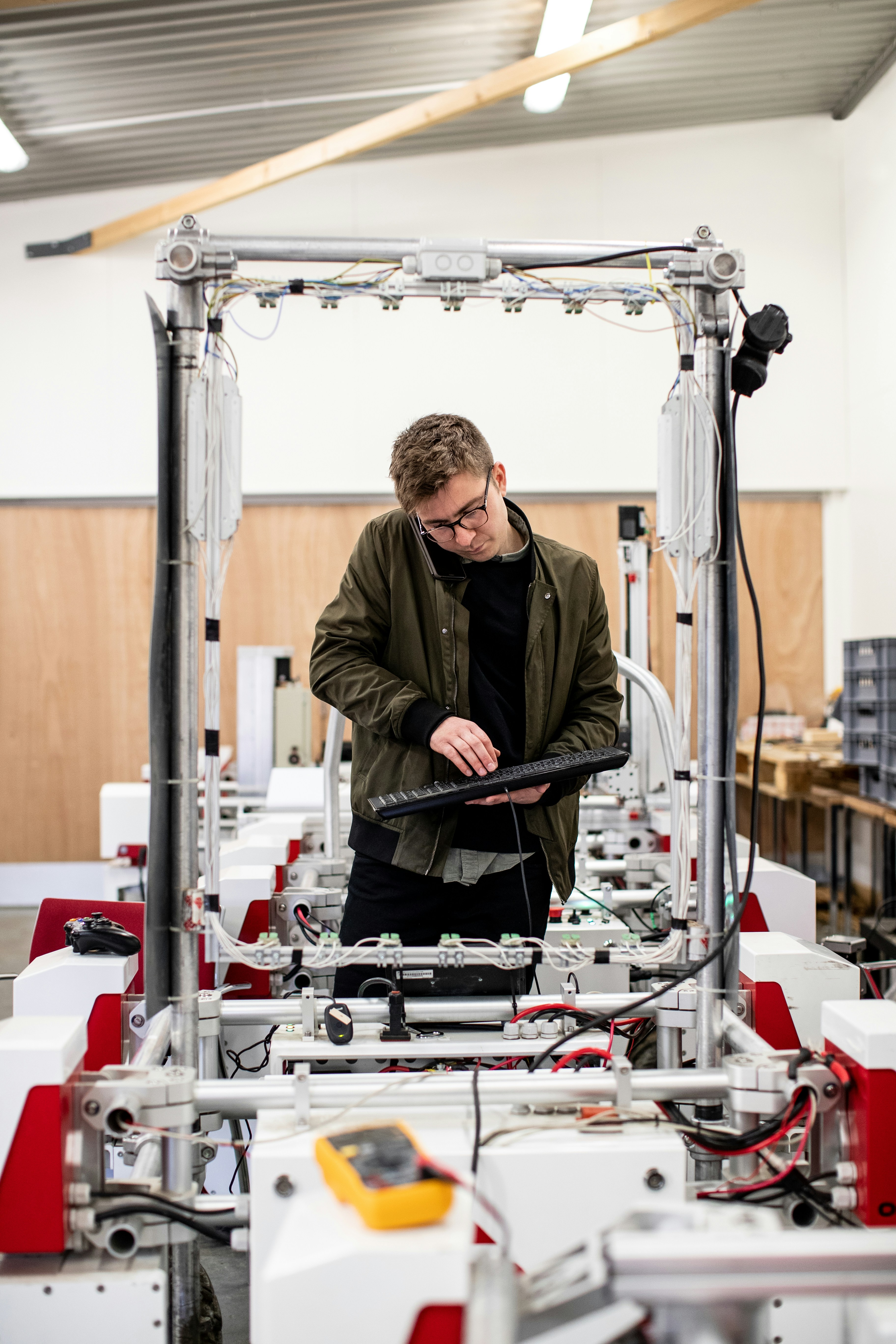 Then refine. Don’t settle for the first result. Generate multiple variations and compare. This is where AI beats manual design — speed of iteration. You can test ideas that would normally take hours within minutes.
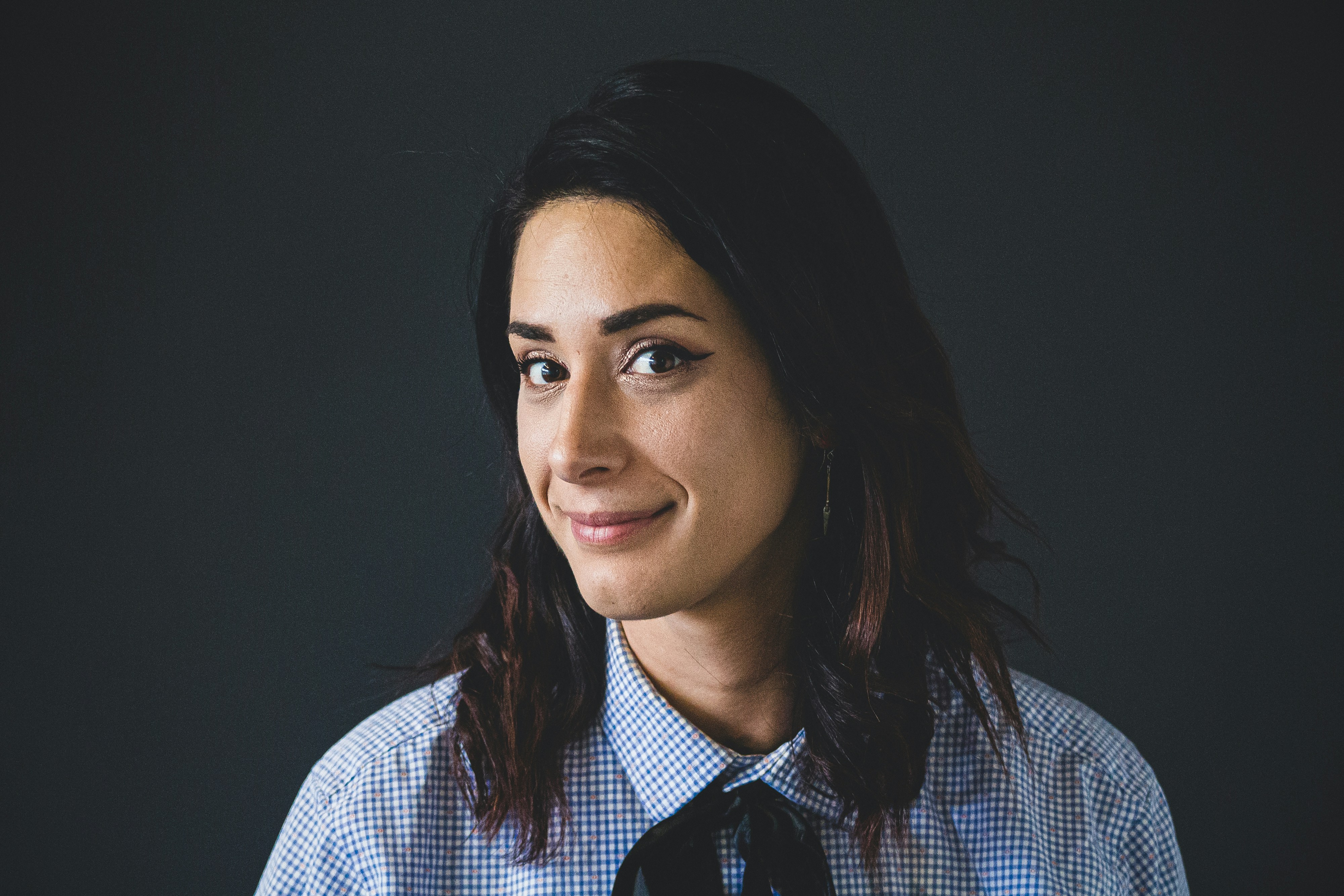 Also, don’t rely only on AI. Combine AI-generated visuals with simple editing tools to add text, contrast, and branding. AI gives you the base, but your thinking completes the process.
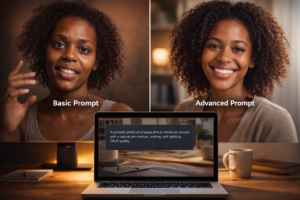 Before jumping into the Best Prompts to Generate Realistic AI Images, you need to understand why things go wrong. Most people type very basic prompts. Something like “woman smiling” or “office background.” That’s way too vague for AI. AI doesn’t think like humans. It doesn’t understand context unless you clearly describe it. That’s why results look artificial. I’ve already broken this down deeply in my previous guide on
  This is one of the most effective approaches for the Best Prompts to Generate Realistic AI Images. If you’re targeting US customers, especially for marketing or branding, this style works insanely well. Example: “A professional headshot of a confident female business owner in New York, wearing formal attire, soft natural lighting, DSLR camera, 85mm lens, blurred office background, realistic skin tone, high detail, corporate photography” This type of prompt is perfect for LinkedIn, websites, and business branding.
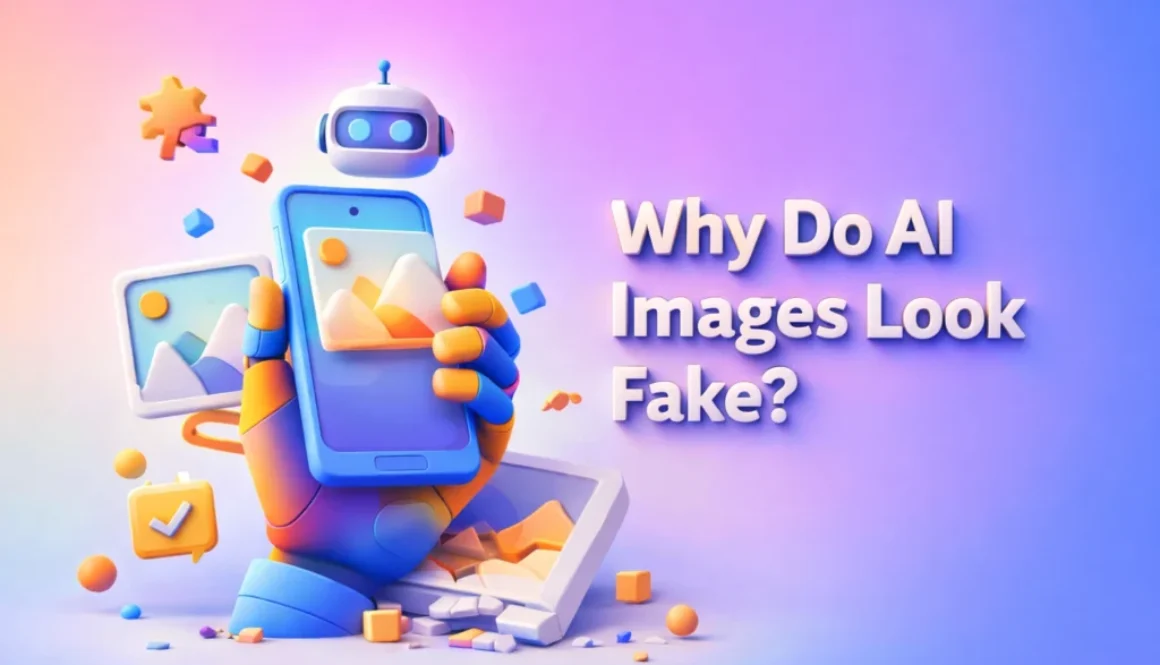
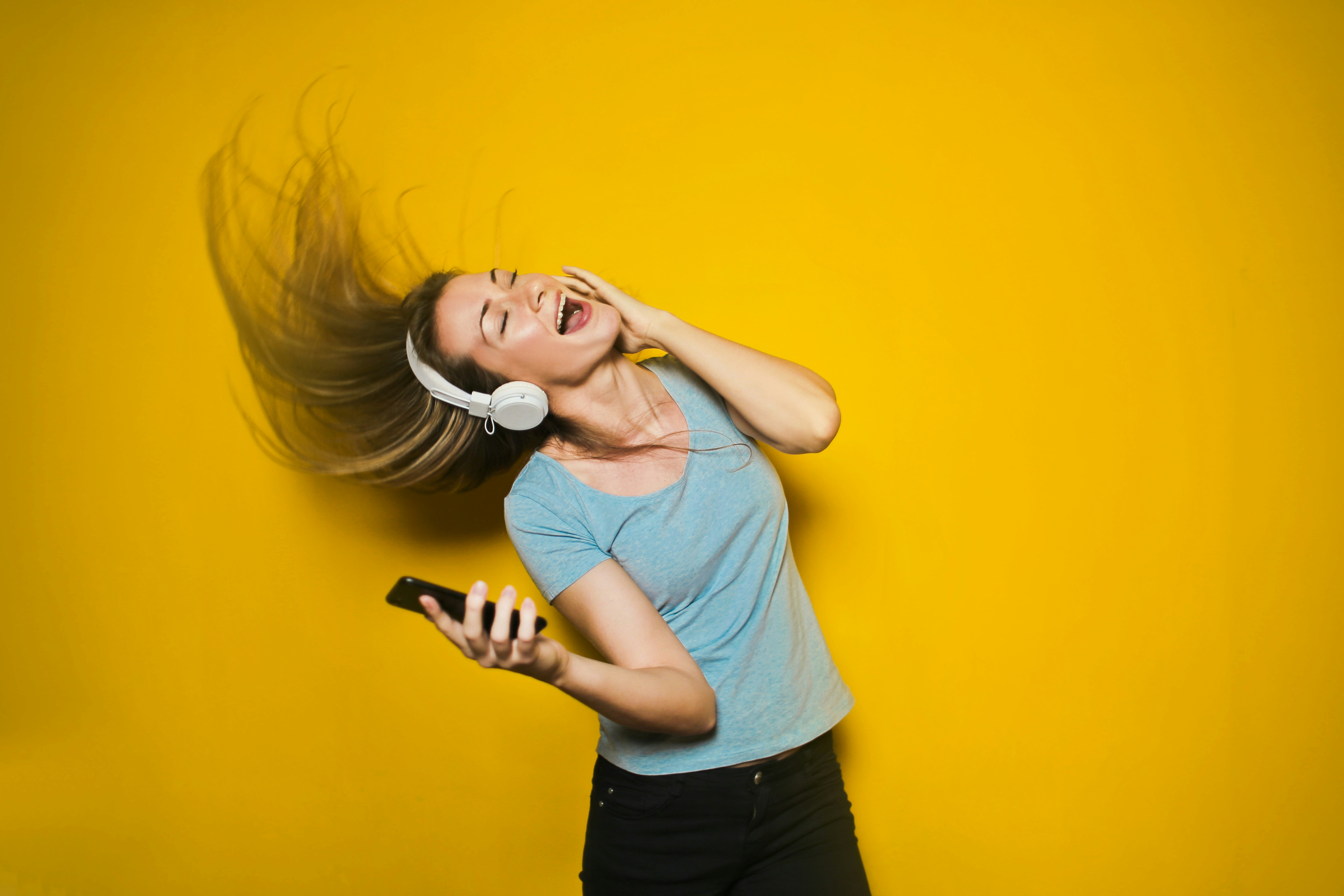
 This image looks almost real at first glance. The lighting is soft, the background blur is perfect, and the facial structure is well defined. But when I zoomed in, I noticed the skin looked too smooth — almost like plastic. There were no natural pores or imperfections. The expression also felt slightly emotionless, like a stock image rather than a real person. This is one of the main reasons why do AI images look fake — they remove natural human imperfections.
 This one surprised me. The lighting and depth look amazing, and even the steam from the coffee looks realistic. But when I focused on the fingers, something felt off. The grip didn’t look completely natural, and the positioning was slightly awkward. These small anatomical inconsistencies are easy to miss at first but become obvious once you observe carefully.
 This image looks like a perfect Instagram moment — everyone smiling, perfect lighting, and a beautiful background. But that’s exactly the problem. It feels too perfect. In real life, group photos have uneven lighting, random expressions, and small imperfections. AI removes all of that, making the image feel more like a movie scene than reality.